
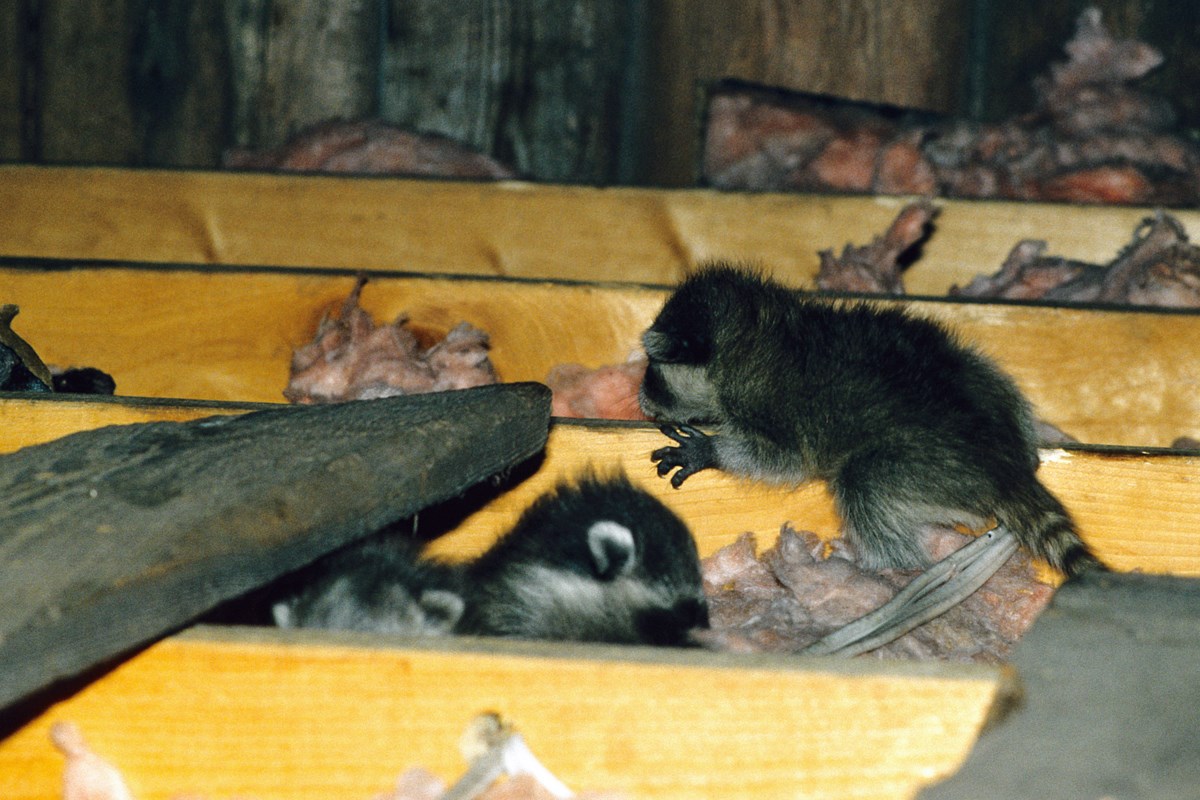
Columnist says preventing re-entry — and using reputable removal and rehab services — may be the most practical way to grapple with growing human-wildlife conflict
Let’s say you have discovered that a family of raccoons have set up their home in your attic. You will want them removed from the premises, of course, but probably don’t wish to see them harmed … just have them relocated to a woodlot somewhere far from here.
When I first started writing these nature columns way back in 1989, there were virtually no companies available to remove ‘residential’ wildlife. Over the last few decades, as more and more and more houses were built within habitats earlier classed as woodlot, fallow pasture, or even wetland, the resident wildlife either moved away, died, or adapted to these strange new shelters. And a new industry was created … wildlife removal services.
Nowadays, with a bit of Google searching, you can find numerous options for the removal and release of your annoying tenants, whether they be skunk, groundhog, squirrel, or bat. Somehow you have retained someone to come and live trap the young raccoons trespassing in your attic. You pay the nice people (“It’s how much per animal?!”) and now assume that the cute vermin will be released into a proper setting.
In reality, the young ‘coons will either be dumped into a ditch near a woodlot, or shot dead. Hmm, which is the crueler way of dealing with these unwanted animals?
If you thought that releasing them into a woodlot is the way to go … sorry, that’s cruel. These young ones do not have immediate shelter from rain, sun, or dogs; they do not have any idea as to where food can be found or how to obtain it; and perhaps they are not yet weaned of their mother. Yet here they are, released into the wild “where they belong.”
Over the next few days they will suffer from exposure, hunger, loneliness, confusion, and attacks from dogs, owls, or the current resident raccoons. Most of the released animals will die a painful death over a period of several days. So, is it so cruel to have them die almost instantly from a well-placed bullet?
Another scenario is to have the young ones taken to a wildlife rehabilitation centre. Here, the young raccoons will be cared for by people until they are old enough to be released into the wild. Aww, isn’t that wonderful. Except that it will take huge amounts of time, money, equipment and skill to raise these ubiquitous creatures.
By the time they are old enough to make it on their own (i.e. strong enough to fight the resident raccoons) they are also imprinted on people, which means they know that humans and handouts go together. It’s bad enough when a ‘rehabilitated’ raccoon tries to climb your pant leg while begging for food, but when a yearling bear does the same trick it’s time for panic.
And then authorities have to come and shoot or trap the offending creature. So much for all that time, money, and skill in raising these ‘wild’ baby raccoons.
However, I can understand the frustration that many people endure when faced with the removal of unwanted wildlife from their property. As mentioned, it’s difficult (and expensive) to get someone else to come and get them, so there often comes the time when the landowner becomes responsible for the capture of said beasties. Off to the hardware store you go to purchase a live trap.
And once you have the animal, now what? Unfortunately, there is no easy answer to this dilemma. Parks don’t want them, zoos don’t want them, nobody wants them.
Even if the homeowner’s wish is to have them killed, they usually don’t have the means, knowledge, and personal constitution to do so. To start blasting away in the backyard with grandad’s inherited .22 rifle will no doubt get you chatting with a whole other group of authoritarian folks.
And so you opt to release the cowering and snarling critter in the trap a few miles down the road, maybe in a nature park or large roadside forest — only to have them return within a night or two. The homing instinct within wild animals is truly awesome.
In my opinion, what is needed are places where such animals can be taken for euthanasia, to be dispatched quickly and humanely. Until that happens (and, also in my opinion, it’s unlikely such places will be established) we must entertain expensive wildlife compounds and animals being dropped off in unfamiliar woods.
I wish I could give you some magic answers to solve this problem, but each case is different. How to handle the situation depends upon the animal in question, the actual problem (is it residing within your house or just wandering through the backyard), and the homeowner’s biases as to whether or not the critters are to be harmed during removal.
As mentioned there are several very reputable wildlife removal companies and wildlife rehab centres throughout our area … use them! And get that hole in the fascia under the eaves fixed ASAP.
David J. Hawke is a freelance writer and naturalist who lives in rural North Simcoe County. He has been continuously creating weekly nature stories since 1989… and thinks that there are still many more topics to cover!