
Key Points
Dinner is an excellent opportunity to boost your intake of fiber and heart-healthy fats.
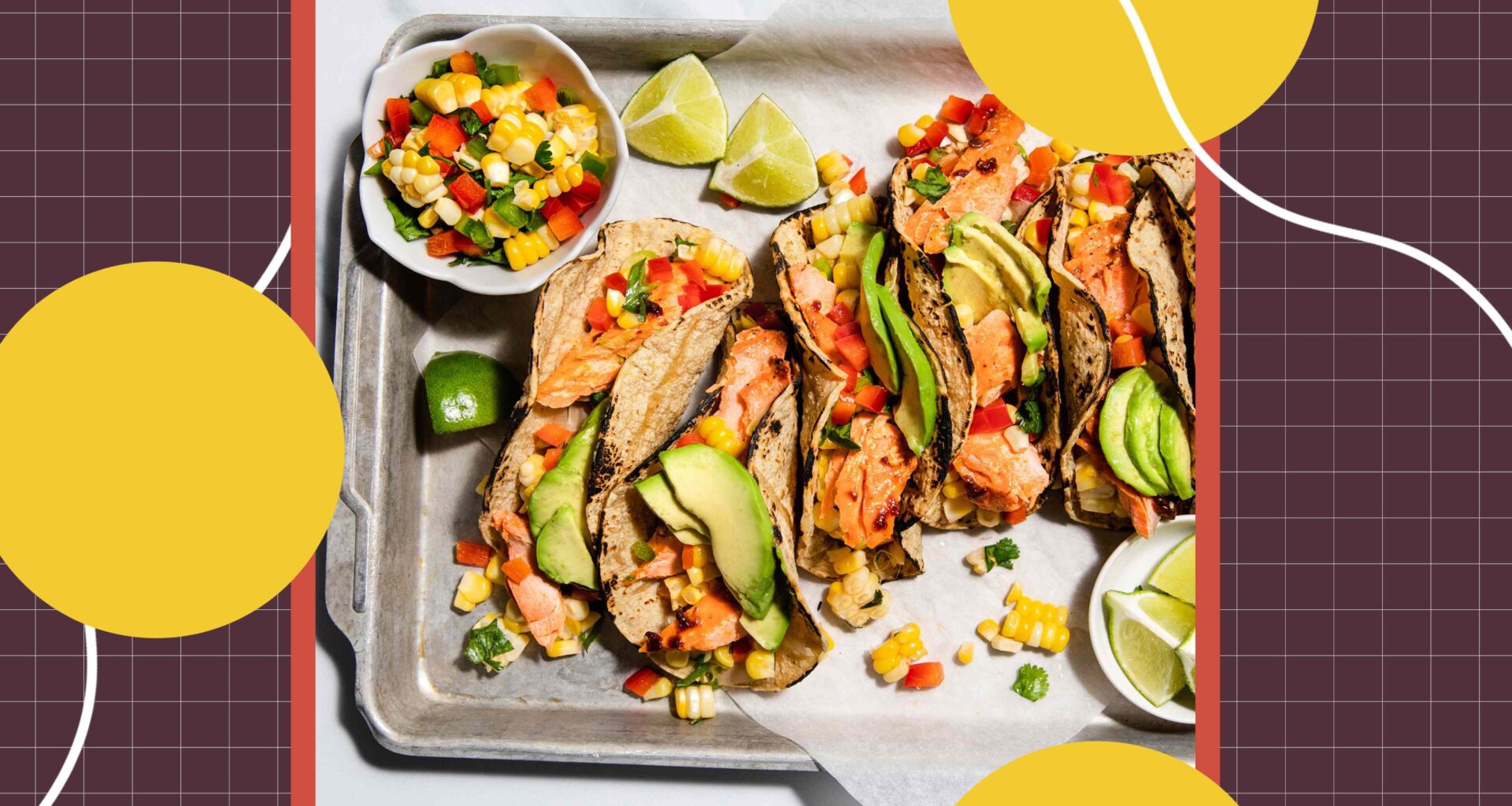
Experts say the best dinner is 30-Minute Roasted Salmon Tacos with Corn & Pepper Salsa.
They’re easy to make and full of omega-3s and fiber—a winning combo for heart health.
They say breakfast is the most important meal of the day, but for many Americans, dinner is the biggest meal of the day. So, it’s an excellent opportunity to boost your intake of soluble fiber and heart-healthy fats to help lower your cholesterol. If you fill your dinner with complex carbs, fruit and veggies, lean proteins and unsaturated fats, that’s a big step toward a cholesterol-lowering diet. However, if your dinner is full of saturated fat and refined carbs and low in fiber, it may work against your cholesterol-lowering goals.
The No. 1 dinner experts recommend is 30-Minute Roasted Salmon Tacos with Corn & Pepper Salsa. “Outside of the fact that the flavors will sing, this recipe is fiber-packed (avocado on deck) and low in saturated fat while being high in omega-3s,” says Jamie Baham, M.S., RDN, LD. Learn more about what makes this dinner so great for cholesterol, plus other tips to lower cholesterol with more than just your dinner choices.
Why We Love 30-Minute Roasted Salmon Tacos with Corn & Pepper Salsa for Lowering CholesterolIt’s High in Fiber
With whole-grain corn, avocado and peppers, this dinner provides 9 grams of fiber per serving. “This meal is a great source of fiber, providing almost a third of the recommended daily amount in a single serving,” says Patricia Kolesa M.S., RDN. That’s notable because the vast majority of Americans fall short on fiber.
Plus, “This high fiber content can help to support LDL reduction,” adds Devan Herring, M.S., RDN, CSOWM, CHC. That’s right—studies show that eating more fiber is linked with lower blood cholesterol levels and better heart health overall.
It’s Low in Saturated Fat
“Saturated fats have been directly associated with raising LDL or your ‘bad’ cholesterol,” says Kolesa, yet most Americans overdo their saturated fat intake. This dinner can help you minimize your saturated fat intake, since each serving only has 3 grams.
That’s much less than a fatty cut of meat, or a meal cooked in butter, or a creamy sauce typically has. Why? Well, this dinner’s main protein source is salmon—a heart-healthy choice rich in omega-3 fatty acids. The fact that it’s roasted helps, too. “Roasting requires little to no added fat during cooking, which helps lower saturated fats in the diet,” says Kolesa.
It Has Anti-Inflammatory Omega-3s
Not only is it low in saturated fat, this dinner is also rich in heart-healthy fats. “Unsaturated fats, like the omega-3s found in fatty fish, walnuts and flaxseeds, can help reduce inflammation as well as help to raise HDL cholesterol while lowering triglycerides,” says Herring.
Since fatty fish are such a great source of omega-3s, the American Heart Association recommends eating at least two servings of them weekly. However, most Americans struggle to do so. Yet another asset of this dinner is that since it’s salmon-based, it helps you meet the weekly goal for seafood intake for a healthier heart.
It Provides Complex Carbs
Many people mistakenly assume they should cut out carbs to promote heart and metabolic health, but that’s not the case. “Fiber-rich carbohydrates, especially soluble fiber found in foods like whole grains, vegetables, beans and lentils, help lower LDL cholesterol by binding to it in the digestive tract and helping the body eliminate it,” says Herring. In this recipe, that includes corn and corn tortillas. A medium corn tortilla provides about 1.4 grams of fiber, so eating two tacos provides about 2.8 grams of fiber, or 10% of the Daily Value from the tortillas alone.
Tips for Building a Cholesterol-Friendly Dinner
It’s tempting to focus on what to cut out when adopting a cholesterol-friendly diet, but Baham invites you to think about it a little differently. “When counseling my clients, instead of focusing only on what they have to take away, it’s exciting to discuss what we can add!” says Baham. Here are four tips for assembling dinners that support healthy cholesterol:
Pick a lean protein. Lean proteins are ones without much fat, especially saturated fat. They should make up most of your protein choices, including at dinner. Some that work well for dinner are skinless chicken breast, fish, beans and lean ground meat.
Add fiber-rich carbohydrates. Carbs are a key part of a well-balanced meal. For healthy cholesterol, opt for fiber-rich carbs like whole grains, starchy veggies and legumes. These boost your energy levels steadily to keep you fuller longer and promote healthy triglycerides.
Incorporate soluble fiber. Soluble fiber helps bind cholesterol to prevent your digestive tract from absorbing it. At dinnertime, add soluble fiber through beans, apples, pears or prunes—great salad mix-ins! Plus, “Many high-fiber foods, like fruits and vegetables, also contain antioxidants and phytonutrients that reduce oxidative stress and support overall heart health,” says Herring.
Add heart-healthy fats. Finally, make sure to add some heart-healthy fats through nuts, seeds, avocado, liquid cooking oils or fatty fish. These can help lower cholesterol, especially when you use them in place of saturated fats.
Other Tips for Lowering Cholesterol
Diet is one of many factors that influences cholesterol levels. Besides eating cholesterol-friendly dinners, here are some other tips for lowering cholesterol:
Be active.Physical activity promotes healthier cholesterol levels, so weave it into your weekly routine. For the most benefits, aim for at least 150 minutes of moderate-intensity aerobic activity or 75 minutes of vigorous-intensity activity each week.
Manage your stress. For some people, chronic stress raises cholesterol levels. So make stress management a part of your wellness routine, whether that’s through yoga, journaling, breath work or simply taking time to do nothing.
Prioritize sleep. Getting the recommended seven to nine hours of sleep per night lowers the risk of high cholesterol, so make sure to get enough quality sleep to protect your heart. Doing so may also help manage your stress.
Stop smoking. If you smoke, consider creating a plan to stop or reduce this behavior. Quitting can help raise your HDL cholesterol—the “good” kind of cholesterol—to promote an overall healthy cholesterol profile.
Our Expert Take
When you need a quick dinner that’s good for your cholesterol, whip up these 30-Minute Roasted Salmon Tacos with Corn & Pepper Salsa. They’re easy to make and full of omega-3s, fiber and complex carbohydrates—a winning combo for heart health. “Cheers to working towards lowering your cholesterol with this one! It will be on repeat in my house!” says Baham. Of course, this dinner alone won’t radically transform your cholesterol levels. Besides following a heart-healthy diet, prioritize physical activity, stress management, quality sleep and smoking cessation to work toward reductions in your cholesterol.
Read the original article on EatingWell