
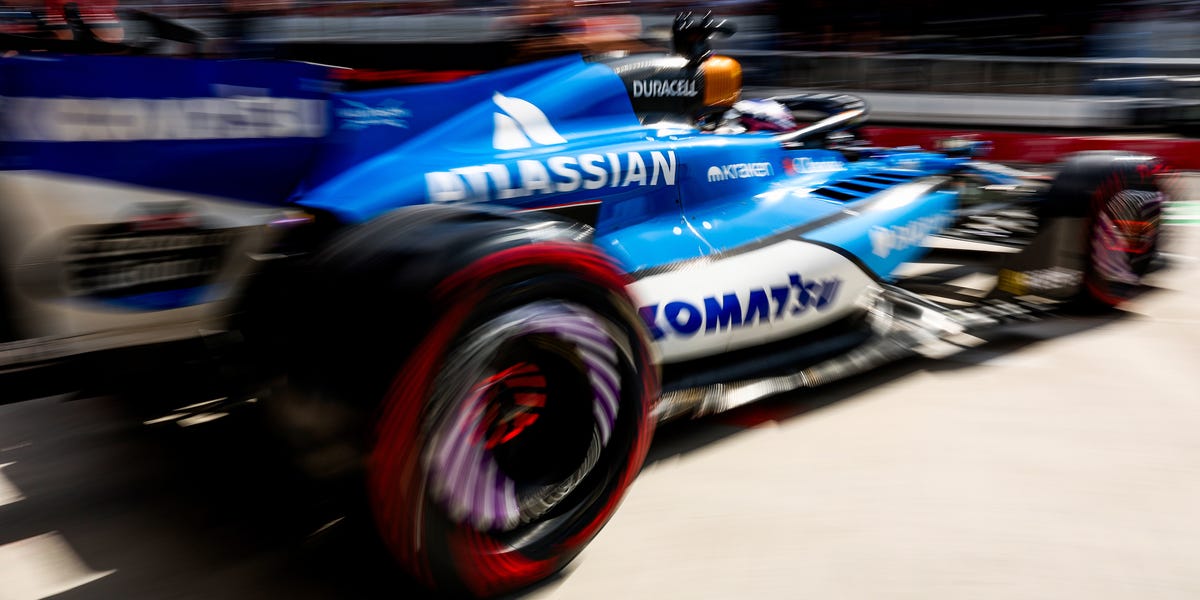
Championship position: 9th (11 points)
A difficult start to Formula 1’s new era was signposted by Williams when it missed the opening shakedown test owing to build delays, and it proved the portent for a deeply underwhelming first half of the campaign. The FW48 is overweight, aerodynamically poor, and development has been a struggle—and there’s little excitement for the remainder of 2026.
Williams has regularly operated in a no-man’s land between the mid-pack and Cadillac, and realistically the abject Aston Martin-Honda effort has only shielded Williams from more criticism. Last year it was fifth-best, this year it has tumbled to ninth, despite having the best overall power unit in the back of the FW48, and it has been embarrassingly adrift of fellow customer Alpine.
The weight issue consequently had a knock-on effect at circuits with long corners and in hot temperatures, accelerating tire degradation, and simply worsening matters further. Aston Martin’s Hungary update relegated Williams to second-slowest, ahead only of Cadillac.
There is an upgrade package planned for the Azerbaijan Grand Prix, in late September, but expectations have already been lowered.
“The kind of upgrade the Aston had we can only dream of that,” said Alex Albon in Hungary. “Fair play to them, yeah, we’re going to be fighting with them on some races because of the straight-line speed we’ve got, [but] it’s eye-opening for us, we know what our Baku upgrade is, it’s not that.”
 Peter Fox//Getty Images
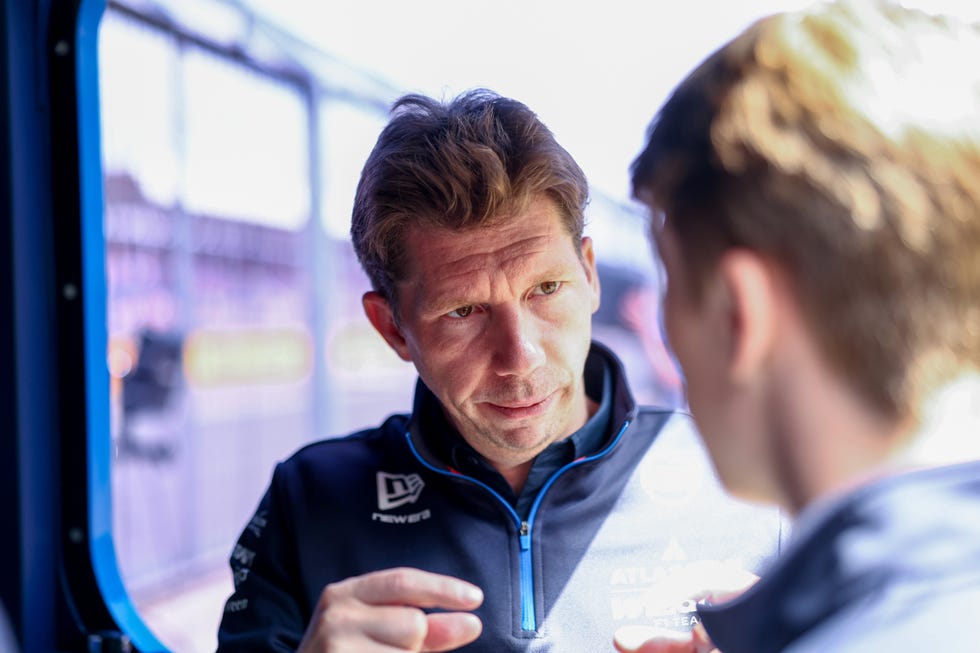
James Vowles.
Team Principal James Vowles has regularly spoken of the challenges facing Williams, with the build cycle for the new regulations—the first under his stewardship—highlighting more deficiencies within an organization he labeled as 20 years behind the front-runners when he joined in 2023.
Vowles concurred with Albon that the impending upgrade will not transform short-term prospects.
“What I can say is the Baku upgrade will not be enough to put us in the points scoring positions regularly.”
“More importantly it’s more about the focus of getting the foundation right for next year,” Vowles said after the Hungarian Grand Prix. “What I can say is the Baku upgrade will not be enough to put us in the points scoring positions regularly. Mainly for me it’s about understanding what went wrong this winter, we have some pretty nasty characteristics in these cars, what can’t happen is we go into next year still carrying the burden that was 2026.”
A few weeks beforehand Vowles spoke of Williams’ current task as “flying the plane and rebuilding it at the same time,” with 2026 almost one step back but in the hope of moving several steps forward.
Vowles added that “we got very, very exposed this winter, we have many years where we haven’t been able to build up our facilities to the level they need to be, what the cost cap does is it constrains you, we are dedicating a lot of resource to making sure we are fixing those issues behind the scenes, rather than bringing performance to the car in the current year. Clearly the winter showed we have a long way to go, it’s not the work of a month or two months, it’ll take time to get there—we will, we’re on this journey to make sure we keep stepping forward.”
The articulate and convincing Vowles has built up credit during his leadership of Williams, and he has time on his side, but this has been a deeply disappointing opening salvo to the new regulatory cycle. It is also the second time in three years that Williams has had setbacks and delays with a car build process.
 Peter Fox//Getty Images
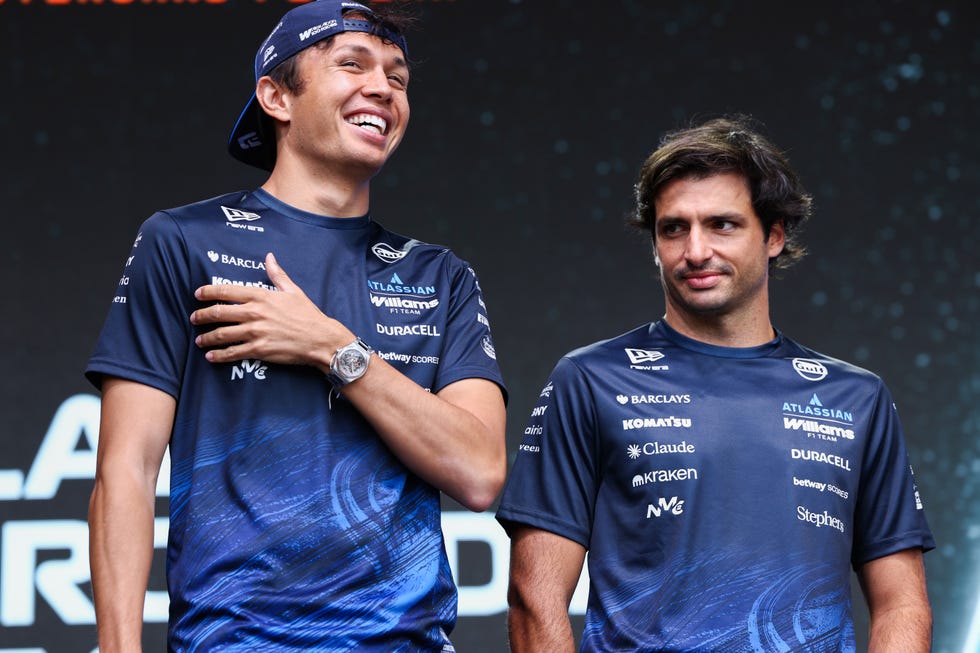
Alex Albon (left) and Carlos Sainz.
Williams’ woes have left Carlos Sainz and Alex Albon scrapping for the occasional smattering of points, usually gained by faster rivals encountering misfortune. Sainz has been a more convincing performer than Albon through 2026, though multiple grands prix have still turned into extended test sessions, a world away from late 2025, when Sainz was a two-time podium finisher on merit. The pair, now in their early 30s, have been all-in on the Williams project but patience is understandably wearing thin.
“I think there’s no secret that my expectations, or let’s say my timeline for how long it would take me to win a race again and for Williams to be the place to do that, have been delayed by a year or two,” said Sainz on Williams’ project. “Having said that, I see what the team is investing in the future. I still see the vision of the team being pretty clear. I see how much is going on behind the scenes when you leave the current car performance aside, and this still gives me confidence and motivation that we’re going in the right direction. It’s just that this year’s car, for whatever reason or reasons, has been very underperforming and has fallen very short of our expectations for many different reasons.”
This year was never going to be Williams’ chance to return to title contention, but its long-term ambition to elevate itself to its glory days is resetting from a lower baseline than anyone anticipated, and the internal weaknesses look a greater obstacle to overcome than first thought. The remainder of 2026 is likely to be a grim long slog.

U.K.-based Phillip Horton started covering Grands Prix while still at university and swiftly deemed that writing about Formula 1 and the behind-the-scenes machinations was much more engaging than reading centuries-old novels. Degree gained, he went on to cover the sport full-time from 2014 and is as intrigued and excited by the destinations Formula 1 visits during its lengthy annual world tour as the racing itself. Phillip joined Autoweek in 2021 and while he has just about learned to spell in American English he has yet to find anywhere in America that makes a proper cup of tea.