
Bike travel is changing. The next generation of bike destinations is not just about famous climbs, legendary races or the toughest routes—it is about discovering places in a way that only a bicycle allows. Around the world, cities and regions are investing in cycling culture, building better infrastructure and creating experiences where riding becomes part of the journey rather than simply a way to get there.
From the historic cycling heartland of Flanders, Belgium, where professional racing has shaped an entire culture, to emerging destinations such as Mexico City, Setouchi, Japan and Bogotá, where bicycles are transforming how visitors experience city life, a new generation of cycling destinations is taking shape. These are places where riders can combine great routes with food, architecture, nature, history and local communities.
The best cycling destinations in 2027 are not necessarily the ones with the biggest mountains or the most famous races. They will be the places where the bicycle opens the door to a deeper travel experience—where a morning ride can lead to a hidden neighbourhood café, a coastal village, a historic town or a landscape that feels completely different when explored at human speed.
Whether you prefer quiet country roads, island-hopping adventures, urban exploration, rail trails or multi-day cycling journeys, these destinations represent where bike travel is heading next.
Flanders, Belgium
Go for: cycling history becoming the world’s greatest bike culture experience
Flanders has never needed an introduction to cyclists. This is the land of the Tour of Flanders, cobbled climbs, legendary one-day races and some of the most passionate cycling fans on the planet. But in recent years, the region has transformed its racing heritage into something much bigger: a year-round cycling destination where visitors can experience the culture rather than simply watch it. Permanent cycling routes now allow riders to follow the same roads as the professionals, including iconic climbs such as the Oude Kwaremont and Koppenberg, while towns across the region have embraced cycling with bike cafés, museums, accommodations and dedicated infrastructure. The appeal of Flanders in 2027 is not that it is new—it is that the rest of the world is finally catching up to what locals have known for generations: cycling here is not a hobby, it is a way of life.
Beyond the famous race routes, Flanders offers a surprisingly accessible cycling experience. Riders can explore quiet country lanes connecting medieval villages, breweries and historic cities such as Ghent, Bruges and Leuven, creating trips that combine cycling with food, architecture and culture. The region continues to invest in recreational cycling networks and tourism initiatives aimed at attracting international riders who want more than a challenging route—they want a complete experience. For cyclists interested in the history and soul of the sport, few destinations offer a deeper connection.
How to plan it: Spring is the traditional cycling season in Flanders, especially around the major classics, but the region is enjoyable from late spring through early autumn when temperatures are mild and the countryside is at its best. The easiest bases are cities such as Ghent, Bruges or Leuven, all well connected by rail and surrounded by cycling routes. Bring a road bike to chase famous climbs, a gravel bike to explore quieter rural paths, or simply rent locally and experience the region at a relaxed pace.
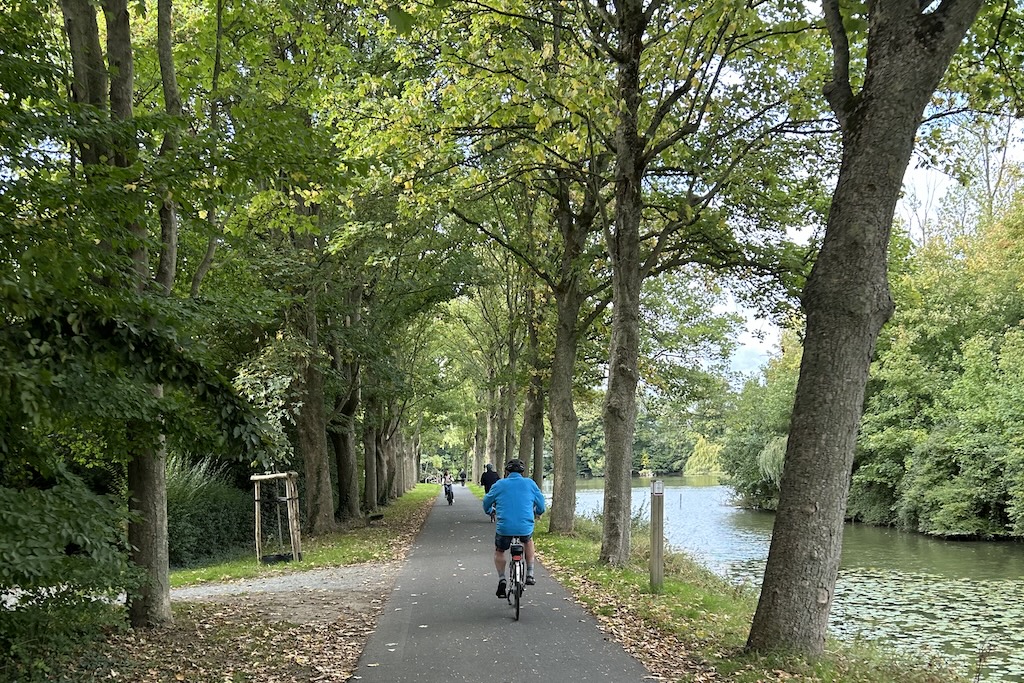
Back in Ypres, Flanders after a day on the Peace Route
Slovenia
Go for: Europe’s next great cycling adventure
For years, Slovenia was known primarily as the small Alpine nation producing some of the world’s greatest cyclists, including Tour de France champions Tadej Pogačar and Primož Roglič. Now the country is building a reputation of its own—as one of Europe’s most exciting destinations for riders who want dramatic landscapes, diverse terrain and a cycling experience that feels refreshingly undiscovered. From the Julian Alps and emerald lakes to vineyard-covered hills and quiet gravel roads, Slovenia offers an extraordinary variety of riding in a country small enough to explore without spending days in transit.
The growth of cycling tourism has accelerated with the development of routes such as the Juliana Bike Trail, a multi-day journey around Triglav National Park that showcases Slovenia’s mountains, villages and natural landscapes. New cycling accommodations, improved trail networks and a growing focus on sustainable tourism are helping position the country as an alternative to more established European cycling destinations. In 2027, Slovenia feels less like a hidden gem and more like the next major cycling destination waiting to be discovered.
What makes Slovenia especially appealing is the combination of adventure and comfort. Riders can spend one day climbing Alpine passes, the next exploring gravel roads through forests and vineyards, then finish with local cuisine and wine in a centuries-old village. It is a destination built for the modern cycling traveller—one who wants challenging rides, incredible scenery and a deeper connection to place.
How to plan it: Late spring through early autumn offers the best riding conditions, with summer ideal for higher mountain routes and shoulder seasons perfect for exploring lower elevations. Ljubljana makes a convenient starting point, while towns near Lake Bled, Kranjska Gora and the Julian Alps provide access to some of the country’s most spectacular cycling. Slovenia is easily combined with neighbouring Austria, Italy or Croatia for a longer European cycling adventure.
The Pacific Northwest is becoming North America’s great urban cycling corridor
Vancouver, British Columbia
Go for: one of the world’s most beautiful cities entering its next cycling era
Few cities can match Vancouver’s combination of natural beauty and cycling potential. Mountains rise behind the skyline, the Pacific surrounds the city, and some of Canada’s most scenic urban rides—from Stanley Park’s seawall to the North Shore trails—are woven directly into everyday life. But Vancouver’s cycling story is entering a new chapter. The global attention surrounding the 2026 FIFA World Cup has accelerated investment and interest in how visitors move through the city, while major public-space projects are changing how people experience downtown.
The transformation of Granville Street is one of the city’s most ambitious examples. Once dominated by vehicle traffic, the downtown corridor is being reimagined as a more pedestrian-focused destination, creating new opportunities for walking, cycling and public life. Combined with Vancouver’s expanding protected bike network, connections to regional trails and growing reputation as a cycling-friendly gateway to British Columbia’s mountains and coastline, the city is becoming more than a place to ride—it is becoming a place designed around active exploration.
For cyclists, Vancouver offers something few destinations can: the ability to start the day riding beside the ocean, climb into coastal forests by afternoon and finish with a city experience that rivals anywhere in North America. The appeal in 2027 is not discovering whether Vancouver is beautiful. Everyone already knows that. It is seeing how the city is adapting that beauty for a new generation of riders.
How to plan it: Summer and early fall offer the best combination of weather and trail conditions, although Vancouver’s mild climate allows for year-round riding. Base yourself downtown, where Stanley Park, the seawall and neighbourhood routes are easily accessible, or explore beyond the city with rides through Richmond, the North Shore and the Sea-to-Sky corridor. Road cyclists, gravel riders and mountain bikers can all build a trip around Vancouver.
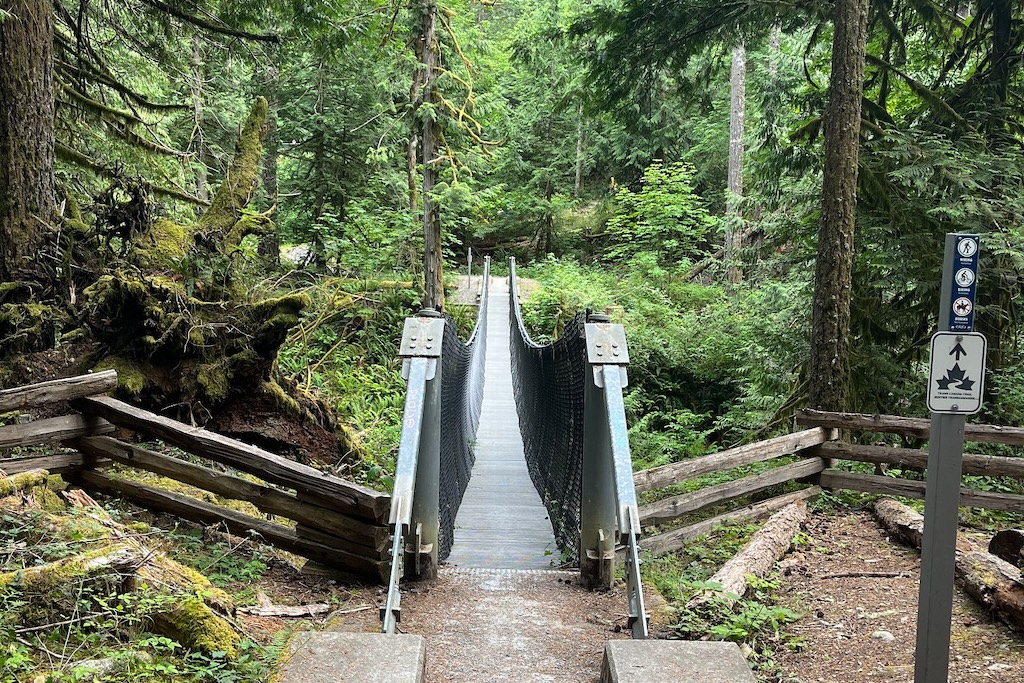
Vancouver Crossing Loop
Seattle, Washington
Go for: the Pacific Northwest city proving that urban cycling can evolve
Seattle has spent years living in the shadow of its northern neighbour when it comes to cycling. But that is changing. The city is experiencing a new wave of investment in active transportation, with expanded protected bike routes, neighbourhood greenways and ambitious projects reshaping how residents and visitors move through one of America’s fastest-growing cities. What makes Seattle interesting in 2027 is not that it has suddenly become a cycling capital—it is that it is finally connecting the pieces.
The city has invested heavily in creating safer, more comfortable cycling corridors, while projects such as the growing network of protected lanes and trail connections are making it easier to explore without a car. The transformation is especially noticeable along routes connecting waterfront areas, neighbourhoods and major attractions, allowing visitors to experience Seattle beyond the usual tourist stops. The city’s famous relationship with technology, sustainability and outdoor recreation is increasingly reflected in its transportation choices.
Seattle also benefits from a setting that feels almost designed for cycling. Riders can explore waterfront paths with views of Puget Sound, climb through wooded neighbourhoods, connect to regional trails or use the city as a base for larger Pacific Northwest adventures. Add in the region’s coffee culture, food scene and proximity to mountains and islands, and Seattle becomes a destination where cycling is part of a broader travel experience.
How to plan it: Late spring through early fall is ideal for exploring Seattle by bike, with the driest weather typically arriving in July and August. Downtown and neighbourhoods such as Capitol Hill, Ballard and Fremont provide convenient bases for riding. Bring a gravel or adventure bike if you want to explore beyond the city, with nearby destinations including the Olympic Peninsula, the San Juan Islands and the Cascade foothills.
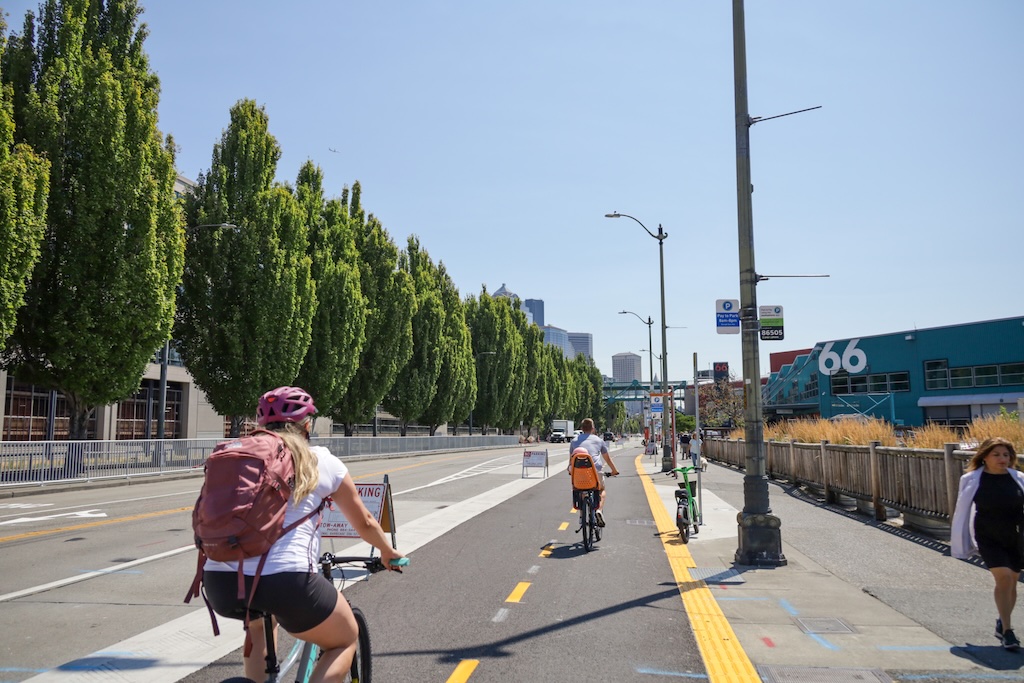
Park of the Alaskan Way cycling route in Seattle (Seattle Department of Transportation)
Setouchi, Japan
Go for: Japan’s island-hopping cycling paradise
Japan has no shortage of incredible travel experiences, but the Setouchi region is emerging as one of the country’s most compelling destinations for cyclists. Built around the tranquil waters of the Seto Inland Sea, the region combines legendary cycling routes, hundreds of islands, historic port towns, contemporary art, exceptional food and a landscape that feels perfectly designed for exploring on two wheels.
The region’s global cycling calling card is the Shimanami Kaido, the 70-kilometre route connecting Honshu and Shikoku across six islands and a series of spectacular bridges. But the real appeal of Setouchi is that the famous route is only the beginning. Cyclists can extend their journey through island roads, coastal villages and lesser-known routes that reveal a slower, more intimate side of Japan.
Beyond the Shimanami Kaido, riders can explore islands such as Awaji, Naoshima, Teshima, Omishima and Shodoshima, each offering its own character—from beaches and olive groves to fishing villages, temples and world-class art installations. The region has embraced cycling tourism with bike-friendly accommodations, rental services, ferry connections and routes designed for visitors who want to combine riding with culture.
The appeal of Setouchi is that it delivers something many cycling travellers are searching for: adventure without isolation. A rider can spend the morning crossing a bridge over turquoise water, stop for fresh seafood or local citrus products at lunch, visit a contemporary art museum in the afternoon and finish the day in a traditional inn.
As cycling tourism moves beyond famous road climbs and race routes, Setouchi represents a different future for bike travel—one built around discovery, connection and the freedom to explore slowly.
How to plan it: Spring and autumn are the best seasons, offering comfortable temperatures and beautiful scenery. The city of Onomichi is the natural gateway for the Shimanami Kaido, while Matsuyama, Hiroshima and Takamatsu make excellent bases for exploring the wider region. Bring a road bike or gravel bike for longer adventures, although high-quality rental bikes and e-bikes are widely available. Allow at least five to seven days to experience more than just the famous route.
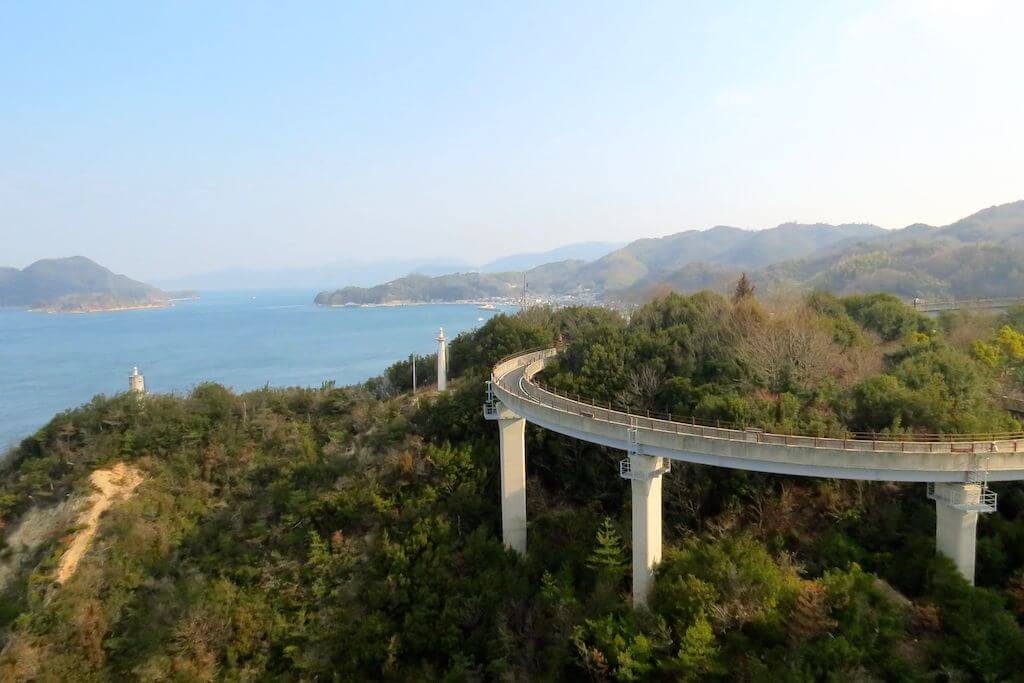
Shimanami Kaido cycling route
Jeju Island, South Korea
Go for: Asia’s emerging cycling island paradise
South Korea’s Jeju Island has quietly become one of Asia’s most appealing cycling destinations. Famous for volcanic landscapes, coastal scenery and a unique island culture, Jeju offers something increasingly rare in modern travel: the ability to completely disconnect and explore at a slower pace.
The Jeju Fantasy Bike Path circles the island for approximately 230 kilometres, following dramatic coastlines, quiet rural roads and sections overlooking the ocean. Along the way, riders pass black volcanic rock formations, beaches, fishing villages, tangerine farms and views of Hallasan, South Korea’s highest mountain. The route includes dedicated cycling sections, rest stops and passport checkpoints that turn the journey into a memorable challenge.
Unlike mainland Korea’s massive Four Rivers network, Jeju’s appeal is less about covering huge distances and more about the rhythm of island cycling. Riders can stop for seafood, explore cultural sites, relax at cafés or spend extra time discovering smaller communities along the coast. The combination of infrastructure, scenery and hospitality makes Jeju one of the most promising cycling destinations in East Asia.
As more travellers seek experiences that combine adventure with culture, Jeju is positioned perfectly for the next generation of bike tourism.
How to plan it: April to June and September to November are ideal, avoiding the hottest summer conditions and stronger winter winds. Most riders base themselves in Jeju City or Seogwipo and complete the loop over three to five days. Rental bikes are widely available, including e-bikes.
South Island, New Zealand
Go for: the world’s best-supported Great Ride adventure
New Zealand has long been a dream destination for outdoor travellers, but its cycling reputation is entering a new era. The South Island, with its dramatic mountains, glacial lakes, vineyards and endless rural landscapes, has become one of the world’s most complete cycling destinations—offering everything from relaxed multi-day trails to challenging backcountry adventures.
At the heart of that transformation is the Alps 2 Ocean Cycle Trail, one of New Zealand’s premier Great Rides. Stretching approximately 300 kilometres from the Southern Alps near Aoraki/Mount Cook to the Pacific Ocean at Oamaru, the route delivers an extraordinary cross-section of the South Island. Riders pass turquoise alpine lakes, braided rivers, farmland, vineyards and historic towns while experiencing some of the country’s most spectacular scenery at bicycle speed.
But the appeal of the South Island extends well beyond one trail. A growing network of Great Rides and adventure routes allows cyclists to explore different sides of the landscape, from the Otago Rail Trail’s historic gold-mining country to mountain bike destinations around Queenstown and Wanaka. The region has embraced cycling tourism with shuttle services, bike-friendly accommodations, luggage transfers and operators that make multi-day adventures accessible to a wide range of riders.
What makes the South Island special is the combination of wilderness and comfort. A day can begin beside snow-capped peaks and end with local wine, farm-to-table cuisine and a comfortable lodge. For cyclists seeking a destination where the journey itself is the experience, few places match the scale and variety of New Zealand’s South Island.
How to plan it: The best riding season runs from November through April, with the shoulder seasons offering fewer crowds and excellent temperatures. The Alps 2 Ocean is typically completed over five to eight days, depending on pace and stops. Christchurch, Queenstown and Dunedin are useful gateways for exploring the wider region. Bring a gravel bike or mountain bike for the greatest flexibility, although many sections are suitable for hybrid bikes and e-bikes.
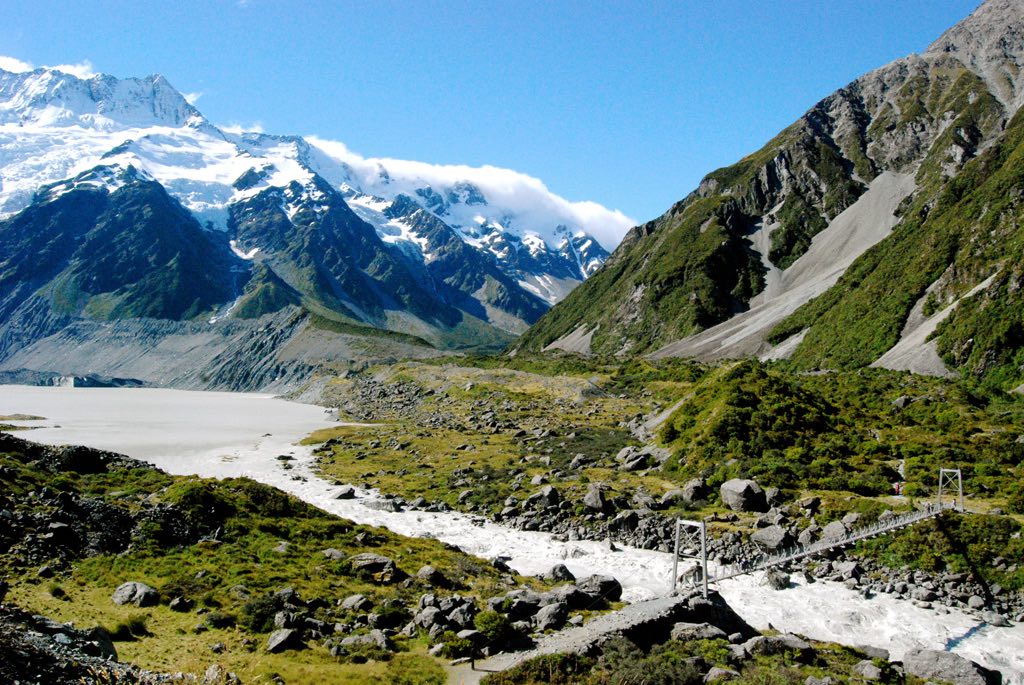
Alps 2 Ocean, New Zealand
Tasmania, Australia
Go for: Australia’s emerging cycling adventure capital
Australia has no shortage of incredible cycling destinations, but Tasmania is quickly becoming the country’s most exciting place to explore by bike. The island state combines rugged wilderness, quiet roads, world-class food and wine, mountain landscapes and a growing network of trails that make it feel tailor-made for cycling travel.
The appeal of Tasmania is its diversity. Riders can explore the famous Tasmanian Trail, a 480-kilometre off-road route crossing the island through forests, farmland and remote landscapes, or tackle shorter rail trails and scenic cycling routes connecting communities throughout the state. Around Hobart, Launceston and the Tamar Valley, cyclists can combine riding with historic towns, wineries, breweries and some of Australia’s best culinary experiences.
For mountain bikers, Tasmania has become a global destination thanks to trail networks such as Blue Derby, where a former mining town has been transformed into one of the world’s most celebrated mountain bike destinations. Meanwhile, road cyclists are drawn to quiet country lanes, coastal climbs and iconic routes through places like Freycinet and Cradle Mountain.
Tasmania’s biggest advantage may be its sense of discovery. Unlike Australia’s larger cities, the island offers the feeling of a true cycling escape—where traffic is light, landscapes are dramatic and every ride connects travellers with local communities. As more cyclists look beyond traditional destinations, Tasmania is emerging as one of the Asia-Pacific region’s must-watch cycling destinations.
How to plan it: March to May and September to November offer some of the best riding conditions, with mild temperatures and fewer crowds. Hobart and Launceston are the main gateways, while smaller towns such as Derby, Bicheno and Strahan provide access to major riding areas. Bring a gravel bike or mountain bike to experience Tasmania’s famous off-road routes, or plan a road trip combining coastal roads, wineries and national parks.
Bogotá & the Colombian Andes, Colombia
Go for: one of the world’s great everyday cycling cultures
If there is one place in South America that belongs in a Momentum-style cycling travel article, it is Bogotá. The Colombian capital has one of the most distinctive cycling cultures in the world, built not around tourism but around the bicycle’s role in everyday life.
The city’s famous Ciclovía, which closes hundreds of kilometres of streets every Sunday and holiday to cars, has become a global model for urban cycling. Every week, families, commuters, athletes and casual riders take over Bogotá’s streets, turning the city into one of the world’s largest recurring cycling events.
But Bogotá is more than a city ride. Its location high in the Andes creates an incredible cycling landscape beyond the urban core. Riders can explore mountain roads, coffee-growing regions, colonial towns and scenic routes that have helped make Colombia one of the world’s great cycling nations.
The appeal for visitors is the combination of culture and accessibility. A morning ride can start in a neighbourhood café, continue along dedicated cycling routes, climb into the surrounding mountains and finish with Colombian coffee and local cuisine. It is a destination where cycling is not something added for tourists—it is already part of how the city moves.
How to plan it: The best riding conditions are generally December through March and July through August, when rainfall is lower. Stay in neighbourhoods such as Chapinero or La Candelaria for easy access to city cycling routes. Combine Bogotá with nearby destinations such as Zipaquirá, Villa de Leyva or the coffee region for a longer cycling trip.
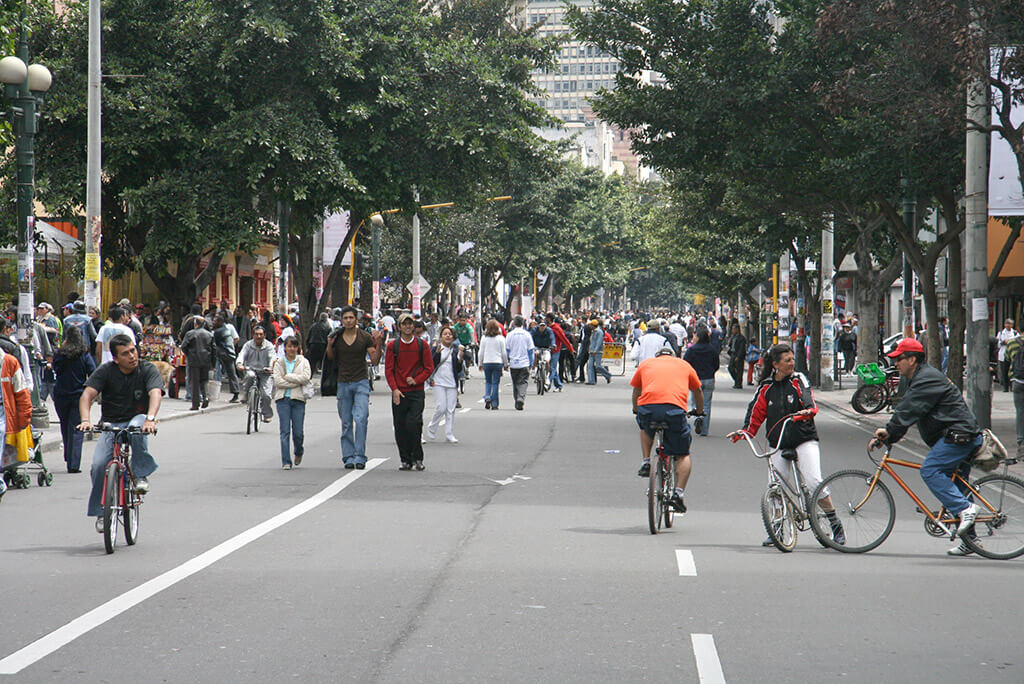
Riding the weekly Ciclovía in Bogotá (Photo by Aaron Naparstek)
Montevideo & Uruguay’s Coast
Go for: South America’s most relaxed coastal cycling destination
This one is actually very Momentum.
Uruguay may not have the cycling reputation of Colombia or Argentina, but that is exactly why it is interesting. Montevideo and the country’s Atlantic coast offer a slower, easier style of cycling travel built around beaches, waterfront paths, small towns and relaxed exploration.
Montevideo’s Rambla—one of the world’s longest continuous waterfront promenades—creates an ideal urban cycling experience, connecting neighbourhoods, parks and beaches along the Rio de la Plata. Beyond the capital, cyclists can follow coastal roads toward destinations such as Punta del Este, José Ignacio and smaller beach communities.
The appeal is not dramatic climbs or extreme routes. It is the ability to spend a week exploring by bike: stopping for seafood, visiting wineries, riding quiet roads and experiencing one of South America’s most relaxed countries at a human pace.
How to plan it: November through March is ideal for coastal cycling. Montevideo makes a good base, while longer trips can follow the coast east toward beach towns and rural areas.
Mexico City, Mexico
Go for: one of the world’s great cities reinventing itself by bike
Mexico City has always been one of the world’s most fascinating urban destinations, but in recent years it has developed a new identity: a city where cycling is becoming one of the best ways to experience its neighbourhoods, parks and cultural landmarks.
The transformation is most visible every Sunday, when Muévete en Bici closes major streets to cars and opens them to cyclists, runners and pedestrians. What began as a local initiative has grown into one of the largest recurring open-street programs in the world, creating a weekly celebration of active transportation that brings together families, commuters, recreational riders and visitors.
But Mexico City’s cycling appeal goes far beyond Sunday rides. The city has developed an expanding network of cycling infrastructure, including some new routes established for the FIFA World Cup, bike-share options and neighbourhood routes that make it easier to explore without a car. On two wheels, travellers can move between the tree-lined streets of Condesa and Roma, explore Chapultepec Forest, visit museums and historic districts, stop for street food, and discover neighbourhoods that are easy to miss from behind a car window.
The city’s altitude, pleasant climate and vibrant street life make it especially rewarding for cyclists. A morning ride can combine historic architecture, markets, cafés and public parks before ending with some of the best food in North America. Beyond the city itself, nearby destinations such as the volcanic landscapes around the Valley of Mexico and the colonial towns surrounding the capital offer opportunities for longer cycling excursions.
Mexico City’s cycling story is not about becoming Copenhagen or Amsterdam. It is about creating a uniquely Mexican cycling culture—one built around community, exploration and the simple pleasure of experiencing one of the world’s great cities at human speed.
How to plan it: The dry season from November through April offers the most comfortable riding conditions. Stay in neighbourhoods such as Roma, Condesa or Centro Histórico for easy access to cycling routes and attractions. Sundays are the perfect introduction to the city’s cycling culture, while guided cycling tours offer a deeper look at its history, food and neighbourhoods.