
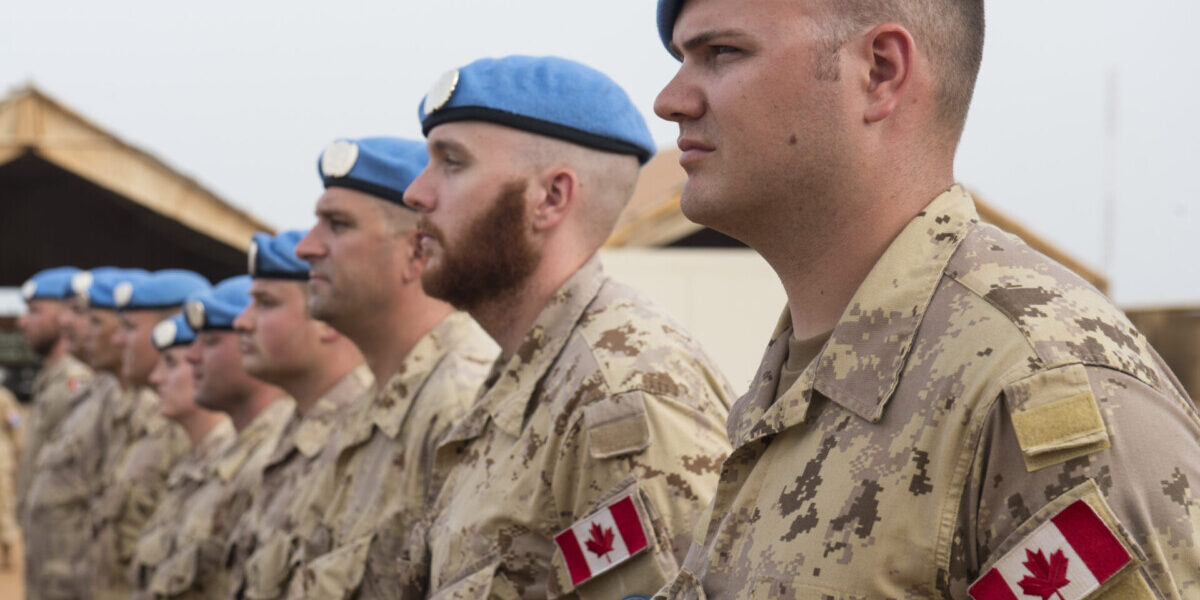
The country’s troop commitment to United Nations peacekeeping will nearly cease next year after the federal government announced last month that it is ending three military missions.
Canada announced on July 17 that it would be ending its contribution to UN peacekeeping missions in the Democratic Republic of the Congo (DRC), South Sudan, and Cyprus by mid-2027.
Canada had 26 personnel across four peacekeeping missions as of April, including 12 members committed to the DRC, nine in South Sudan, and one in Cyprus, based on the latest UN figures. With the end of those missions, Canada’s only commitment to UN peacekeeping would be a contribution of four personnel to a truce-monitoring mission in Jerusalem.
Royal Military College professor Walter Dorn, a leading expert on Canadian peacekeeping, called the decision “shameful.”
“The government decision ignores the needs of those war-torn nations and local populations. Canada ignores global security to its peril. Insecurity in far-away places can affect us, just like Afghanistan did in 2001,” he told The Hill Times.
He said Canada has unlearned the lessons of the world wars that “taught us how security must be thought of globally, and international organizations need to be vigorously supported.”
“By withdrawing from peacekeeping, we are increasing future threats that we cannot predict. The current decision kills a long and proud tradition of Canadian peacekeeping,” Dorn added, remarking that former prime minister Lester Pearson, who birthed the idea of modern peacekeeping, would be “rolling in his grave.”
The reduction in troops would see Canada go from being the UN member state with the 65th highest peacekeeping contribution to the 100th, based on data from April.
Canada would be the lowest contributor among G7 countries to UN peacekeeping next year, matching the four troops that Japan sends, based on April figures. Italy’s contribution was 754 personnel, France had 609 people, the United Kingdom had 250, Germany sent 200 personnel, the United States offered 15 people.
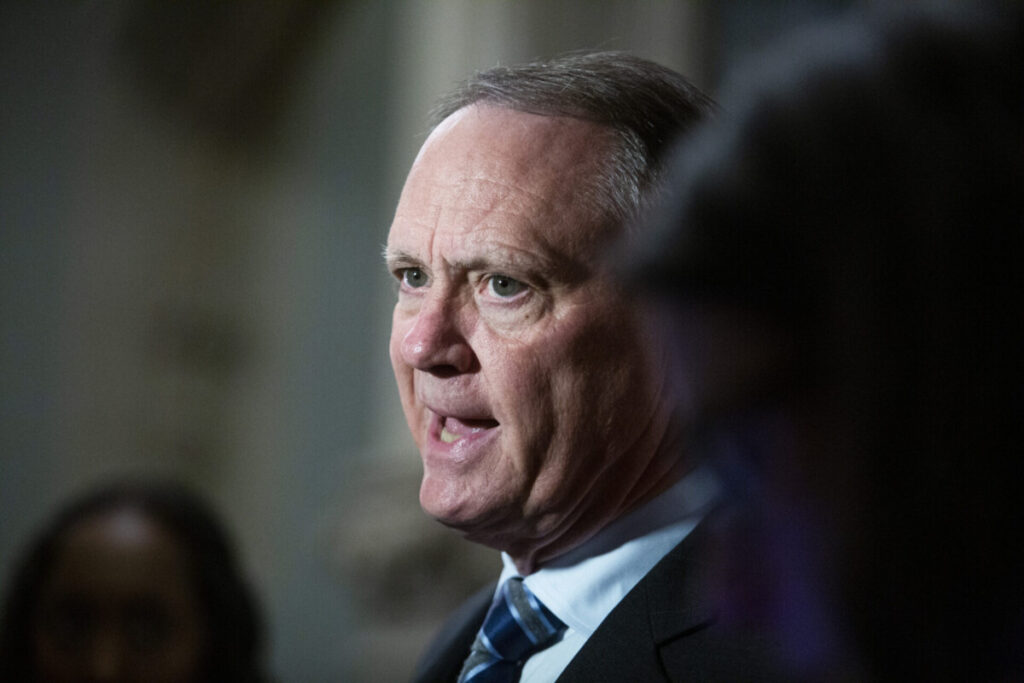 The Department of National Defence, led by Minister David McGuinty, announced last month that Canada would be cutting its contribution to three UN peacekeeping missions to ‘better align resources with evolving defence priorities.’ The Hill Times photograph by Andrew Meade
It would also put Canada 22nd among the 32 NATO member states for their contribution to UN peacekeeping—a drop from its position of 12th last April.
A spokesperson for Defence Minister David McGuinty (Ottawa South, Ont.) didn’t respond to The Hill Times’ questions before publication deadline.
In the press release announcing the changes, the Department of National Defence noted that the military is “rebalancing its global operational commitments to better align resources with evolving defence priorities in an increasingly complex security environment,” citing defending Canada, supporting the Euro-Atlantic, and fostering Indo-Pacific stability.
It also noted that it would be ending its commitment to the NATO-led peacekeeping mission in Kosovo by the end of the year, and reducing its presence in the non-UN peacekeeping mission on the Sinai Peninsula from around 40 members to approximately 10 by the end of this year.
“Approximately 50-60 CAF [Canadian Armed Forces] members currently assigned to these missions will be progressively reintegrated into higher-priority roles supporting operations at home and abroad,” the release noted.
Dorn said the Canadian government feels that the military is overstretched, but that he doesn’t believe it to be the case.
“We could definitely double or triple our size and not have any operational effect on any other areas of the world,” he said.
Dorn said one area that the mission closure will be felt the most is in the DRC, where a war has been ongoing for more than four years.
“There’s a huge need there,” he said.
A Canadian serves in a senior military role as the deputy chief of staff in that mission.
“It’s a very influential position, and we will lose impact in a key area of the world where there are major combat operations,” he said. “It’ll be much harder to get back into the positions once we withdraw from the mission because there’s competition for those missions.”
Dorn added that the Canadian Forces will lose regional and conflict expertise, as well as the knowledge of understanding how the United Nations works.
Canada headed in ‘wrong direction,’ says NDP
NDP MP Heather McPherson (Edmonton Strathcona, Alta.), her party’s foreign affairs critic, said the current moment is one where Canada should be strengthening the UN, and instead the country is doing the opposite.
She said Canada cutting its UN peacekeeping contribution will weaken its influence in the multilateral system.
“It limits what we can do, it limits our validity and our voice, but it also weakens the United Nations,” she said. “I think most Canadians [and] most people around the world see this moment in time as a moment where we should have a stronger United Nations—a stronger global body—working towards conflict resolution.”
“We’re headed in the wrong direction,” McPherson said.
The previous Liberal government of then-prime minister Justin Trudeau proclaimed a return to UN peacekeeping in the early years of his mandate, but that pledge was never fully delivered.
The last major peacekeeping deployment was to Mali in 2018 and 2019. But a promised 200-member quick-reaction force for the UN never materialized, nor did the promise of deploying up to 600 peacekeepers.
In the 2026-27 main estimates, the federal government proposed spending of $176-million for UN peacekeeping operations. That was down from $185-million in planned spending in 2025-26, and $184-million in actual spending in 2024-25. The planned spending for this fiscal year represents a 45-per-cent decrease compared to the actual spending of $323-million in 2015-16.
“There isn’t even the veneer that they’re trying now,” McPherson said.
“I certainly hope that this is something that can be reversed,” she said. “But we’ve seen nothing that indicates that is the case.”
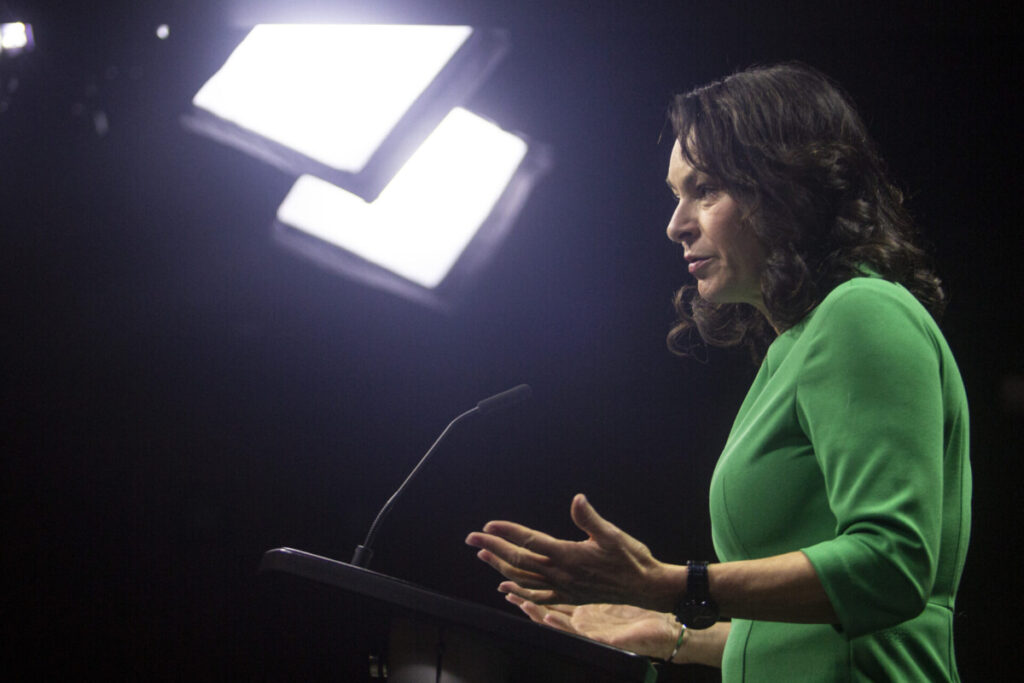 NDP foreign affairs critic Heather McPherson says Canada’s cuts to UN peacekeeping will limit its influence at the global body. The Hill Times photograph by Andrew Meade
She said that the government’s words have not been backed by action.
“Mark Carney has made it very clear. Despite all his overblown speeches on the international stage, speeches don’t mean anything if your actions don’t match your words,” she said.
The Canadian government has released a statement marking the International Day of United Nations Peacekeepers on May 29 every year since 2016, including last year when a series of ministers—including McGuinty and Foreign Affairs Minister Anita Anand (Oakville East, Ont.), among others—released a statement noting that “in a more dangerous and divided world, peacekeeping matters. Canada will continue to step up, working with allies to build peace, strengthen security, and protect human rights.”
No statement was released this year. Canada’s National Peacekeepers’ Day is on Aug. 9.
Ineffective missions, risk averseness behind draw down: retired general
Retired major-general Denis Thompson, who commanded the multinational force in the Sinai from 2014 to 2017, said the end of the missions is likely driven by a recognition that UN peacekeeping missions are ineffective, and that there is political risk aversion to committing troops.
He said UN missions have transitioned from deploying forces to create separation between two warring sides into operations that use all means to enforce peace, but they haven’t been given adequate resources to do so.
“It’s only enough to impose an absence of violence in the conflict rather than resolve all the underlying circumstances; that’s why these things trickle on for 10, 20, 30 years,” he said, adding that the protection of civilians role requires a large amount of resources as it asks the deployment to take on a counterinsurgency approach.
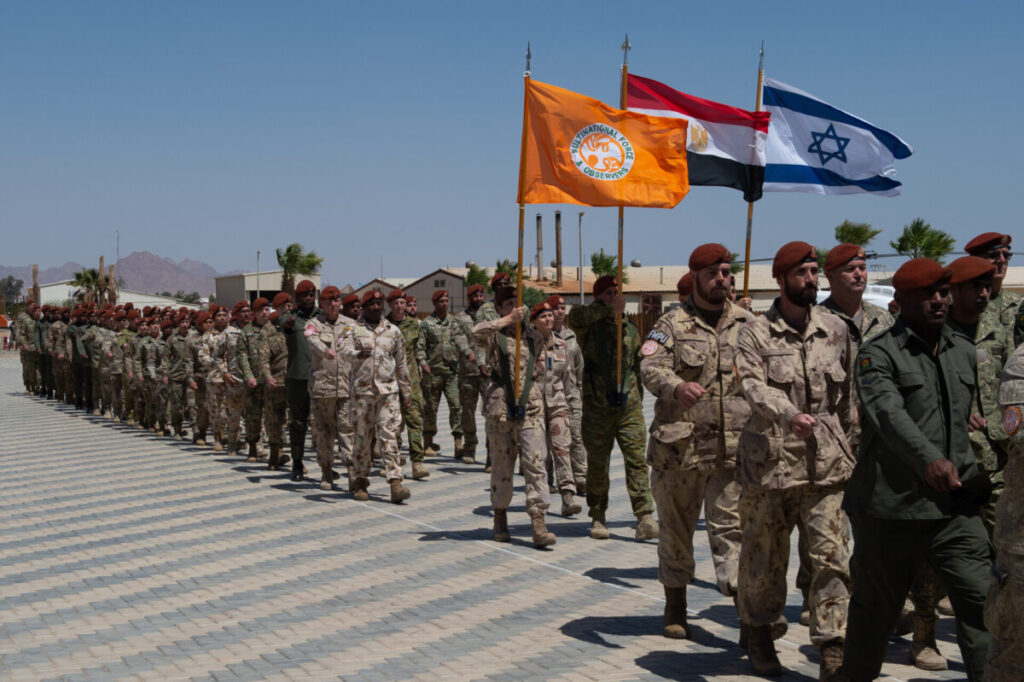 Canada is reducing its contribution to a non-U.S. peacekeeping mission in the Sinai Peninsula by about 75 per cent. Department of National Defence photograph by Sergeant Vincent Carbonneau
He said that other countries continuing to deploy a large contingent of peacekeepers with UN missions likely understand the operations are “suboptimal,” but they aren’t as risk averse as Canada.
“What’s going to happen is Canada is going to lose situational awareness of all these various conflicts for which it is advantageous to have eyes on the ground, and it also gives your senior officers … exposure to a multinational mission,” Thompson said.
He said that when he was on the ground in the Sinai, he had deep contacts with both the Israelis and Egyptians.
“You’d have to be blind not to be able to glean some intelligence,” he said.
Canada’s shrinking UN résumé
The UN Charter notes that when electing members to a temporary spot on the Security Council, “due regard” should be paid to a member state’s contribution to the “maintenance of international peace and security.”
Canada has lost its last two bids for a seat on the Security Council, including its last effort in 2020. Before those defeats, Canada had appeared on the council in every decade since its formation.
“We’ve always boasted about our peacekeeping contribution when we’ve successfully got into the Security Council in the past,” Dorn said.
“We just have much less to boast about. We have nothing to boast about—it’s shameful,” he said.
Royal Military College professor Adam Chapnick, an expert on Canada’s role at the Security Council, said Canada’s peacekeeping record wouldn’t be in question if the election isn’t contested.
“If we do what we should do, which is only run in uncontested elections, it’s going to be irrelevant how much we contribute or not,” he said, remarking that in a contested election, the record of Canada’s competitors would also matter.
Get Today’s Headlines Newsletter
Wake up to the day’s top political and policy headlines. Weekday Mornings.
By entering your email address you consent to receive email from The Hill Times containing news, analysis, updates and offers. You may unsubscribe at any time. See our privacy policy
Canada runs in the Western Europe and Others Group (WEOG) bloc for two rotating seats on the council. Canada only has to run a campaign if there are more WEOG members that advance candidacies than there are open seats.
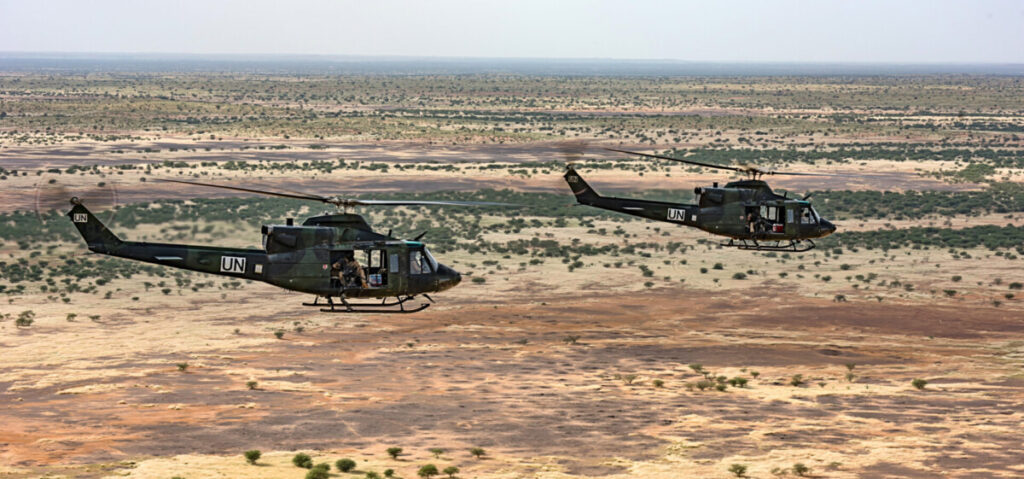 Canada’s last major deployment to UN peacekeeping was in 2018-2019 when it sent eight helicopters and around 250 troops to Mali. DND photograph by Corporal Ken Beliwicz
Chapnick said UN member nations will have a wide variety of views about Canada’s declining peacekeeping commitment, citing NATO and Indo-Pacific nations that could welcome this country doing more in their regions at the expense of UN activities.
He said that there may be elements of the UN bureaucracy that are naturally disappointed when a country that has historically done more is seen to be doing less.
“But the organization as a whole, its members are going to be quite divided on whether this is a good thing or bad thing depending on their own individual interests,” Chapnick said, remarking that because the UN lacks leverage to compel member states to contribute to peace operations, it will “forgive extraordinarily quickly” if Canada comes back.
“While there may be some disappointment, there won’t be a grudge of any sort,” he said.
nmoss@hilltimes.com
The Hill Times

Neil Moss covers federal politics, foreign policy, international trade, Canada-U.S. relations, and defence. He has been a reporter with The Hill Times since 2018. You can reach him at nmoss@hilltimes.com. See all stories BY NEIL MOSS