
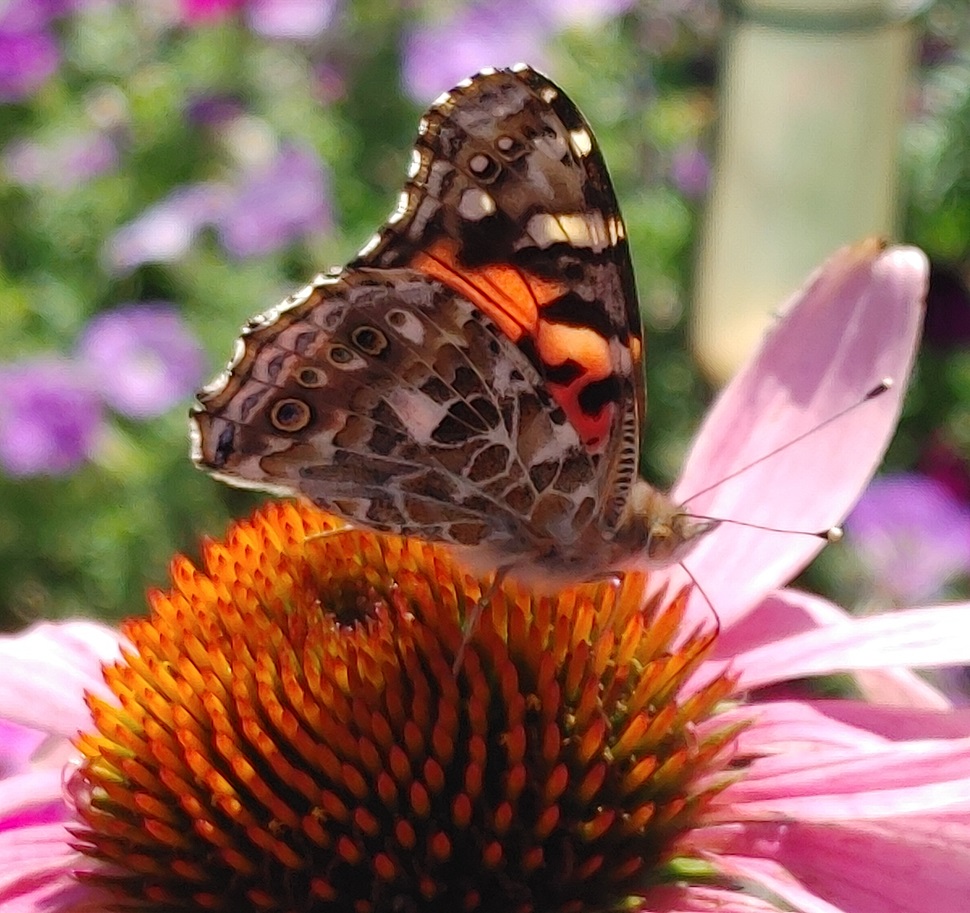
A visit to a butterfly sanctuary in Mexico inspired Unity resident Fanterra Fisher to create a thriving pollinator garden that attracts butterflies, bees, hummingbirds and other beneficial insects while encouraging others to take small steps to help the environment.
Fisher is a Butterflyway Ranger with the David Suzuki Foundation’s Butterflyway Project. Her pollinator garden is one of the few registered Butterflyway gardens in western Saskatchewan and serves as both a habitat for pollinators and an educational space for the community.
Related Stories:
Fisher said the idea came after noticing a dramatic decline in pollinators compared to what she remembered growing up.
“My inspiration was visiting both a botanical garden and butterfly sanctuary in Puerto Vallarta, Mexico,” Fisher explained. “It reminded me of all the bees and butterflies I would see drinking from puddles in our farmyard and feeding on our flowers in our flower gardens and on our fruit trees when I was growing up.”
“Unfortunately, in past years, I was no longer seeing those butterflies or bees I saw in my childhood.”
That realization motivated her to create a space dedicated to supporting pollinators.
“I decided to create my own pollinator sanctuary for the community to share and be educated as well,” she said. “My goal is to one day attract and create an endangered monarch butterfly breeding ground.”
A growing haven for pollinators
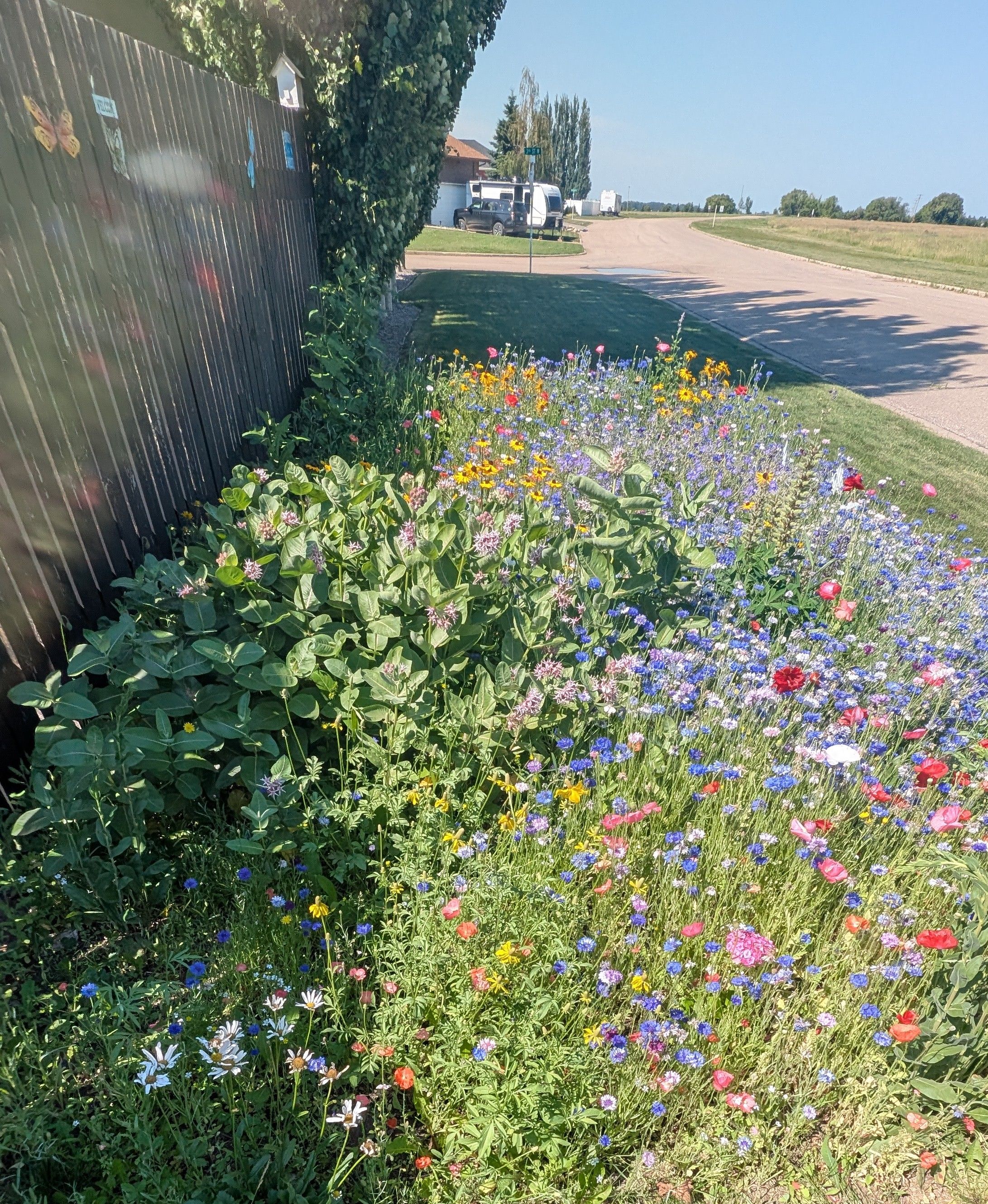
Since establishing the garden, Fisher has documented a surprising variety of species visiting her yard.
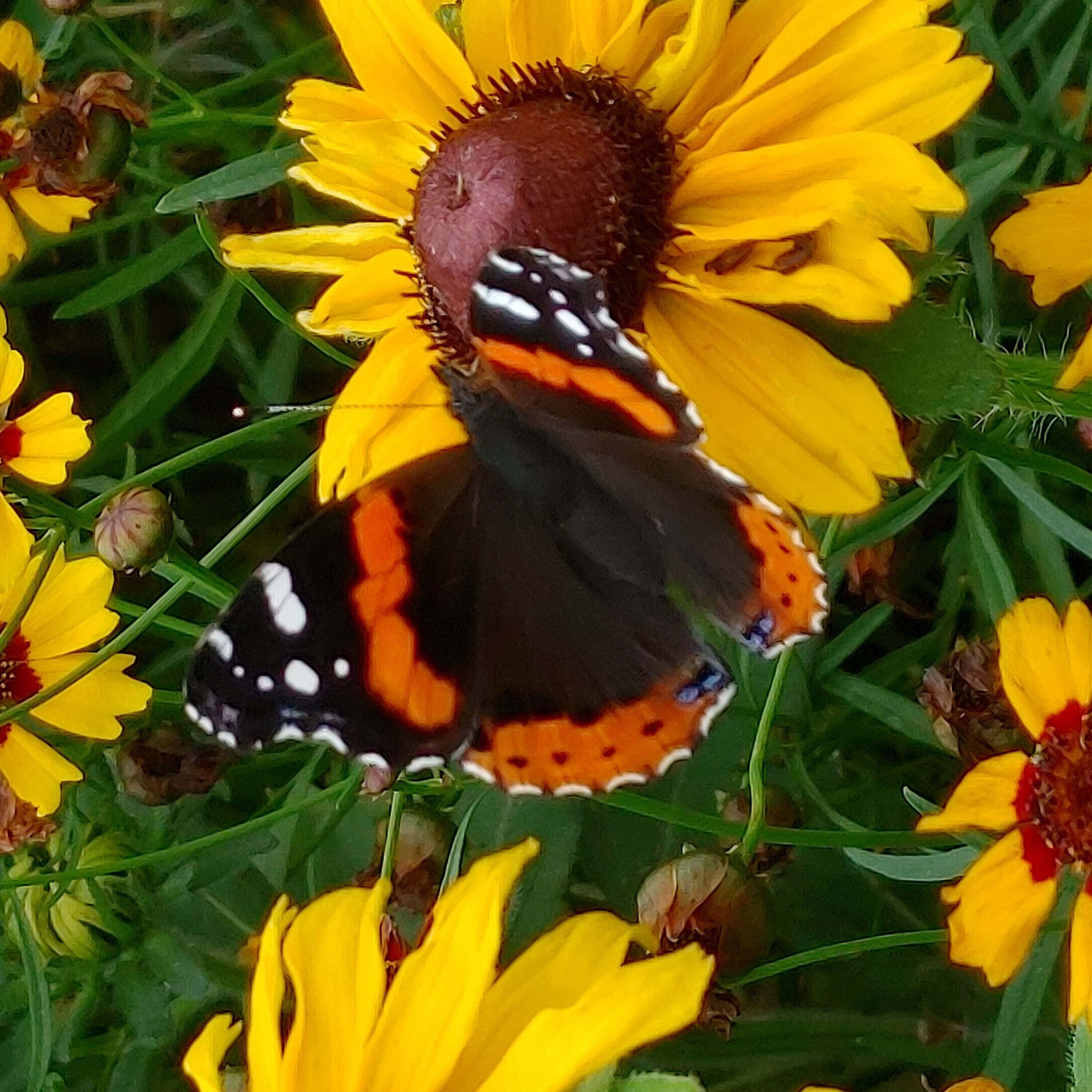
Among the butterflies she has identified are red admiral, white admiral, painted lady, tortoiseshell and dogface butterflies, along with wood nymph and Y moths. She has also observed numerous bee species, dragonflies, hummingbirds and a variety of caterpillars she had never seen before.
To accurately identify the insects and contribute to scientific knowledge, Fisher uses Google Lens alongside the iNaturalist app, where experts verify submitted observations.
“Maybe I will even provide useful research data with my findings,” she said.
Choosing plants that make a difference
The garden originally began with donated seeds and commercial wildflower mixes, producing flowers including lavender, lupins, coneflowers, cosmos, poppies, zinnias, bachelor’s buttons, brown-eyed Susans and Shasta daisies.
After researching pollinator needs and participating in educational webinars, Fisher shifted her focus toward Saskatchewan native wildflowers.
“The native wildflowers provide more food for the pollinators,” she explained. “While common flowers do attract these pollinators, wildflowers provide more food than regular flowers. So the pollinators don’t have to work so hard or travel so far for their food.”
She also noted that some pollinator species rely on very specific host plants to reproduce.
“Certain species of pollinators only lay their eggs exclusively on certain host plants. The most commonly known example of this is milkweed and monarch butterflies.”
To continue expanding the garden, Fisher has sourced native seed varieties from Saskatchewan-based Blazing Star Wildflower Seed Company in Aberdeen and the Ecoseed Bank in Montreal.
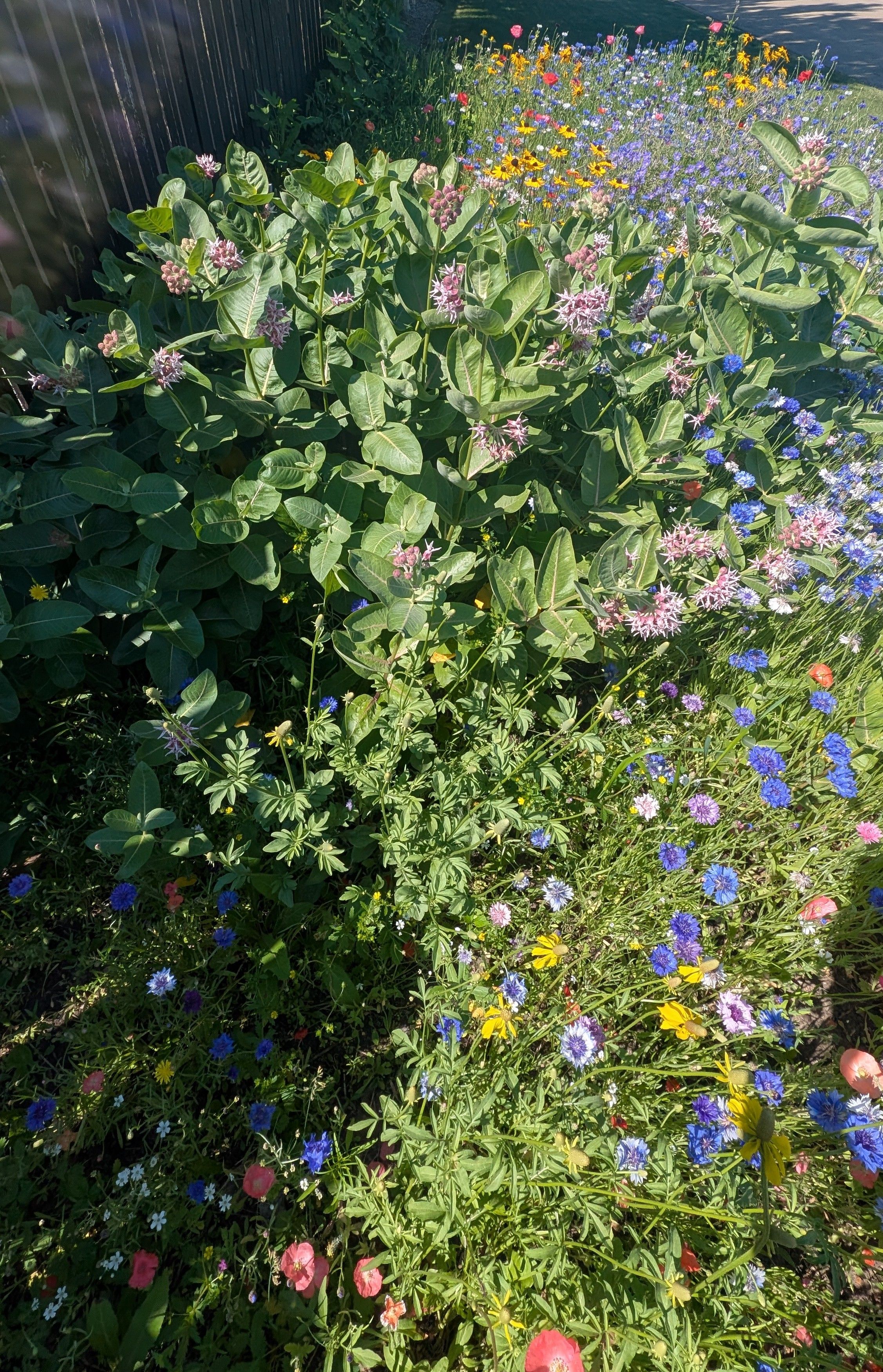
Her expanding collection includes Showy and Swamp Milkweed, Rocky Mountain bee plant, harebell, bergamot, prairie coneflowers, giant hyssop, asters, goldenrod and numerous other native flowering plants.
Creating a complete pollinator habitat
Fisher’s efforts extend beyond planting flowers.
She composts kitchen waste throughout the year to enrich the soil while reducing household garbage, collects rainwater in barrels for irrigation and has built watering stations specifically designed for pollinators.
The shallow water stations use rocks that allow insects to safely drink without drowning.
She has also added tree stumps with drilled holes to provide shelter for beneficial insects while creating habitat for organisms that help break down compost.
“Everything is connected,” Fisher said.
Supporting gardens through pollination
While the colourful flowers attract visitors, Fisher said pollinator gardens also provide practical benefits for home gardeners.
“Another benefit to my garden is that all of our vegetable gardens and fruit trees get the required pollination,” she said.
She explained that inadequate pollination can result in poor fruit production and deformed vegetables.
“When the seeds are fertilized the fruit grows and enlarges. Twisted or deformed squash or cucumbers are the result of insufficient pollination.”
She added that many vegetable blossoms remain open for only a short period before dropping if they are not successfully pollinated.
“You need pollinators to grow a successful garden.”
Small actions can create lasting change
Beyond pollinator conservation, Fisher encourages residents to think about everyday choices that reduce waste and support the environment.
Her household composts fruit and vegetable scraps, coffee grounds, tea bags, eggshells and many other organic materials while recycling paper products and collecting rainwater.
She also advocates for recycling plastics, metals, batteries, used oil and other materials through organizations such as SARCAN and the Saskatchewan Waste Reduction Council, while encouraging reusable shopping bags, water bottles and coffee cups.
Fisher has also participated in shoreline and park cleanups and hopes more businesses may consider composting initiatives for produce and coffee waste.
She believes even the smallest individual efforts can have a ripple effect throughout a community.
“Even a small pollinator garden can be enjoyable and beneficial to your yard,” she said. “Imagine if a few people in our town, or even on your block plant a pollinator garden. One person’s actions do make a difference because they may inspire someone else. That is my hope from my own actions.”
Encouraging others to plant for pollinators
Fisher hopes more residents will consider adding pollinator-friendly plants to their yards, particularly native milkweed species that provide critical habitat for Monarch butterflies.
She encourages gardeners to include both Showy Milkweed (Asclepias speciosa) and Swamp Milkweed (Asclepias incarnata) whenever possible.
“All of these little actions can add up to a lot of change,” Fisher said. “In what ways in your home, backyard and community can you think of that will make a difference? Try and make those changes in your life and try to inspire others to make those changes as well. Broaden your thinking and let’s all make this earth, our world a better place.”