
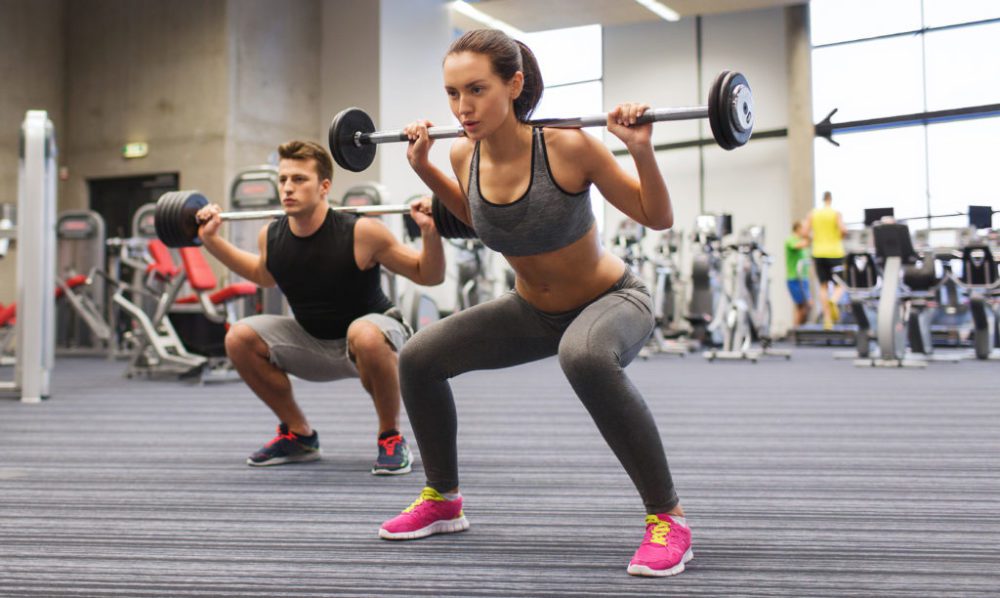
Strength training is an important part of any runner’s routine because of the repetitive impact on the body. When time is limited, it pays to focus on the muscle groups that will have the greatest benefit for both performance and injury prevention. The glutes, calves and hamstrings all play a key role in helping runners move more efficiently, generate power and stay healthy throughout a training block.
Most runners have experimented with different strength training programs, whether to prevent injury, recover from one or simply get faster. One of the biggest challenges is finding time to fit in strength work within an already busy schedule.
Not as complicated as you think
There is no shortage of opinions online about the best way to strength train for running performance and injury prevention. According to chiropractor and marathoner Jared Sison of Peak Health and Performance Calgary, the process is often made more complicated than it needs to be.
“People tend to overcomplicate running arguments around heel striking, shoe stack height and everything else,” Sison told Canadian Running. “Honestly, it’s not too complex in my opinion; ultimately, what you need is leg strength, period.”
While certain muscle groups deserve extra attention, Sison says consistency matters more than finding the perfect exercise, and that “the best exercises are the ones you’ll actually do.”
Even with a busy running schedule, Sison recommends carving out just 20 to 30 minutes twice a week for strength training. That small investment can improve running efficiency and help the body better tolerate the demands of your mileage.
What to focus on
While consistency should come first, some muscles deserve more attention than others.
Sison says every part of the glutes contributes to performance, with the gluteus maximus and gluteus medius playing especially important roles. The gluteus maximus is the primary driver of hip extension and forward propulsion, helping generate power in your stride. The gluteus medius provides pelvic stability, keeping runners balanced and helping prevent excessive hip drop, which can reduce efficiency.

The hamstrings work alongside the glutes to assist with hip extension and help stabilize the leg during your stride. Though if there is one muscle group Sison believes runners should prioritize, it is the calves.
“Calves are definitely the MVP in my opinion,” Sison said, “because they help a lot with being able to store energy so that you can take your next step and propel forward. It is also one of the body’s main shock absorbers; with every step, you’re loading the calf a lot and strength training helps your body handle those landing forces.”
What are you missing?
Finding exercises for the glutes, hamstrings and calves is not difficult. From social media to Canadian Running, there are countless strength-training routines available, but Sison says one important muscle is often overlooked: the soleus.
“The soleus is between your upper calf muscle and the Achilles, and it’s what absorbs a ton of force while running,” Sison said. “Training it is also really easy and only requires small angle changes to popular exercises, such as calf raises.”
3 niche lower-leg exercises every runner should do
With every stride, the calves absorb forces of roughly two to three times your body weight, and the soleus handles much of that load. Giving it the attention it deserves can improve resilience, reduce injury risk and help runners continue training consistently. Even a pair of 20- to 30-minute strength sessions each week can make a meaningful difference.