

Listen to this article
Estimated 3 minutes
The audio version of this article is generated by AI-based technology. Mispronunciations can occur. We are working with our partners to continually review and improve the results.
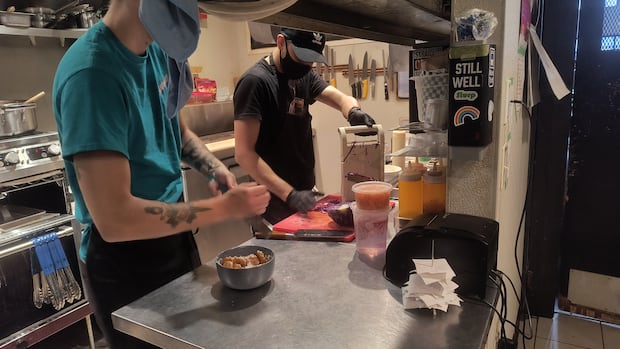
The grill is sizzling, the deep fryer is bubbling away, and the cooks are sending out orders almost as fast as they come in.
Chef Joe Martin inspects a lobster roll that’s about to be served.
“Just a little less time on that bun next time, yeah?” he says in a calm tone.
It’s a busy Friday night at Bar Stillwell in downtown Halifax, yet the atmosphere in the kitchen is relaxed — no chefs berating staff like what’s often seen on Hell’s Kitchen, the hit American reality TV cooking competition show.
This is by design. Some chefs in Halifax are trying to change how kitchens work.
Martin has been the chef at Bar Stillwell for around eight years. He remembers working his way up in restaurants with tougher environments, and wanted to do something different when he finally held the reins.
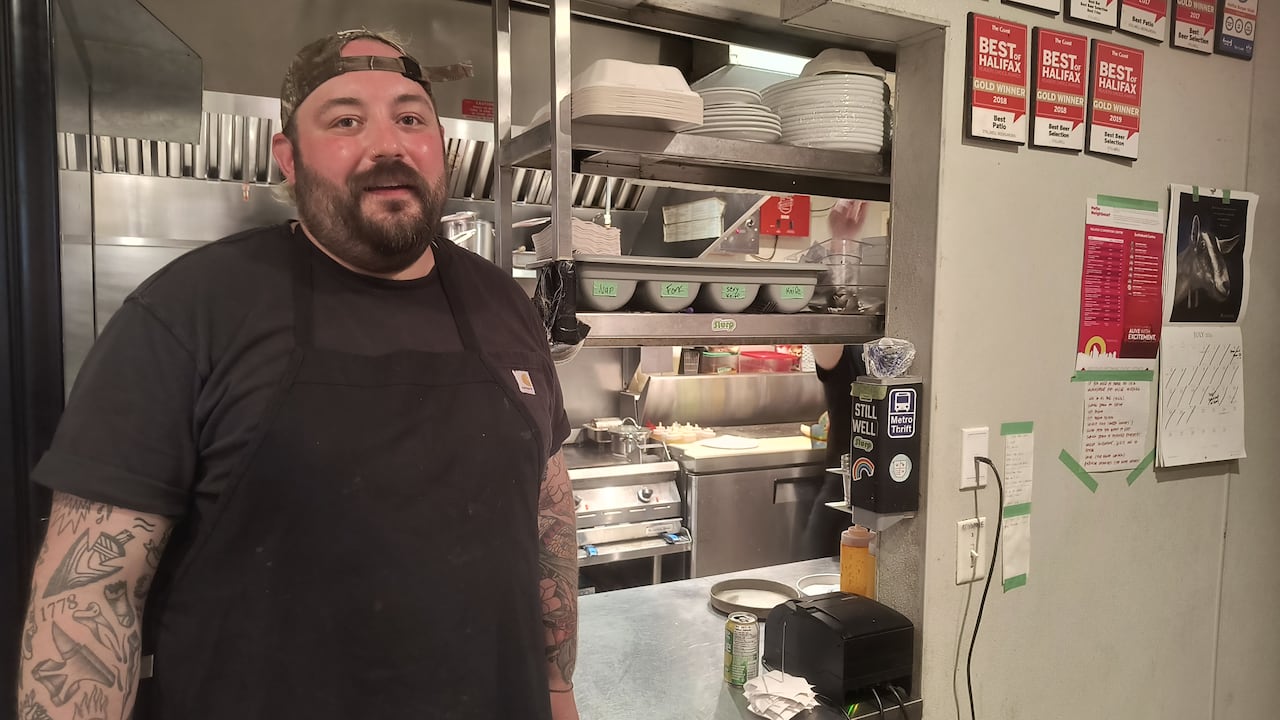 Chef Joe Martin says the industry is moving away from the angry chef image. (Colin North/CBC)
“Our kitchen is a no-shouting kitchen,” he says. “If you’ve got something to say, take a minute and think about it. But there’s no reason to [yell].”
There’s an air of levity in the small space with a busy blacktop grill and a churning dishwasher. The cooks crack jokes and listen to music while working on a half-dozen orders simultaneously.
Martin says behaviour is just one aspect that’s changed in the culinary world — he’s also seeing more diversity in the kitchen.
Several restaurants in Halifax are led by women, a change from the traditionally male-dominated space.
Chef Moira Murray runs the kitchen for The Ostrich Club. She’s been in the industry for nearly 20 years, having worked stints in Toronto, New York and British Columbia. At nearly every restaurant, she was the only female cook.
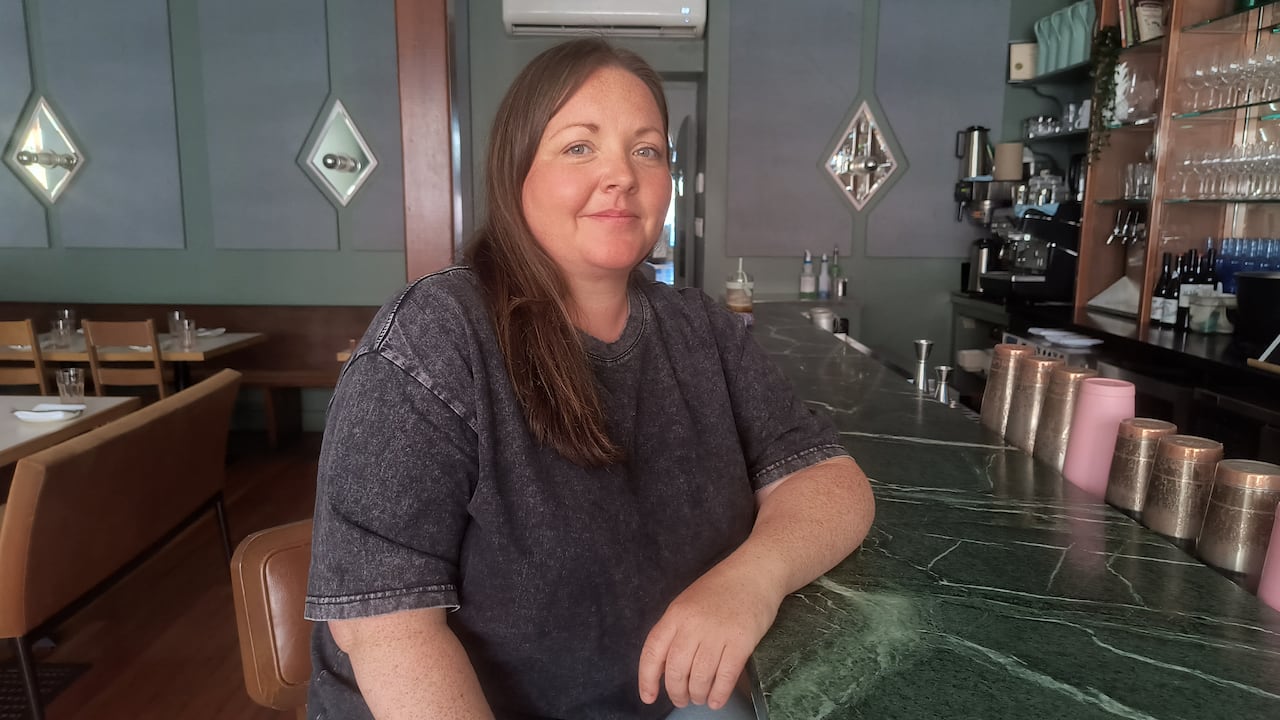 Chef Moira Murray has worked at several upscale restaurants. She says it’s important to be firm on quality standards without being toxic. (Colin North/CBC)
She remembers the feelings of isolation: laughing at jokes that she didn’t find funny, and the fear of putting her foot down to make a stance and being viewed as “the bad guy” in the room.
“I just thought ‘kitchens are hard, this is just what it is,’” Murray says. “I didn’t consider it might be harder because of my gender.”
After working in Michelin-starred restaurants and appearing on Top Chef Canada, Murray says it was a dream come true to come home to Halifax.
She teaches young cooks to hit high standards by being firm but fair. In turn, she’s learning from the next generation about how kitchen environments can still improve on the mental health side.
“You know, the culture is changing, the people within it are changing,” she says. “I see a lot of young chefs telling me moves they’re making in their lives early [on] to make sure that they have a long career.”
Back at Bar Stillwell, a smash burger is ready to be served. Martin points out how much work goes into that simple item, from locally sourced ground beef and cheese to homemade mayonnaise with local eggs.
It’s indicative of a larger community beyond just the kitchen, where countless people are engaging in their life’s work to make that one dish happen.
“It’s all the hours and weeks and months of work to raise everything, all for this plate,” says Martin. “It’s pretty cool to be a cog in the wheel.”
MORE TOP STORIES