
Tue 11 Aug 2026 at 4:20pmTue 11 Aug 2026 at 4:20pm
That’s a wrap on the governor

And that’s it for Michele Bullock’s press conference.
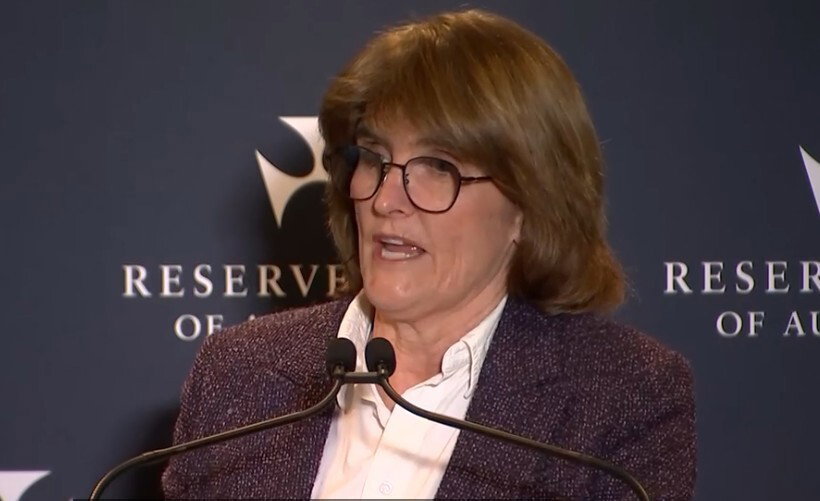 Michele Bullock (ABC News Channel)
It was actually a pretty long one. Or at least it felt long! Plenty more to unpick, which we’ll be doing through the afternoon, so stick with us.
Tue 11 Aug 2026 at 4:15pmTue 11 Aug 2026 at 4:15pm
Bullock has a ‘reverse mentor’ for AI
Michele Bullock says the RBA is at “early stages” of using AI within the central bank.
She says its in-house tool is “of great use” to staff but describes herself as “not great with it”.
“I am trying. I have a reverse mentor who’s helping me and I am using it for some things, to help me organise my day – and it’s sometimes handy to give me some questions from journalists,” she says, which gets a laugh from the room.
“We’re looking at ways we can use it, both in terms of policy – how do we use it to relieve people of jobs in analysis that might be sort of mundane and get them to focus on the important stuff, the value-add.
“We’re looking at ways to simplify processes in the organisation.
“But we’re not out at the bleeding edge on this sort of thing. We’re a conservative central bank.”
Tue 11 Aug 2026 at 4:11pmTue 11 Aug 2026 at 4:11pm
At what level of unemployment does the RBA start to worry?
The RBA has a dual mandate — to keep inflation low and stable, and ensure as many people have jobs as possible.
As Ms Bullock referenced in some of her earlier answers, it makes for an uncomfortable situation, when in order for inflation to return to its target, the RBA forecasts unemployment needs to rise.
“I don’t like people losing their jobs generally. It’s stressful for them, it’s stressful for their families,” she said.
Ms Bullock said the RBA’s current forecasts, which have the unemployment rate rising to 4.8% by June 2028, isn’t a situation of “masses” of people losing their jobs.
“Employment is still growing. But it just means that there are possibly less jobs available, it’s taking longer for people to find work and that sort of thing,” she said.
“We have [the unemployment forecast] rising because there’s tightness in the labour market and it’s contributing a bit to inflationary pressures. We’re trying to make sure we don’t have it rise more than it has to.”
Tue 11 Aug 2026 at 3:38pmTue 11 Aug 2026 at 3:38pm
RBA board not ruling out need for further rate rises
Michele Bullock says the August decision to keep the cash rate on hold shouldn’t be taken to mean the RBA is necessarily done with rate hikes.
“I think the message today is that in waiting, the board isn’t ruling out there may be a need for further interest rate rises,” the governor says, noting that a situation where more hikes are needed might be if inflation is tracking well above its forecasts.
“We’re not ruling that out. But we’re saying we want to get a bit more information to confirm whether or not we still seem to be on that path.”
Tue 11 Aug 2026 at 3:25pmTue 11 Aug 2026 at 3:25pm
RBA hold provides stability, but economic outlook for small businesses still ‘tricky’
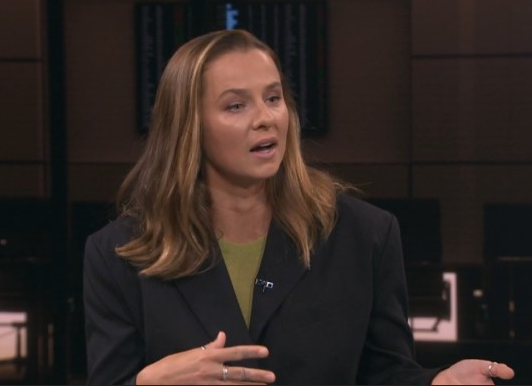
The RBA’s decision to hold the official cash rate at 4.35% has been welcomed by small businesses, but economists say there is still a long road ahead.
Economist for small business accounting platform Xero Louise Southall says small business owners were already feeling the pinch on their bottom line from previous rate hikes this year.
“Holding the interest rate won’t stop expectations of further economic slowing, but it may provide some stability to consumer spending and business confidence, as households and businesses aren’t facing another immediate increase in borrowing costs,” she says.
Right now, Ms Southall says it’s a “tricky period” for small business, with higher operation and fuel costs.
Xero’s Small Business Insights data shows sales growth dipped to 6.5% year-on-year in the June quarter, down from 7.9% in the March quarter. Sales also grew less in May (4.0%) and June (4.8%).
“This slowdown shows that recent cash rate increases are contributing to softer consumer demand, but inflation remains stubbornly elevated,” says Ms Southall.
“Until inflation meaningfully responds to the rate hikes, and fuel prices ease, owners need to continue to closely manage and anticipate any cash flow pinch points in the months ahead.”
Tue 11 Aug 2026 at 3:23pmTue 11 Aug 2026 at 3:23pm
How have interest rates been tracking?
This is the second consecutive meeting of the RBA keeping the cash rate unchanged, after three hikes earlier in 2026.
Here is a graph showing how it has tracked to get here:
Despite this month’s decision, economists warn that underlying inflation is still too high, with some saying that they expect interest rates to have to rise again, at some point, to squeeze inflation out of the economy.
Following today’s decision, the cash rate target will remain at 4.35% for the next seven weeks, until the RBA board’s next meeting in late September.
Business reporter Gareth Hutchens has more:
Tue 11 Aug 2026 at 3:15pmTue 11 Aug 2026 at 3:15pm
RBA governor Michele Bullock to speak at 3:30pm
Your business correspondent David Taylor is first on the scene … of a press conference not due to start for another 15 minutes or so.
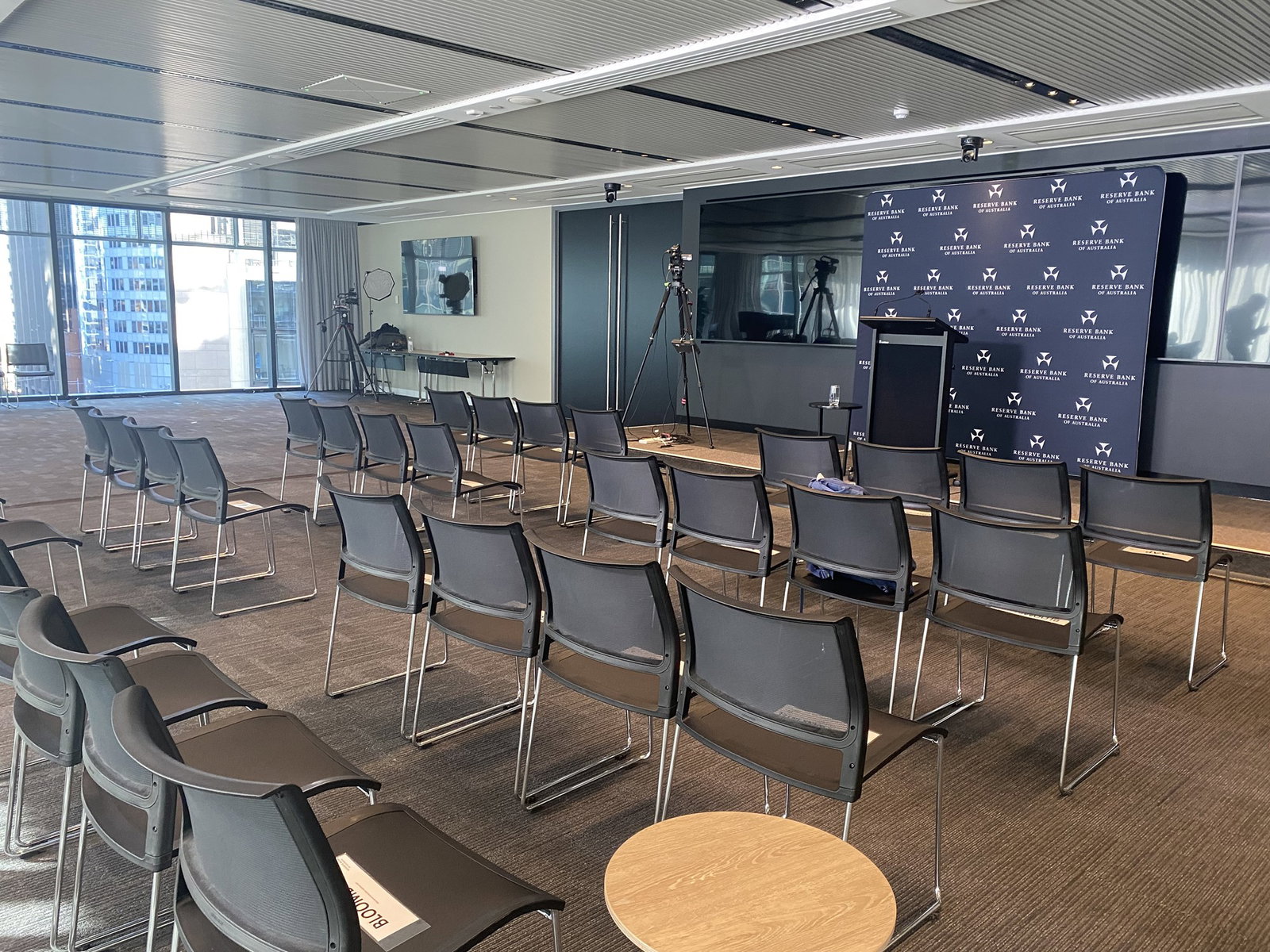 Plenty of seats at the RBA presser (ABC News: David Taylor)
The RBA governor is due to front media in her regular-post meeting appearance very shortly, so stick around for live coverage here on the blog and on ABC News Channel.
And given he has the pick of the bunch, to find out — which seat will DT choose?
Tue 11 Aug 2026 at 3:05pmTue 11 Aug 2026 at 3:05pm
Housing price falls to help inflation fight: economist
KPMG Australia chief economist Brendan Rynne joined finance presenter Alicia Barry on ABC News Channel as the interest rate decision came through.
She asked him whether the recent downturn in housing prices will help reduce inflation pressure.
“It certainly going to help, because there an idea of the wealth effect — as we feel like our house are starting to decline that we feel less wealthy and consume less,” he said.
“There’s never been more Australians employed than we have at the moment.
“It’s that momentum of people being employed and having large amount of money within their pocket to spend, notwithstanding the fact that were still having these cost of living challenges, but that momentum of spending in the household sector is continuing to drive relatively strong [economic growth].”
Tue 11 Aug 2026 at 2:59pmTue 11 Aug 2026 at 2:59pm
Mortgage repayments, debt burden on households near peak — analysis
You may feel like you’re being gouged by your bank but, if you’ve shopped around and are on a reasonably competitive rate, then chances are you’re getting a pretty good deal.
“Spreads between lending rates and the cash rate also remain low by historical standards, reflecting low risk premia, favourable funding conditions and strong competition in lending markets,” the RBA observed.
In plain English, this means the banks are not charging as much interest on mortgages above their cost of funding as they used to — bad for bank profits, good for borrowers.
Despite this relatively smaller cut going to the banks, the RBA noted that scheduled mortgage repayments relative to household disposable income have increased to be close to their 2024 peak.
Including consumer credit repayments, Australian households are spending around 12 per cent of their disposable income servicing debt. That overall number includes the millions of households that have little or no debt.
As in 2024, this is now approaching the overall debt payment burden households faced just before the global financial crisis in 2008, when the RBA’s cash rate was 7.25 per cent, but mortgage debts were generally much smaller.
However, the RBA noted that the previous period of low interest rates had seen most mortgage borrowers stash extra cash into their offset accounts or get ahead on their loan and build large redraw buffers, with the typical borrower now having the buffer of around a year’s worth of scheduled repayments in these savings.
Tue 11 Aug 2026 at 2:47pmTue 11 Aug 2026 at 2:47pm
AI boost outweighs Middle East hit to trading partners: RBA
Returning to the RBA board’s statement, released after its decision to keep the cash rate on hold, there’s a reference to artificial intelligence and the economic impact.
After detailing the “heightened uncertainties” due to the Middle East conflict, and the likely continued upward pressure on global energy prices and inflation, the RBA board noted that there has been a tempering factor:
“So far, growth in Australia’s major trading partners has been stronger than expected, as the boost from AI-related investment has outweighed the adverse effects of the Middle East conflict,” the statement read.
“In Australia, historically weak productivity growth continues to constrain potential growth.”