
Then came the 1960 Italian Grand Prix, which the British F1 teams boycotted, citing the fragility of their cars and the dangers of Monza’s banking. The organisers were anxious to encourage locals to find ways to enter the race and bolster the field, and so it was that Drogo surprised the F1 glitterati by starting and finishing a world championship-status F1 grand prix. Better still, he brought his Scuderia Colonia Cooper T43 home in eighth place, albeit five laps behind Phil Hill’s winning Ferrari 246 F1. Perhaps that was enough for him — for at the close of that 1960 season, still only 34 years old, he put away his helmet for good.
Unlike so many drivers of the time, he was neither killed, forced into retirement by injury, nor driven to it by disappointment. Instead he recognised his limitations, he raced where he had always dreamed of racing, then, having done so, he followed a route dictated by what he had now come to realise his greatest legacy might be. Together with Lino Marchesini and Celso Cavalieri, in November 1960 he established Carrozzeria Sports Cars of Modena, a workshop dedicated to producing exquisitely crafted, lightweight, aluminium bodies for sports cars and race cars, above all Ferraris. Sheets of aluminium were meticulously coaxed into compound curves by Drogo and his fellow craftsmen, whose hammers struck not with brute force but with care and precision, every panel shaped intuitively by eye, touch, and a desire to produce automotive beauty.
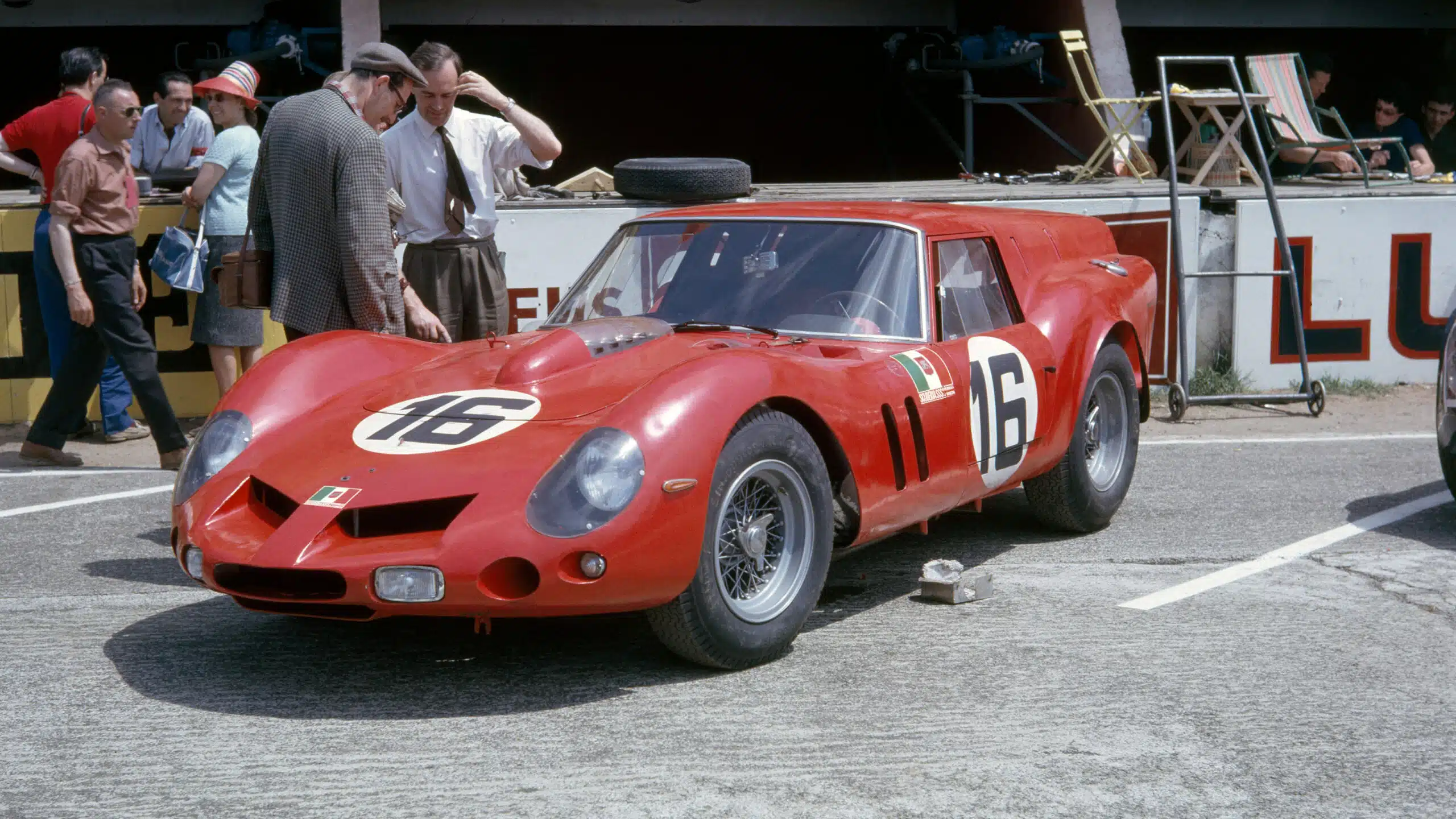
Aerodynamically enhanced ‘Breadvan’ was running ahead of Ferrari’s 250 GTOs at Le Mans in 1962, before it retired with a broken propshaft
Klemantaski Collection/Getty Images
No single creation better illustrates that intuition than the Ferrari 250GT SWB ‘Breadvan’ of 1962. Originally it was an act of rebellion, conceived when Count Giovanni Volpi’s Scuderia Serenissima found itself denied Ferrari factory support and Volpi’s design engineer Giotto Bizzarrini responded with delicious ingenuity. Using the magnificent 250GT SWB as his foundation, he reimagined the car aerodynamically, after which Drogo’s craftsmen translated a bold theory into a shimmering reality. The result was shocking when first revealed, and perhaps it still looks that way today. Its elongated roofline continued rearwards almost horizontally before ending abruptly in a chopped-off Kamm tail, giving rise to the irreverent nickname by which it is remembered, although I would be surprised if anyone has ever used one to deliver bread.
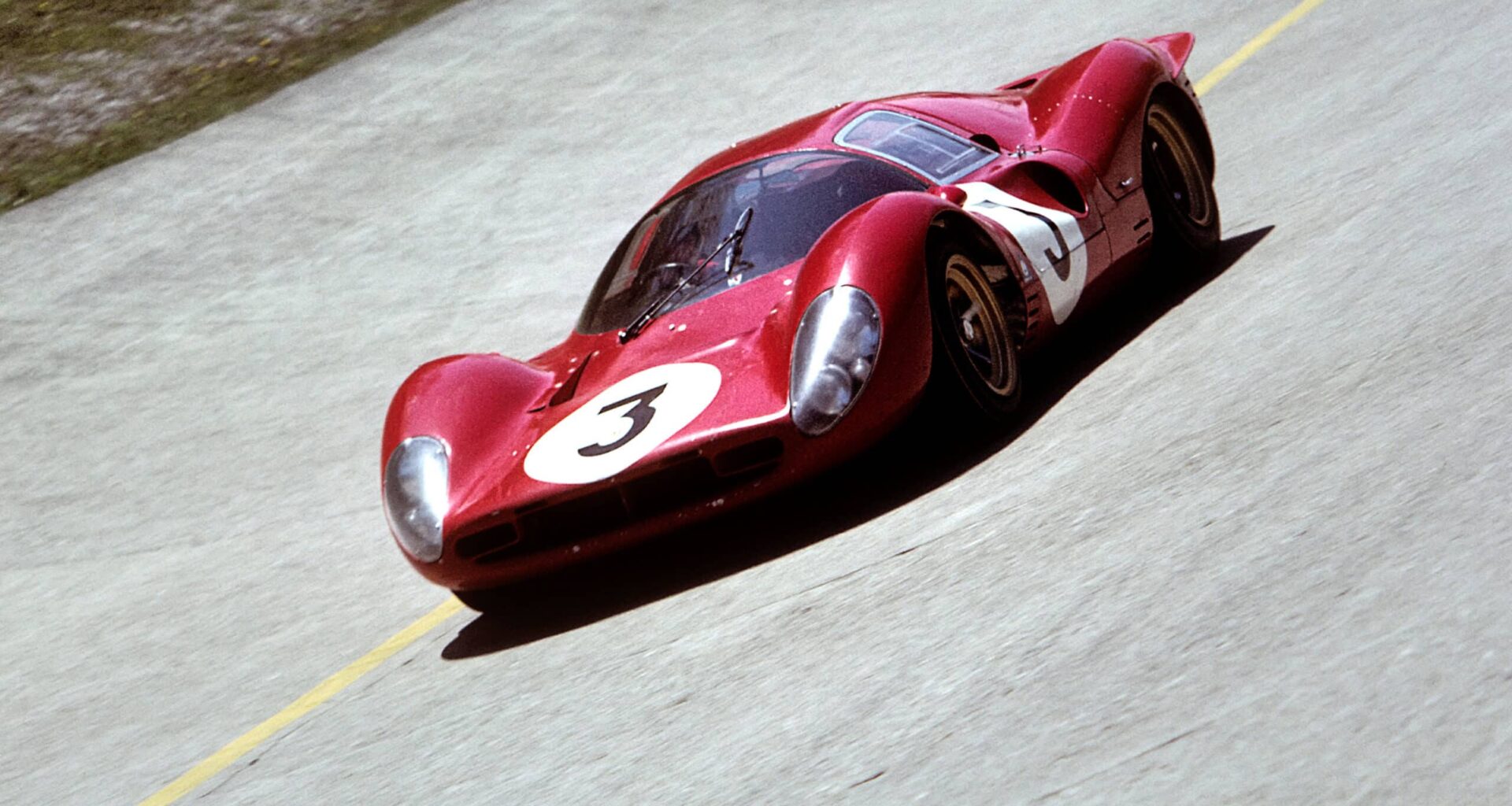
If the Breadvan demonstrated that Drogo and his craftsmen could give visual form to aerodynamic innovation, the sports prototypes that followed revealed an atelier capable of clothing mechanical perfection in shapes that have never ceased to quicken the pulse. Among the most gorgeous was the Ferrari 330 P3, unveiled in 1966, a car that seemed to belong not merely to the future but to an aesthetic ideal that motor sport has spent the subsequent decades trying and largely failing to recapture. It sat impossibly low, its every line flowing with liquid inevitability from pointed nose to tapered tail. Nothing about it appeared superfluous. Its voluptuous wheel arches rose like tensed muscles beneath taut skin, while its delicately curved cockpit canopy gave the impression that the driver was sitting within a drop of mercury. Beneath those unforgettable forms lay a sophisticated tubular chassis, independent suspension, and Ferrari’s glorious 3967cc V12 engine, whose mechanical aria combined cultured refinement with thunderous urgency.
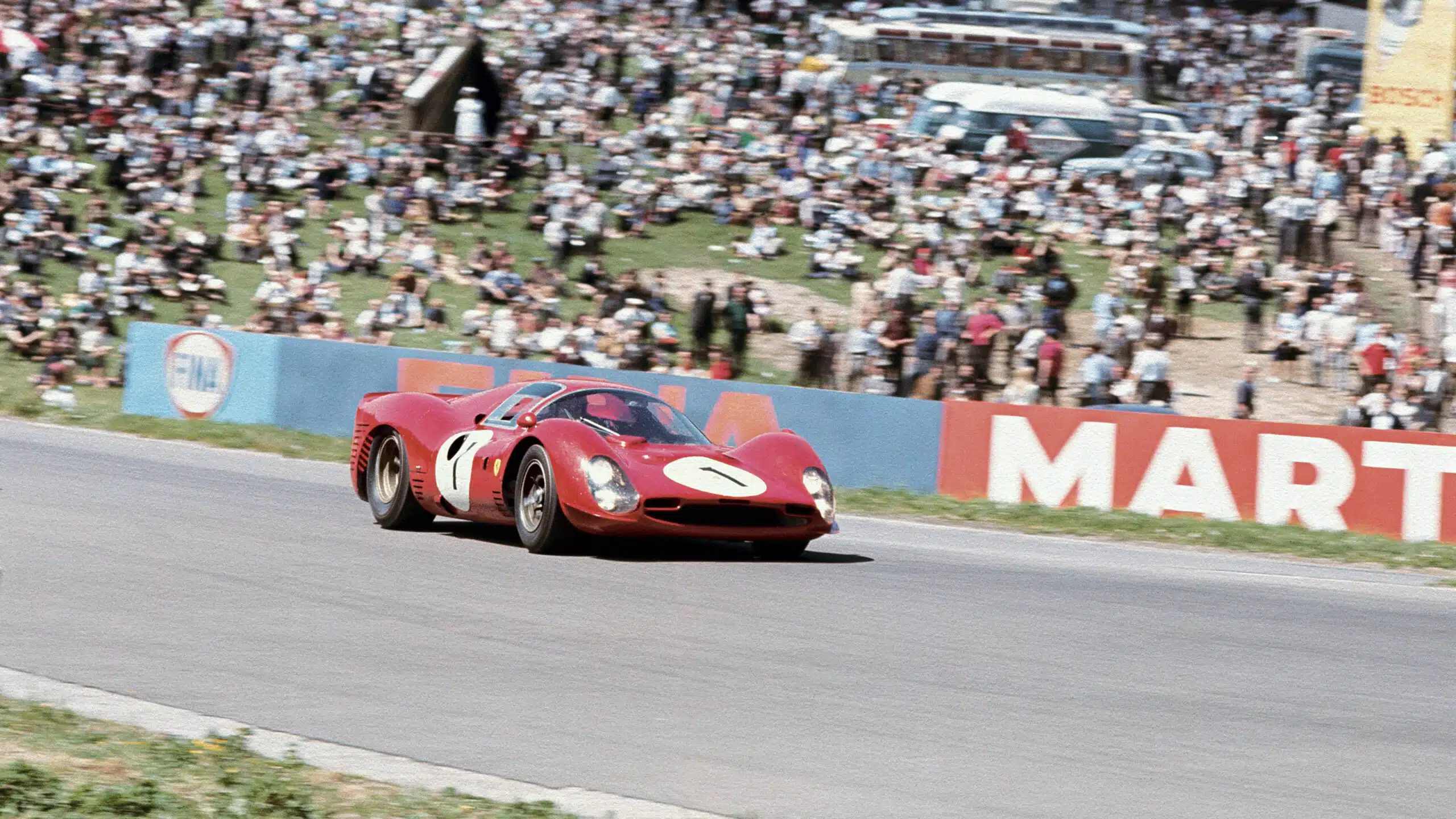
Stunningly successful: Michael Parkes and Ludovico Scarfiotti won the 1966 Spa 1000Kms in a Ferrari 330 P3
LAT
If the 1966 Ferrari 330 P3 represented the opening movement, the Ferrari 330 P4 of 1967 was the symphony completed. To many eyes — and it is difficult to argue otherwise — it remains the most beautiful racing sports car ever constructed. Beauty, of course, is a dangerously subjective concept, yet there are occasions when consensus becomes so overwhelming that subjectivity begins to resemble fact. The P4 was as curvy as the P3, its every intake elegantly incorporated rather than artificially added, while its broad tail was simultaneously delicate and purposeful. Its V12, revamped by Franco Rocchi, was more powerful and even more tuneful than the version that had powered the P3. In the hands of Lorenzo Bandini and Chris Amon the P4 won the 1967 Daytona 24 Hours, and two months later the same two drivers drove it to victory in the Monza 1000km.
Drogo’s artistry was not confined exclusively to Maranello. The Iso Grifo A3/C, emerging from a fertile collaboration between Giotto Bizzarrini, Giorgetto Giugiaro, and Iso founder Renzo Rivolta, was an altogether different kind of beast, yet it too bore the unmistakable fingerprints of Carrozzeria Sports Cars, for again it was constructed by Drogo and his merry men. Closely related, yet somehow even more special to my eyes, was the Iso Bizzarrini GT5300, also a Drogo project, and if you have seen and heard one racing in the TT at the Goodwood Revival, as I have, you will probably love it every bit as much as I do. Sometimes you just cannot beat the combination of elegant Italian coachwork and a guttural small-block Chevy V8.