
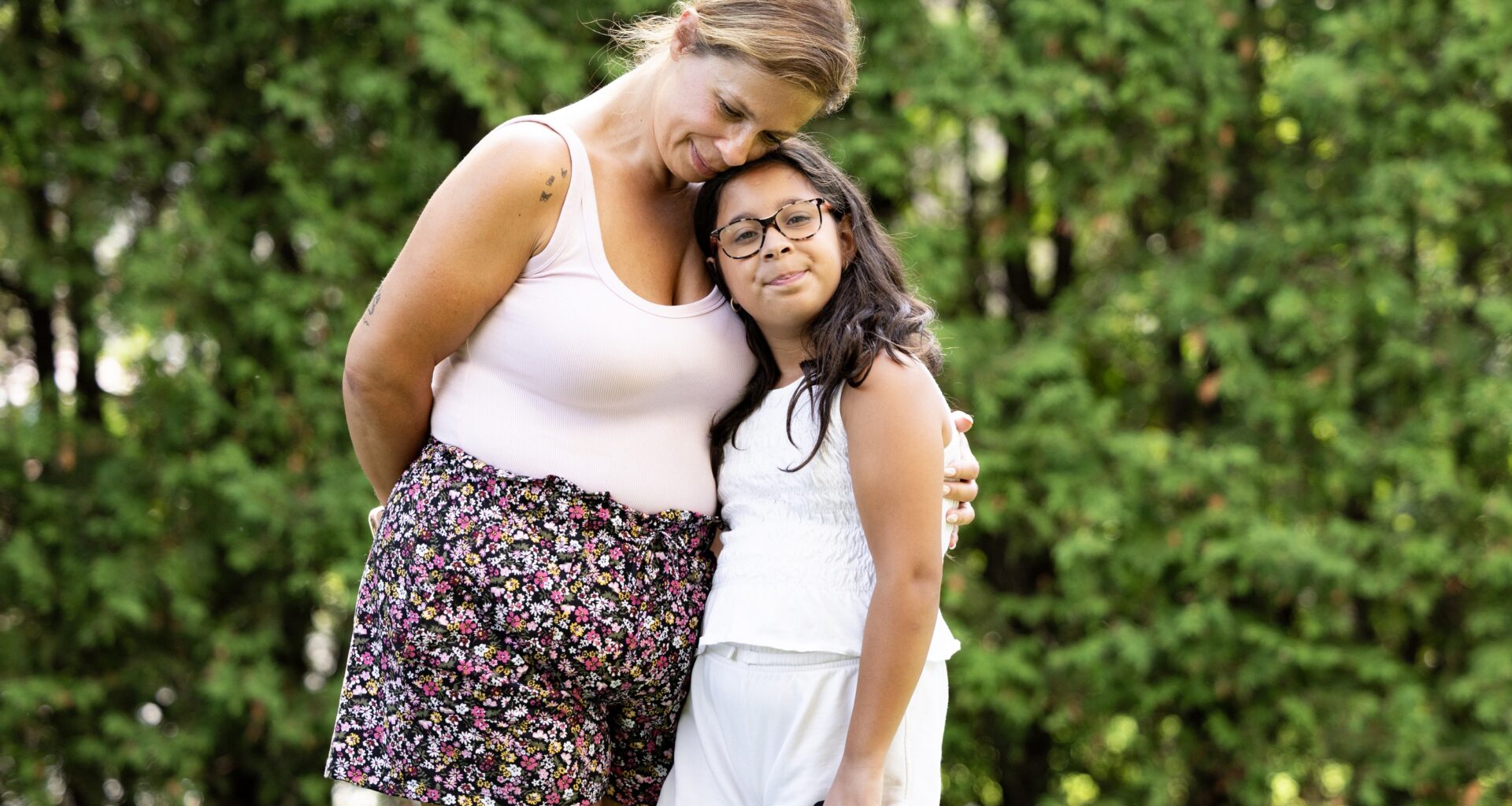
Teresa Tucci will only turn to Quebec’s 811 health line as a “last resort” after saying she waited hours to speak with a nurse and her medical concern was never addressed by the service.
The mother of two from Vaudreuil-sur-le-Lac called early in the morning of Aug. 3 on behalf of her daughter, who was feeling unwell. She said she wanted to confirm whether she “should be seeing a pediatrician or maybe going to something further.”
Tucci left her name and number for a callback, with an estimated wait time of 45 minutes to one hour.
Three hours later, she said she received a message saying the service had attempted to reach her three times and she moved to the bottom of the queue. But Tucci said she didn’t go anywhere while waiting, and had her phone on her the entire time.
“I didn’t have any calls,” she said. “It was just very odd.”
Tucci dialed 811 a second time and said she was given an estimate of two hours for a callback from a health-care professional.
“I was like ‘Fine, it is what it is at this point.’ And they actually just never called. I got no phone calls,” she said of her follow-up attempt.
Luckily, she said, her daughter will be fine after her pediatrician was able to squeeze them in at the end of the day and they now have other appointments lined up. But she noted not every patient has that option.
“It’s frustrating on my end when you call and you can’t get through to anybody or there is no one there to help you,” she said of her calls to 811.
Tucci’s experience comes as the province’s 24-hour health line is facing an uptick in calls and longer wait times to speak to a nurse.
Santé Québec’s medical dashboard reported an average wait time of 87 minutes on July 25, 2026. The 811 health line received 183,693 calls in July — an increase of more than 45,000 from the same month in 2025, the agency confirmed last week.
The delay to speak to a nurse is “normally” around one hour and there is a “high volume of calls” from November to March that impacts wait times, according to Santé Québec spokesperson Catherine Brousseau.
“Even so, there’s still work to be done, and it’s far from perfect,” Brousseau said in an email. “That’s why, since the fall, we’ve been working to increase call-handling staff and are testing different measures to reduce processing times and better meet demand.”
Santé Québec’s teams are “fully mobilized and working to respond to requests as quickly as possible,” she said, noting a high number of calls and the complexity of requests that require more attention can cause delays.
Brousseau also said the health agency encourages people to reach out to 811 before going to the ER and also noted the callback option, “which avoids having to wait on hold.”
As a working mother, Tucci said that waiting either on the phone or for a callback is difficult since she is always on the go.
“I don’t have time to sit and wait, or sit and be on hold for two, three hours.”
‘I feel like I can’t get the care I need,’ health-care worker says
A Montreal-based health-care professional also spoke to The Gazette about his recent experience seeking care, including two calls to 811, in the midst of a health scare.
Daniel, whose name has been changed to preserve his anonymity, said his quest for answers left him feeling “as if I don’t count.”
In July, a dentist urged him to seek medical attention after noticing slight swelling on the left side of his face and finding a structure on the same side below his jaw line.
“I have this something there, which could be a bone structure. It could be a cyst. It could be a mass. It could be cancer,” he explained.
Daniel said he knew his health concern is semi-urgent, but was unable to get an appointment with his general practitioner, who is on vacation, or his clinic before the end of August despite multiple attempts over several days. He then contacted the CLSC; he was hesitant about calling 811 due to long wait times.
He said the CLSC employee suggested contacting the Primary Care Access Point (Guichet d’accès à la première ligne or GAP), a service designated for patients without a family doctor, through 811. While Daniel has a GP, he decided to try that option in hopes of obtaining an appointment.
The 811 worker who responded began triaging Daniel after he explained his symptoms and the urgency of the situation, he said, adding he was then asked to wait on hold.
“I’m on hold for about 20 minutes,” he said. “Then, the line goes dead.”
Santé Québec reported 4,572 calls were made to 811 for the GAP service in July, up 12 per cent from the same time last year. Brousseau said “the proportion of priority requests that are processed within 36 hours is 94 per cent or more, despite the increased demand.”
If that time frame is “currently more difficult to maintain,” she said, it’s due to an increase in the number of calls combined with summer vacations.
“Nevertheless, the teams are continuing their efforts to ensure that requests are handled quickly,” she said, adding ground teams are also ready to help patients during the summer.
Editor’s Picks
After being disconnected, Daniel decided to check private health-care options, but he noted they are expensive and he said the clinic he found doesn’t offer the specific service in his area.
He called 811 again and this time chose option 1 to speak to a nurse. At 10 a.m., he opted for a callback instead of staying on hold; he was contacted about 4.5 hours later.
The 811 nurse triaged him and agreed the situation was semi-urgent, he said. Ultimately, the nurse helped Daniel find a timely appointment at an emergency medical appointment centre.
Relief set in, but Daniel criticized having to jump through hoops to get proper medical attention after his dentist told him to see a doctor. The entire process took more than 10 days.
“I feel helpless,” he said. “I feel like no one listens to a certain degree. To have to wait to speak to someone — for over an hour, like three hours, four hours — is ridiculous.”
“And that should show Santé Québec there is a demand — do something.”
Daniel also considered showing up to the ER, but said as a health-care worker he didn’t want to “abuse” the system. In July, The Gazette reported the situation in Quebec’s ERs was markedly worse this summer than for the same period in 2025.
“I feel like I can’t get the care that I need,” he said. “I’m not crying wolf. I’m not tying up the emergency system.”
Tucci also said more resources are necessary, and that she has, at times, turned to the private system for timely care — something she acknowledged isn’t accessible to most people.
Asked if she would consider calling 811 in the future, she replied “to be completely honest, they’re my last resort.”
The Gazette contacted Santé Québec about both Tucci and Daniel’s experiences with 811, specifically about lines being cut and calls not returned.
“After checking, no outages related to the virtual waiting feature were reported in the past week. Unfortunately, the information we currently have does not allow us to further analyze the reported situations,” Brousseau said in an emailed response Monday.
“We are sorry for the inconvenience and understand the frustrations this situation is causing.”
She said Santé Québec also encourages anyone who has experienced “similar difficulties” to contact its complaints and service quality commissioner via sante.quebec, adding reports are “essential to help us identify the issues and make the necessary adjustments.”