
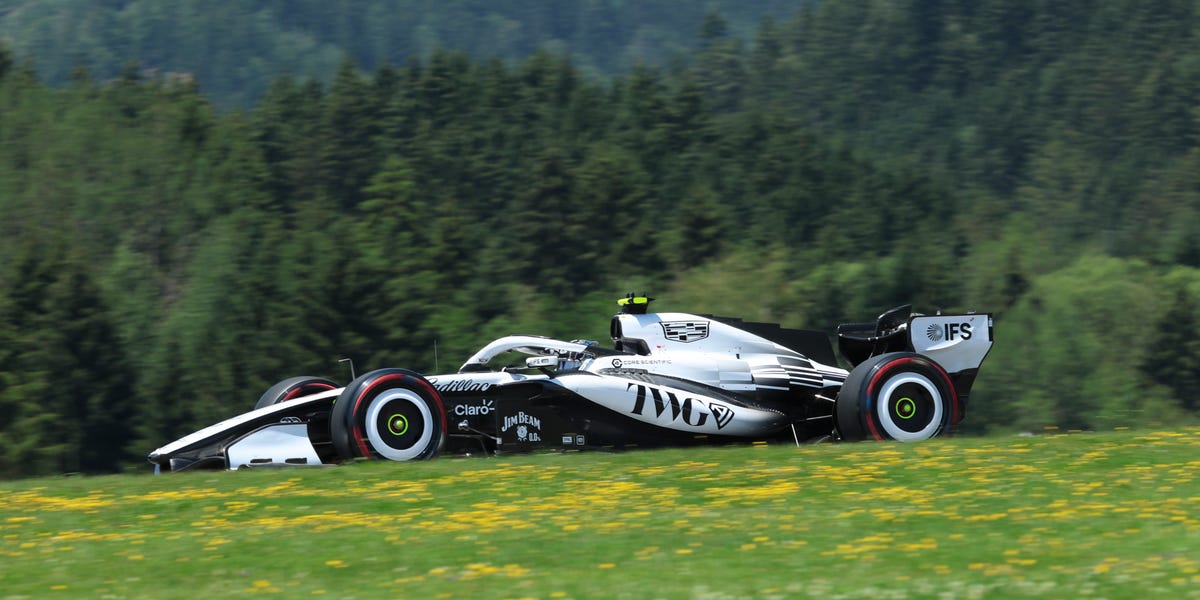
Formula 1’s summer break has given the new Cadillac F1 team a welcome chance to catch its collective breath after what has been a relentless run of testing and races since January. It has been a tough schedule for all the teams, as they have had to adapt to new power units and new chassis regulations. However, when you’re doing it for the first time—even with a lot of experienced F1 folk on board—it’s particularly hard.
So how would a 2026 half-term report card look for Cadillac? The answer has to be along the lines of, not a bad start given the circumstances—but the honeymoon period is coming to an end, and now it’s time to do better.
Team principal Graeme Lowdon, the man who put the whole project together, admits that it hasn’t been an easy ride thus far. “Nobody has the luxury to stand still in F1, and for new teams the same as well,” he told Road & Track. “So we can’t just come in and then stand still while we acclimatize to everything. We’ve got to keep pushing. We’re up against the best teams in the world, and they are all pushing, all of them. And so we have to push even harder to get to where we want to be. And that’s what you’re seeing now. And it’s not always smooth, it’s not always straightforward. That’s the same up and down the pit lane.”
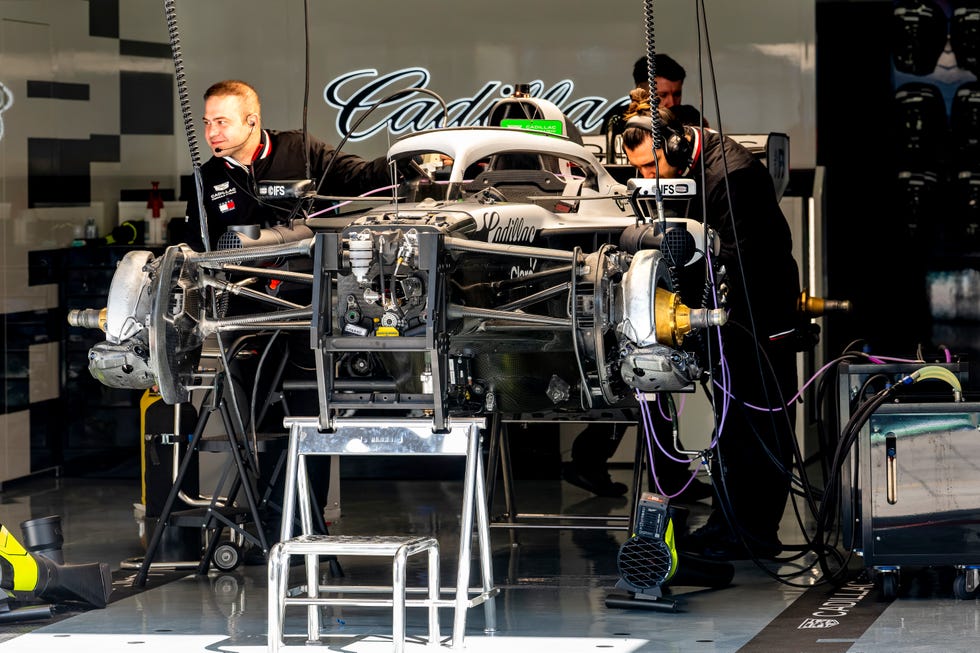
The first task was to simply get a car on track allow Sergio Perez and Valtteri Bottas to log some priceless miles. To the team’s credit, the first Cadillac chassis was ready to run very early, which meant that the initial specification had in essence to be very basic relative to rivals. Inevitably, the car was well off the pace in the early races, and the next job was to pursue a development program—in other words, designing and manufacturing new parts, and bringing them to the track. All the processes put in place to make that happen had to work smoothly while the team was already busy just getting to the races.
NurPhoto//Getty Images
The good news is, those new parts have generally done what they were supposed to do: they have improved the overall performance of the car relative to the start of the season. That progress even caught the attention of McLaren boss Andrea Stella, who in Austria highlighted the steps that Cadillac has made.
“It’s nice that he sees it,” said Lowdon. “I think the other teams have seen it as well. The people who really understand the sport can certainly see that. We brought quite a few things since Melbourne—and one of the real plus points is they’ve been positive actually in every case, and also ,the correlation of what we were hoping to see and what we’re seeing is there as well. Which is obviously good, because it suggests that some of the simulation and the tools that we’re working with are heading in the right direction. But we can’t be complacent, and we just have to keep our heads down, and keep working as hard as we can.”
For a few races, Cadillac moved even off the back row, qualifying and racing in front of the beleaguered Aston Martin team, while also edging towards the likes of Williams and Haas up ahead. Aston then made a step with its update package last time out in Hungary, where Cadillac was demoted to the back once more. Performance relative to the competition is a key barometer … but you can’t make progress if you’re not finishing races.
NurPhoto//Getty Images
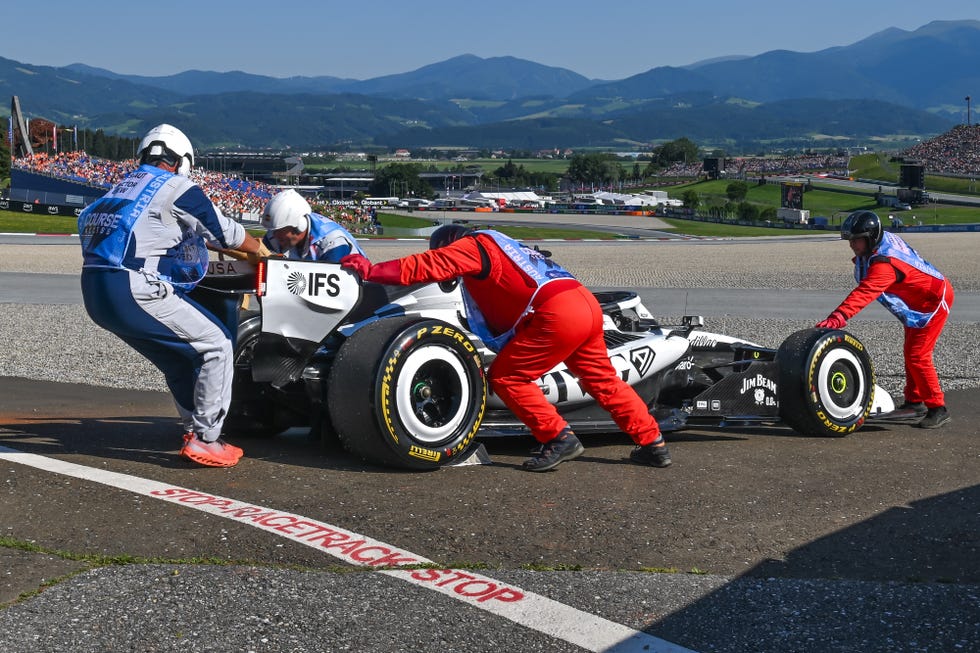
Poor reliability has been very costly for the team, with a series of issues that are relatively uncommon at this level. Some retirements have been related to one-off mistakes in the garage, rather than design or manufacturing, and have served as reminders how hard it is to get everything right. There have also been regular problems with brake cooling, which first appeared in Monaco—and yet despite the pursuit of countermeasures were still seen five races later in Hungary, where Bottas had to brush along the pit entry barrier in order to stop the car as flames and smoke emanated from his front wheels.
Most worryingly, there were different front suspension problems for Perez in Canada and Hungary. The Mexican stopped the car safely in both races, but it could have been more serious. Seeing your front wheels suddenly askew is not the sort of thing that inspires confidence in drivers.
“Obviously, being a new team, you kind of expect all these issues,” said Perez when asked by Road & Track about the Budapest failure. “I think it’s a little frustrating that it has happened very often. So I’m sure that we will use this break to make sure we are able to clean, and to improve all areas and different departments, because I think it’s really important how we are able to progress in the second half of the season.”
“It’s the second time he has DNF’d with the suspension,” Bottas acknowledged. “So it’s very clear where we’ve got to improve and fix issues to start finishing races.”
SOPA Images//Getty Images
Lowdon concedes that the reliability issues have been painful. However, he sees them as part of the learning process. “Other teams may go back to the factory—the factories we go back to, we’re still building them! And it is just a massive challenge for everyone. And the fact that we’re making progress means that when we do have an issue of operation, it’s obvious for people to see. If we were absolutely nowhere, then nobody would even notice. So we just take the positives from everything, and keep working hard and keep developing.”
Aston Martin’s struggles have demonstrated just that; it is, after all, a team that has a continuous history since its birth as Jordan in 1991, and yet it still has tripped up. In that context, you could argue that Cadillac hasn’t done too badly.
“F1 is so competitive,” says Lowdon. “The most competitive team sport in the world, in my view, and it’s so complicated. Because the teams are so good at it—and they really are really good—everyone takes it for granted. When a team isn’t where it wants to be, it’s really visual. And not just with Aston. McLaren are at the front at the moment, but it wasn’t that long ago that they weren’t, and it just shows how difficult it is. I think most of the people in our team have been in F1 long enough to know exactly how difficult it is. So we don’t really need reminding.”
The bottom line is, creating a new F1 team from scratch is just the tip of the iceberg; actually running the cars, and trying to progress in all areas, is the real challenge. The need to focus on designing and building the 2027 model while racing the current contender is set to be a major test for the team in the coming months, so it will fascinating to see if Cadillac can get any closer to the opposition this season.