
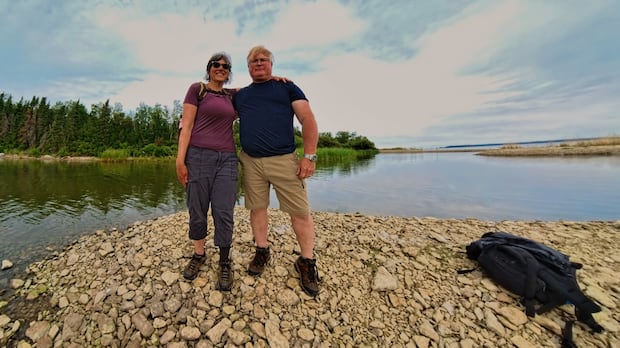
A Manitoba man suffering extreme chills and fatigue says he tested positive earlier this month for West Nile virus, yet the provincial government website still says there have been zero human cases this year.
Todd Holmes is disappointed the Manitoba government hasn’t alerted people.
“I got notified on Friday that I have this, but I’ve seen nothing on the news and their websites … so people can be informed where it happened, so they can be properly protected,” he said.
“They move far too slow.”
Holmes, who lives on a 13-acre lot north of Winnipeg near Libau, posted about his diagnosis on a community Facebook page as soon as he was notified.
“I did it for the intention to try to help people, to save them the grief that I’ve been going through,” he said.
Holmes believes he was bit by an infected mosquito on Aug. 3, during a hike in Hecla-Grindstone Provincial Park, where he encountered swarms of the insects.
The next day he began to get the chills, then headaches. A burning sensation in his eyes and pressure at the back of them followed, along with all-over body soreness and exhaustion.
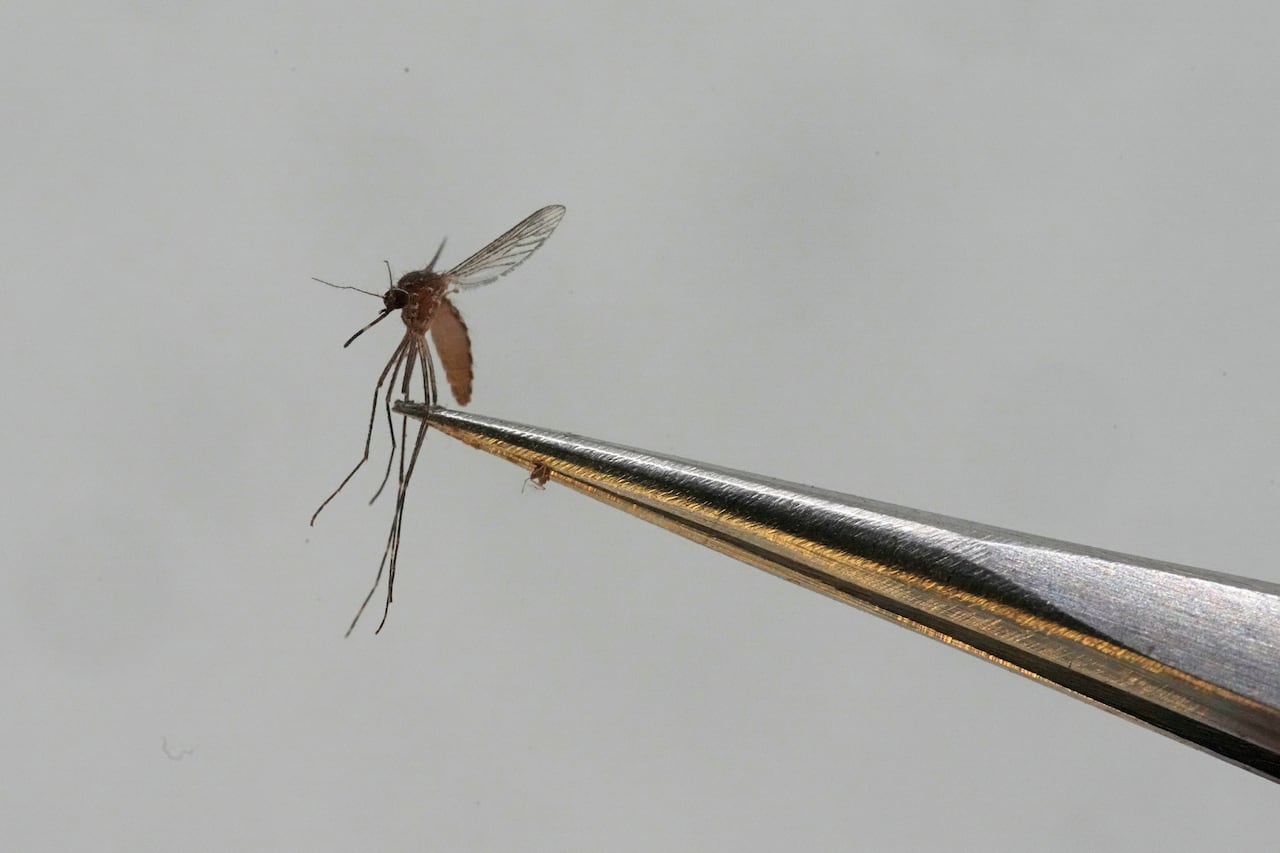 The Manitoba government ordered a mandatory fogging program at the end of July for several municipalities where trap counts showed high numbers of Culex tarsalis mosquitoes, the species known to carry the West Nile virus. (Rick Bowmer/The Associated Press)
“I just wanted to sleep, but it was kind of different. When you tried to sleep, you couldn’t really sleep, but you wanted to sleep,” he said.
Soon, his appetite vanished and “within a couple days I started losing pounds really quick.”
Then on Friday, he received a phone call from Canadian Blood Services saying blood he donated three days prior — the day after the Hecla-Grindstone hike — tested positive for West Nile.
Holmes recalled leaving the donation centre Tuesday and feeling so cold that he turned on the heat in his car. The temperature was pushing 20 C at the time, Environment Canada said.
‘I couldn’t warm up’
“When I got home, I was complaining to my wife that I felt chilled. So I sat down — we have a heated recliner — [and] I sat there for 15 minutes, trying to warm up,” Holmes said.
“I couldn’t warm up. I finally jumped into a hot shower. I had it almost on fully hot, and my teeth were chattering.”
He doesn’t believe he contracted the virus anywhere else because “there’s next to no mosquitoes out here,” Holmes said about his property. “But the area I was hiking in, it was wilderness.”
The province ordered a mandatory fogging program at the end of July for several municipalities where trap counts showed high numbers of Culex tarsalis mosquitoes, a species known to carry the virus, which they acquire after biting infected birds.
A person can get West Nile virus from a single bite by an infected mosquito. About 70 to 80 per cent of those infected have no symptoms, while others experience flu-like illness, the Public Health Agency of Canada says.
Since the province began tracking the virus in 2003, at least nine human deaths in Manitoba have been officially attributed to West Nile virus infections, with the first fatality recorded in September 2003.
Nine Canadians died of West Nile virus last year, the Public Health Agency says.
Manitoba is currently in the highest-risk period for human exposure, which occurs between July 15 and Aug. 15 each year, the province said when it issued the fogging order.
Holmes applauds the province for acting quickly in that regard, but says it is doing a disservice by not letting people know a human case has been detected.
“There’s a greater chance of more people getting this, and then we’re going to put a greater burden on the medical system, and it’s just going to, you know, compound,” he said.
CBC News has reached out to the province for comment but has not yet received a response.
There were four human cases in Manitoba last year but no deaths, the province’s West Nile update page said Tuesday morning.
Use bug repellent
If he hadn’t been called by Canadian Blood Services, Holmes would never have known he had West Nile, he said.
“I would have just written off that I just wasn’t feeling well,” he said.
Since he posted about it on Facebook,”a number of people said the same thing, that they’ve had these nagging headaches ever since they’ve been in that [Hecla-Grindstone] area.”
Canadian Blood Services wouldn’t reveal whether any other human cases have been detected and wouldn’t comment on any individual cases. In an email, the agency said testing for West Nile is always done during the at-risk period of the year and always for those who travelled to at-risk areas.
Any positive test results are passed on to public health authorities, as required by law, the agency said.
As of Tuesday, one week after his first symptoms, Holmes said the headaches had “pretty well gone away,” but he still had sore muscles and his eyes were dry.
He hopes the worst of it has passed, but he’s not holding his breath.
“I’ve gone through a couple of stages where I was feeling absolutely great, and then suddenly I was doing horrible shortly thereafter. So I’m really just trying to take it easy,” he said.
Holmes urges everyone spending time outside to be prepared.
“Wear the proper clothing. Make sure that you take bug repellent and use it,” he said.
“And when you see areas that have a lot of mosquitoes, don’t stand around.”