

Listen to this article
Estimated 3 minutes
The audio version of this article is generated by AI-based technology. Mispronunciations can occur. We are working with our partners to continually review and improve the results.
The province has temporarily rescinded a protection order on the Salmon River, less than weeks after issuing it, which had affected more than 450 water licenses.
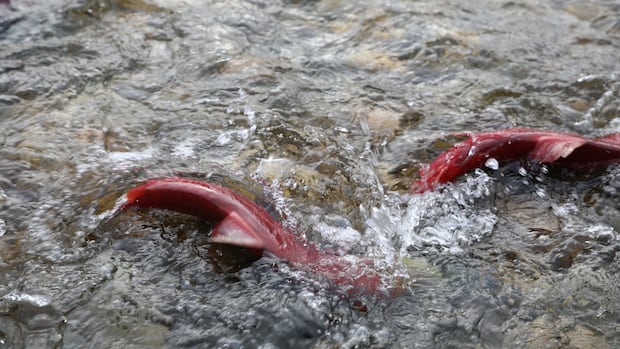
A protection order was put in place for the Salmon River on July 28 amid drought conditions, temporarily restricting water use to protect fish populations.
The order affected 456 surface-water and groundwater licences, restricting irrigation of forage crops such as hay, alfalfa and forage corn, as well as lawns, fairways and certain industrial uses.
The Salmon River — which spans roughly 110 kilometres through the B.C. Interior, about 20 kilometres northeast of Prince George before flowing into the Fraser River — has persistently shown low streamflow despite voluntary conservation efforts, according to the province.
This temporary protection order was put in place to protect Chinook salmon during drought conditions, said Water Minister Randene Neil. But farmers and ranchers were opposed, arguing they wanted access to the watershed during heightened wildfire risk, the minister added.
Consequences of low water flow
Much of B.C. is currently experiencing exceptional drought intensity, according to the federal government.
“We’re seeing low flow and habitat areas drying out for salmon all across the southern Interior,” said Jason Hwang, chief program officer with the Pacific Salmon Foundation.
Hwang said reports received late last week showed about 50 adult Chinook salmon holding in the Salmon River. While they appeared to have found suitable areas to hold, he said there were still concerns about warm water and whether low flows would prevent them from reaching spawning grounds.
He said the conditions could also affect juvenile salmon remaining in the river from last year’s cohort, adding that consequences for the river’s salmon population could show over the next five years and “in generations beyond that.”
 Jason Hwang of the Pacific Salmon Foundation said consequences for the river’s salmon population could show over the next five years and ‘in generations beyond that.’ (David Horemans/CBC)
Despite those concerns, Hwang said the well-being of people and communities must come first, while urging governments to continue protecting aquatic ecosystems.
“Just like people have emergency needs when environmental conditions are extreme, salmon have emergency needs as well.”
Why irrigation is critical
Kevin Boon, general manager of the B.C. Cattlemen’s Association, told CBC’s Daybreak Kamloops that concern among ranchers was not primarily about irrigating crops, but about maintaining green, wet areas that could act as buffers around properties as wildfires spread.
“None of these guys want to burn up with the fire. They’re doing everything possible to keep the irrigation on, keep things [contained to] where things are wet,” Boon said.
“Irrigation becomes extremely positive for us out there.”
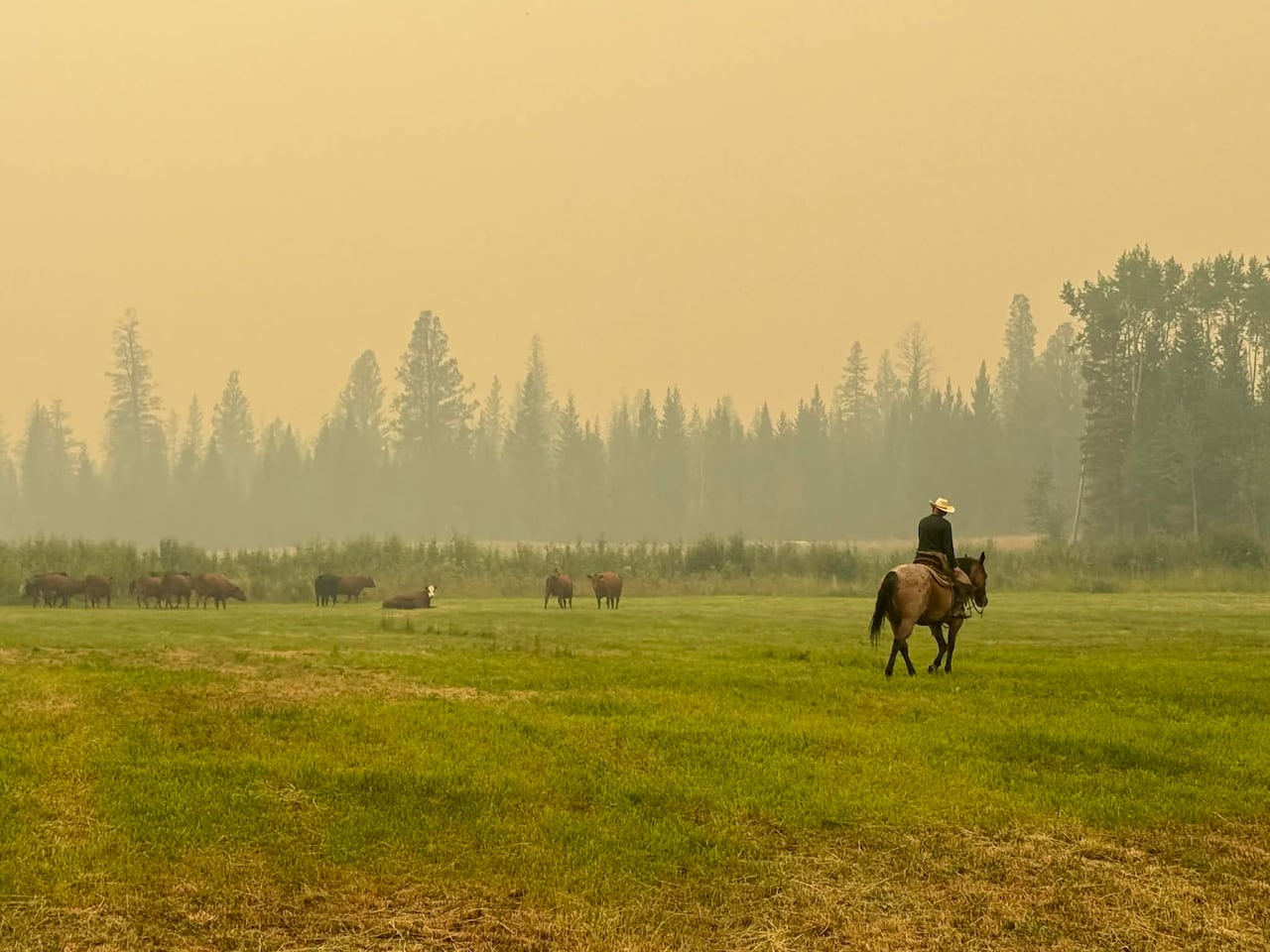 A rider moves cattle through smoky conditions near the Fiftynine Creek wildfire. The general manager of the B.C. Cattlemen’s Association says ranchers are concerned with maintaining green, wet areas that could act as buffers around properties as wildfires spread. (Monika Wyssen/Facebook)
Boon said ranchers are scheduling irrigation so they are not taking the full available amount of water, while someone is monitoring river flows to ensure they remain adequate for fish.
“But at the end of the day, we have to look at human life first,” he said.
“It’s about protecting what we got right now and working for the future in this.”
Hwang hopes people around the province and the provincial government will take this year’s low river flows as a lesson for seasons ahead.
“We need to optimize everything we can in terms of water storage, water use, water availability, but we also need to optimize how we use water. [To] make sure we’re maximizing efficiency,” he said.