
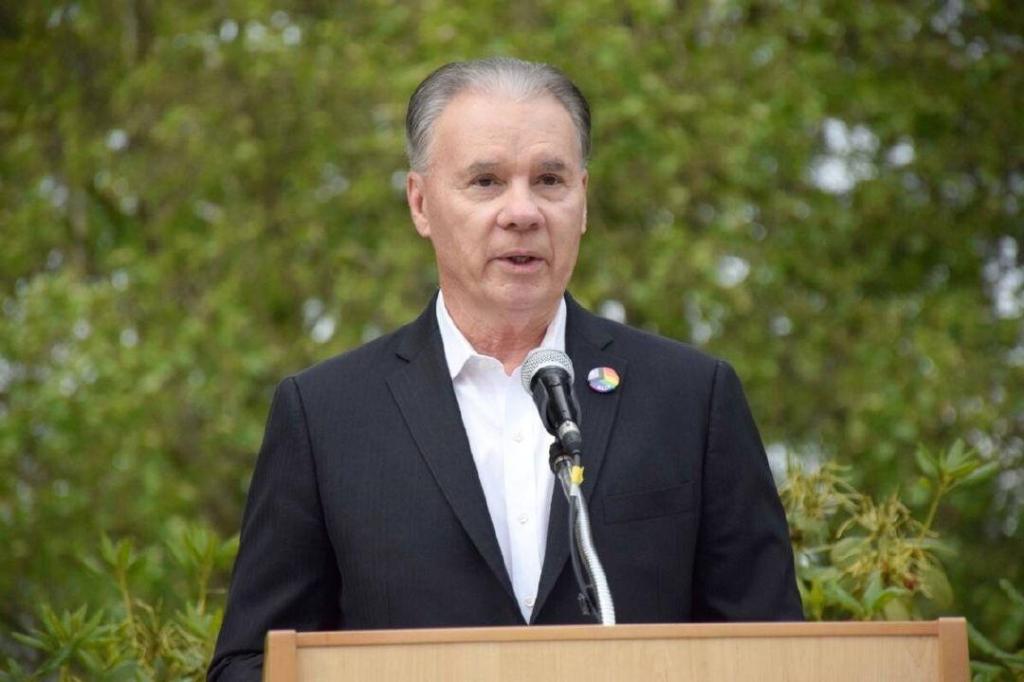
Mayor George Harvie says that, if re-elected, he intends to withdraw Delta from “non-essential” Metro Vancouver programs and services”
In an announcement sent to media Aug. 4, Harvie said he will, with the approval of council, have city staff begin examining the legal, financial and operational steps required to withdraw from non-core Metro Vancouver programs while protecting uninterrupted access to essential core regional services — namely water delivery, sewage treatment, and solid waste disposal.
Harvie’s policy statement came less than two weeks after Metro Vancouver directors endorsed a plan to reduce the number of members serving on the board, a move that requires provincial approval before implementation — a process that could take up to two years.
“The motion addresses a symptom of the regional government’s challenges rather than the underlying issues and, on its own, will not deliver any meaningful change,” Harvie said in a campaign press release.
He said the fundamental issue is that Metro Vancouver has expanded beyond its original core responsibilities while becoming increasingly costly and less accountable to taxpayers over the last 30 years.
“When you look at how utility costs have grown — especially over the past two years, which has seen a marked increase — and compare that to how Metro Vancouver has expanded in size and scope, it is understandable why residents are frustrated,” Harvie said.
“Metro must return to its core mandate of delivering water, wastewater treatment and solid-waste services, while stepping back from additional areas it has entered into over the past three decades.”
Harvie said Metro Vancouver’s expansion into areas such as climate programming, air-quality initiatives and social housing has contributed to a larger bureaucracy, increased operating costs and additional financial pressure on municipalities and taxpayers.
He said administrative and departmental costs associated with these expanded programs have increased significantly — particularly between 2024 and 2026 — without delivering measurable outcomes for residents across the region.
“Families are being asked to pay more and more for a regional government they do not directly elect and where accountability is limited,” Harvie said. “Delta residents should not be required to fund an expanding regional bureaucracy that has moved beyond the essential services our communities depend on.”
Harvie is calling for the organization to be restructured into something resembling a regulated public utility with greater transparency, stronger financial controls and clearer accountability to taxpayers.
“Delta will continue working with neighbouring communities to protect the essential regional systems we all rely on,” Harvie said.
“However, we will not continue supporting unchecked mandate expansion, increasing administrative costs, or decisions that do not provide value and accountability for taxpayers — like what happened this year when board members were paid $500 to attend a five-minute meeting, including Councillor [and mayoral candidate Dylan] Kruger. I was disappointed with the involved board members not forcing staff to find an alternative way to have the report considered.”
Mayor distances himself from wastewater plant fiasco
In his release, Harvie pointed to Metro Vancouver’s handling of major infrastructure work, particularly the North Shore Wastewater Treatment Plant, as evidence that the organization requires greater accountability and oversight when managing large-scale construction projects.
He further sought to clarify that his involvement with the North Shore Wastewater Treatment Plant began after key decisions had already been made that “put the project on shaky ground from its inception.”
“I had nothing to do with the initial implementation of this project, which faced significant challenges from the beginning,” Harvie said.
He said three contractors answered Metro’s request for proposals in 2013, with two subsequently withdrawing due to concerns related to the site’s size and composition.
“The project was awarded to Acciona in 2017, before I was even elected,” Harvie said. “Based on reports reviewed after I was elected, Acciona experienced challenges related to the site conditions and contractor issues, resulting in delays and increased costs.
“In 2021, Acciona advised Metro Vancouver that an additional 26 months would be required to complete the project, and the contract was subsequently terminated. Years of litigation followed. During that time, I was unable to publicly discuss the matter. I was muzzled.”
Harvie said that after he was elected board chair in the winter of 2022, he established a committee of Metro committee chairs to examine what happened with the project, and that the committee’s findings were later disclosed to the regional district board.
With the lawsuit relating to the project now settled, Harvie is calling for the public release of the committee’s findings.
“I believe the public deserves transparency. If accountability was the goal, the report should be released so residents and the public can understand what happened with this important project,” Harvie said. “I have not seen this report since I left Metro as their chair.”