

When penicillin was first introduced to the public, it earned the nickname “the wonder drug” because it cured infections that had once been deadly. It ushered in the golden era of antibiotics, during which the bacteria-killing drugs entered widespread use, driving down rates of severe disease and death from infections.
Unfortunately, the sweeping adoption of these medicines also set the stage for their obsolescence. Once hailed as miracles, antibiotics are now losing their power as bacteria evolve strategies to evade them.
Today, the world is contending with a “silent pandemic” of antibiotic resistance, driven largely by the misuse and overuse of these critical medicines. Curbing resistance, then, means changing how doctors prescribe — and patients use — antibiotics.
I traveled to Japan because a government initiative aimed at correcting antibiotic misuse has helped slash unnecessary prescribing and I wondered if a similar approach could work in the U.S. The program offers “tips” of 800 yen (about $5) to the clinics of pediatricians and ear, nose and throat doctors (ENTs) who withhold antibiotics in cases when they’re likely not needed.
My findings suggest that many of the factors that drive antibiotic misuse in outpatient clinics overlap in the U.S. and Japan. But the cultural, governmental and insurance landscape may differ too greatly between the two countries for America to copy-and-paste Japan’s approach. Instead, here’s what I think could work to close the gaps in antibiotic overprescription in the U.S., based on my conversations with doctors.
Similar pressures, different systems
In both Japan and the U.S., sick visits are mere minutes long, so doctors must determine quickly whether an antibiotic is needed. Few rapid tests exist for bacterial infections, introducing a degree of diagnostic uncertainty. Children’s caregivers sometimes request antibiotics when they’re not needed, and depending on the doctor, that social tension can be enough to prompt an unnecessary prescription, research has found.
I learned that children’s caregivers value doctors who can answer questions and clearly explain their reasoning. They don’t necessarily arrive at an appointment expecting a specific “solution,” such as an antibiotic prescription — even if they sometimes request one. When faced with parents who request a prescription, doctors can often defuse the tension by explaining why antibiotics aren’t necessary, my reporting found.

In Japan and the U.S., children’s caregivers value doctors who can explain their rationale for opting for one treatment course over another.
(Image credit: Jessica Peterson via Getty Images)
On paper, Japan’s antibiotic incentive gets at both halves of this pediatrician-parent dynamic. It offers pediatricians and ENTs extra payment to avoid antibiotics for certain types of infections. To claim that cash for their clinics, the doctors must explain their reasoning for withholding antibiotics to the child’s caregivers, to help educate them about appropriate antibiotic use.
Although the pressures that lead to overprescription are similar in the U.S., the countries have several big differences.
For one, Japan has a national insurance system in which children’s healthcare is essentially free. People in Japan report a relatively high degree of trust in their national government overall, and they specifically report being very happy with their healthcare system, with satisfaction rates far exceeding those of similarly wealthy countries.
By contrast, the U.S. has a patchwork of private, subsidized and public insurance. About 27 million people — roughly 8% of the population — are uninsured, and those with insurance frequently face issues with using their coverage and major barriers to care, such as prior authorization and claim denials. Navigating these barriers can derail and delay medical care, spurring frustration. Meanwhile, the number of people able to cover medical care is falling as costs spike, and people worry that insurers hold too much sway over health policy.
These layers of complexity are baked into the U.S. healthcare system, whereas in Japan, the federal government can introduce an insurance policy and affect change across the whole system at once. That’s how the 800-yen incentive for pediatric clinics was implemented.
Japanese doctors readily accepted the notion of “tips” for withholding unneeded antibiotics, in part because those types of small-scale incentives already exist in Japanese healthcare.
Clinics earn incentives by claiming an add-on fee when they seek insurance reimbursement for a given appointment. That reimbursement rate is dictated by Japan’s federal government, which sets healthcare pricing, so it’s simple to introduce such incentives at scale. Similar add-on fees have been used to encourage doctors to prescribe cheaper “biosimilars” over costlier drugs with the same effects and to adopt better treatment approaches for conditions like hip fractures and painful periods.
In contrast, reimbursement rates in the U.S. are set by a dizzying array of agencies and private companies, all with their own goals.
I do not believe that financial incentives should dictate clinical practice.
Dr. Erik Blutinger, emergency medicine physician for the Mount Sinai Health System
I asked U.S.-based doctors whether a similar incentive could work here. Their responses were mixed.
“I think a program like the Japanese one could work in the U.S.,” Dr. Conor Blanco, a pediatric ENT based in New Jersey, told me in an email. He noted that many physicians’ pay is determined partially by patient satisfaction scores, so there are existing financial incentives that steer their behavior. If you set up a similar incentive around proper antibiotic use, “maybe it makes a difference, it’s tough to say,” he said.
Dr. Dmitry Volfson — chief medical officer of CityMD, a large urgent care provider in New York and New Jersey — agreed that it might work. “But [it] may be difficult to implement” given America’s multitude of insurance payers, Volfson told me in an email.
Other doctors were less open to the idea.
“On first pass, it feels very unethical to me,” said Dr. Morgan Leafe, a pediatrician who worked in both inpatient and outpatient settings for 11 years. Children’s caregivers might be upset to hear that clinics get paid more when they don’t prescribe an antibiotic, given that some are already under the impression that U.S. doctors are overly motivated by money, she told me in a direct message.
Doctors already widely criticize insurers for denying what physicians deem necessary care. Dr. Jennifer Shu, a pediatrician with Children’s Medical Group in the Atlanta metro area, worries that insurers might set up the incentive in a way that restricts doctors’ prescribing patterns too aggressively or doesn’t align with current scientific evidence.
“I do not believe that financial incentives should dictate clinical practice,” said Dr. Erik Blutinger, an emergency medicine physician for the Mount Sinai Health System in New York who also works in its urgent care centers. “It should boil down to the patient’s health and ultimate well-being over finances.”
Dr. Ilan Shapiro, a community pediatrician at AltaMed Health Services in Southern California, said he could see an incentive driving down unnecessary antibiotic prescriptions, but he added that it could also overcorrect, encouraging doctors to hold back antibiotics that are actually needed.
“I’m not a believer in the carrot or the stick,” Shapiro told me.
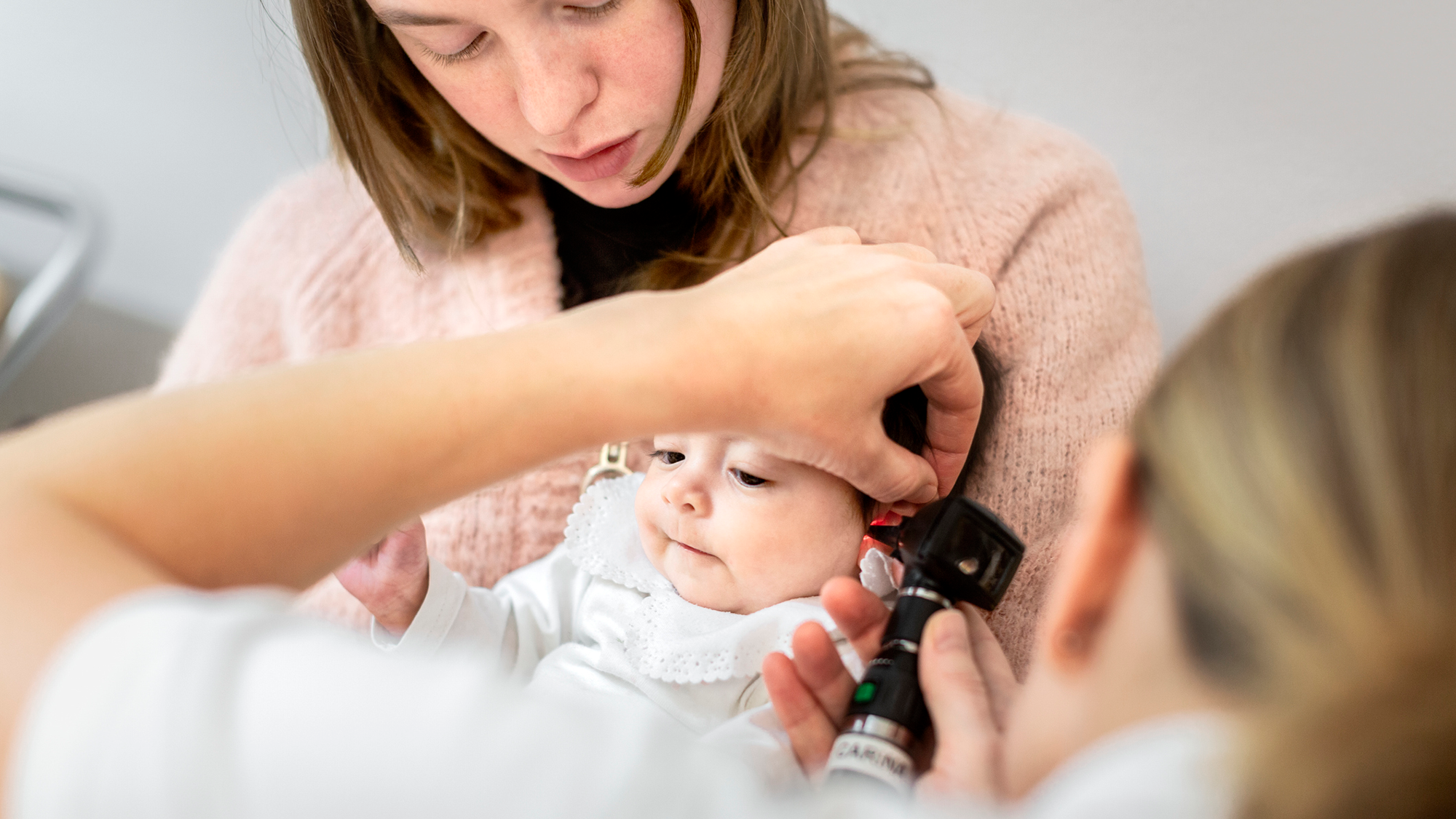
Professional groups and regulatory bodies like the Centers for Disease Control and Prevention issue protocols to help guide doctors’ antibiotic prescriptions. Several U.S. clinicians told me that they’d be wary of insurers setting incentives that might conflict with those established protocols.
(Image credit: Johner Images via Getty Images)
How incentives work in the U.S.
Notably, many U.S. doctors are already financially incentivized to improve antibiotic prescribing — but those incentives apply at a high level, rather than case by case.
For example, many American health insurance plans use a tool called the Healthcare Effectiveness Data and Information Set (HEDIS) to assess patients’ quality of care at the medical centers they visit. The tool is used by many commercial insurers, as well as by private groups that manage Medicare and Medicaid plans.
Some insurers incentivize providers to achieve higher HEDIS scores by offering higher reimbursement in exchange, “but this is not universal,” Volfson explained. There are HEDIS metrics that track how often antibiotics are used for ailments that are frequently viral, like upper respiratory infections, sore throat and bronchitis, he added.
These incentives fall under “value-based care,” which aims to reward behaviors that tend to improve patient outcomes and lower healthcare costs. That’s opposed to the more dominant “fee-for-service” model, which compensates practices for individual services provided.

Science Spotlight takes a deeper look at emerging science and gives you, our readers, the perspective you need on these advances. Our stories highlight trends in different fields, how new research is changing old ideas, and how the picture of the world we live in is being transformed thanks to science.
Medicare has its own value-based care approach that includes metrics to track antibiotic use, including for upper respiratory infections. These metrics get factored into one composite score that can boost reimbursement (if the score is high) or lower it (if the score is low) for eligible clinicians and practices covered by the program.
Medicaid, which covers nearly half of U.S. children and is run at the state level, does not have an equivalent to this Medicare approach, but it has other ways of tying reimbursement rates to metrics like antibiotic use.
Medical practices’ participation in value-based care is growing, but fee-for-service remains dominant. Some doctors are skeptical of the alternate approach, Leafe noted, because they feel it puts them on the hook for outcomes that are not completely within a healthcare team’s control. But Shapiro, whose healthcare system uses value-based care, sees it as a way to encourage doctors to consider the long-term trajectory of a patient’s health rather than only the acute ailment at hand.
“You have to have some sort of guardrail”
U.S. doctors were often put off by the idea of clinical decisions being steered by a potential bump in payment. “Patient-related outcomes are more important than financial incentives when it comes to shaping my clinical decision-making,” Blutinger said.
Shapiro embraces value-based care but expressed doubts about the Japanese approach to incentives. My interviews suggested that incentives awarded for individual actions — such as offering $5 to not prescribe antibiotics for a given child’s cold — might not be accepted as easily in the U.S. as they are in Japan.
As Shu expressed, that may partially come down to a lack of trust in insurance companies. There may also be a lack of trust in other doctors and practices; multiple doctors I spoke with expressed worries about underprescription.
“What if people become disincentivized to give antibiotics at all, even when they need them?” asked Dr. Shruti Gohil, an infectious-disease specialist with UCI Health who has designed antibiotic stewardship interventions for hospitals. “You have to have some sort of guardrail on that.”
Gohil noted that, in Japan’s case, the government incentive aims to promote a “culture of safety, whereas with an insurance company, it’s just about finance.” In other words, she worries that U.S. insurance companies mainly care about their bottom line, not public health. An insurer incentivizing doctors to provide less care struck her as “unsettling.”
In contrast, the pediatricians I spoke with in Japan expressed concerns about other doctors overusing antibiotics, not underusing the drugs, and they argued that some doctors still don’t take antibiotic resistance seriously. Their salaries are also lower than those of other medical specialties, and the doctors explicitly stated that they appreciate that the antibiotic add-on boosts their practices’ profits.
U.S. doctors may not accept a clone of Japan’s incentive program, and given America’s complex mix of insurance providers and systems, a similar incentive could be difficult to implement uniformly and at scale. But based on my research, I think that incentives that fit more comfortably within our existing infrastructure could still move the needle.
Doctors are already incentivized to record certain metrics, such as body mass index (BMI) and ongoing weight-management plans, in their notes, Shu said. For example, Medicare and HEDIS bake this documentation into quality measures that affect reimbursement, as well as other calculations that help dictate insurance payments.
Borrowing from Japan’s approach, I propose that clinicians and health systems could be paid more when they document that they’ve explained key facts about appropriate antibiotic use to patients’ caregivers. These facts might include that childhood illnesses are often viral and that symptoms like fever or green mucus don’t necessarily mean bacteria are to blame. They could note that unnecessary antibiotics can cause side effects like diarrhea and make the medicines less effective over time. These talking points could be added to the electronic medical record, where clinicians could easily access them.
This parent-education requirement could incorporate follow-up plans for further learning. That might include providing parents with physical materials, like pamphlets, or links to vetted websites like the American Academy of Pediatrics’ HealthyChildren.org.

In the electronic medical record, in-built tools and prompts can help guide clinicians’ antibiotic prescriptions. They could potentially help steer patient education around antibiotic use, too.
(Image credit: Morsa Images via Getty Images)
Gohil’s practice regularly uses those types of patient-directed materials. “Nothing beats the conversation,” she said, “but they [the materials] give you talking points and then allow the patient to reference something.”
Various trials suggest that educating parents about appropriate treatment for respiratory infections and uses of antibiotics can help shift their expectations around the drugs, in turn reducing how often they seek antibiotics. There’s also data to suggest that doctors’ providing parents both verbal and written information can help the knowledge stick. Some trials have found that the number of antibiotic prescriptions fell after such educational interventions.
Particularly effective trials combine parent education with efforts aimed at healthcare providers: in-office materials and presentations about antibiotics, guidelines within the electronic medical record that point doctors toward best practices, data on antibiotic resistance rates in the community, or “audit and feedback,” where clinicians get report cards comparing their prescription rates with those of others in their practice.
This approach would not specifically incentivize nonprescribing over prescribing, but it would prompt clinicians to educate patients and caregivers about appropriate antibiotic use while providing them a simple script to follow. U.S. adults report placing more trust in health information from their own healthcare providers than from government entities, suggesting that these messages are more likely to stick when doctors deliver them.
Incentives might also help by rewarding children’s caregivers for educating themselves about antibiotics. That approach might be less ethically dubious than directly incentivizing doctors’ prescribing habits, and the infrastructure for such incentives already exists, my reporting suggests.
Major U.S. health insurers — including private and public insurance — now offer their members cash, gift cards or reward points when they engage in certain “health promoting” behaviors. Even life insurers are getting in on the idea. Participants earn rewards by completing an annual well visit, getting a routine cancer screening, logging a certain number of steps per day, or completing courses on healthy eating or nicotine cessation.
The hope is that, by rewarding such healthy habits, insurers can reduce their members’ medical costs. Evidence suggests that these programs can motivate people to change their behavior and improve related health measures, especially in the short term. Their long-term and systemic impacts are understudied, although some research — about quitting smoking, for example — demonstrate long-term behavioral changes.
This same infrastructure could be used to enhance patients’ understanding of antibiotics, and thus relieve some of the pressure on doctors to explain why the drugs may not be necessary. Children’s caregivers could earn rewards for engaging with short, interactive courses or informational pages about the basics of antibiotics — what the drugs treat, what they don’t, what “watchful waiting” is, and why antibiotic resistance is a problem. Short quizzes and surveys could check parents’ understanding and prompt further rewards from the insurer.
These resources could explain that many common childhood infections are viral and resolve on their own or, similar to an app about childhood illness created in Japan, lay out the recommended care for acute viral infections and describe the signs that a bug might actually be bacterial. The creator of the app, Dr. Masahiko Sakamoto of Saku Central Hospital, has found that the platform changes how parents understand childhood illness and interact with the health system.
Presumably, with that kind of continuing education of patients, they would perhaps seek antibiotics less and less and understand when they’re necessary.
Dr. Shruti Gohil, infectious-disease specialist with UCI Health
Such information is already available to parents via trusted sources like the American Academy of Pediatrics; the difference in this scenario is that caregivers would be paid to use it. Gohil thinks that incentivizing this type of patient education would be a “boon,” especially when combined with strategies aimed at improving providers’ antibiotic use, such as audit and feedback.
“Presumably, with that kind of continuing education of patients, they would perhaps seek antibiotics less and less and understand when they’re necessary,” she said. “I think that [idea] is so compelling.”
This approach could benefit insurers by averting unnecessary doctors’ visits and prescription costs, and on a larger scale, potentially help lower the risk of resistant infections.
Japan’s incentive program focuses on pediatricians and ENTs, because the government recognized a pattern of overprescription in those groups. In the U.S., pediatrics clinics aren’t the main source of overprescription — but urgent care centers may be a significant one.
Compared with other outpatient medical settings, like doctor’s offices, urgent care centers are more likely to write unnecessary antibiotic prescriptions, several studies suggest. One study of millions of urgent care visits found that prescriptions were written for 15% of bronchitis cases, for which antibiotics are nearly never needed.
Unlike primary care pediatricians, who see children’s caregivers many times and have the opportunity to build trust, urgent care providers may see them only once. In a 2026 study of pediatric urgent care providers across the country, many reported feeling pressured to satisfy parental requests for antibiotics, and over 50% admitted to altering their care plans in response to such requests.
That said, 66% of those participants said parents are open to education about antibiotics, even when the provider’s care plan didn’t align with the caregiver’s initial expectations. That suggests that prioritizing — and perhaps incentivizing — parent education in urgent care settings could help prevent unnecessary prescriptions.
“It does become challenging when you have a queue of patients waiting to be seen,” Blutinger noted. Nonetheless, his practice aims to prioritize such education. He’s found that parents are receptive to explanations about antibiotics, especially if he carefully listens to and addresses their concerns. “I’ve never found it helpful to make it a one-way, information-sharing conversation. It has to be two-way,” he said.
The 2026 study included physicians, physician assistants (PAs) and nurse practitioners (NPs), with the latter two groups making up about half of the participants. (In Japan, only doctors can prescribe antibiotics, and there are no equivalent roles to NPs and PAs.)

In the U.S. setting, physician assistants and nurse practitioners may be logical targets for strategies to optimize antibiotic use.
(Image credit: Maskot via Getty Images)
Urgent care centers are often staffed largely by PAs and NPs, with one doctor on-site along with various medical assistants. That might be relevant to their antibiotic prescribing.
That’s because some studies suggest that PAs and NPs are more likely to prescribe antibiotics than physicians are. In one study of acute respiratory tract infections, the providers were 30% more likely than doctors to write an antibiotic prescription for the same ailments, and that difference was more pronounced for visits with pediatric patients. In another study of outpatient providers, PAs and NPs had the highest likelihood of inappropriate prescriptions and pediatricians had the lowest.
The reasons for this difference aren’t fully understood, although the study authors pointed out that efforts to improve antibiotic use have been aimed mostly at doctors. NP and PA education and training also tends to vary more widely than doctors’ training, suggesting potential knowledge gaps.
These trends point to an opportunity to tailor interventions to NPs, PAs and urgent care providers. These might be easiest to implement in urgent care facilities affiliated with larger hospital systems, representing about 35% of U.S. urgent cares. These systems set the metrics that factor into bonuses that doctors, NPs and PAs frequently earn on top of their base salaries.
One metric that’s already used widely is clinical documentation, which could be required to note when rationale for denying antibiotics was provided to patients. A large Utah urgent care network recently took a similar approach and gave their clinicians a goal to decrease antibiotic use for respiratory illnesses. They made a certain threshold of antibiotic use in a year a quality metric that clinicians could earn extra compensation for hitting.
That financial incentive didn’t stand alone, though. It coincided with new educational materials for clinicians and patients about antibiotics, new guidance on antibiotics in the medical record, and the introduction of peer-to-peer comparisons of prescribing rates. Together, these strategies drove a substantial decrease in overall antibiotic use for respiratory ailments. Clinicians initially prescribed antibiotics for 48% of respiratory conditions; that fell to 33% within one year and to 26% the next.
It takes time for new antibiotic-use guidelines to filter down to individual providers, particularly when there’s an existing culture of overprescription. Japan’s experiment demonstrated that targeted incentives can reduce antibiotic misuse — at least in Japan. The exact same approach may not be acceptable or feasible in the U.S. But we can still take inspiration from the idea and explore it as one tool among many to fight this silent pandemic.
“Antimicrobial resistance is one of the world’s most urgent public health threats,” Dr. Sarah Kabbani, director of the Centers for Disease Control and Prevention’s Office of Antibiotic Stewardship, told me in an email. “Because outpatient prescribing is so common, even small improvements can have a large impact on patient safety and population health.”
This article is for informational purposes only and is not meant to offer medical advice.