


Listen to this article
Estimated 5 minutes
The audio version of this article is generated by AI-based technology. Mispronunciations can occur. We are working with our partners to continually review and improve the results.
Toronto’s fire chief is calling for faster changes to the legislation regulating lithium-ion batteries after the city saw three battery-related fires in the span of 24 hours — the most recent injuring four people.
Just before 6 a.m. Wednesday, Toronto Fire Services (TFS) was called to a fire at 291 George St., in downtown Toronto, said Capt. Deepak Chagger. Four people were injured and Toronto paramedics say one was taken to the hospital in non-life-threatening condition.
It involved lithium-ion batteries, and came after at least two fires on Tuesday that also involved lithium-ion batteries, Chagger said. Another is still being investigated to confirm if it was battery-related.
Toronto Fire Chief Jim Jessop said there were six micro-mobility devices in the unit where Wednesday’s fire happened. Devices like e-bikes and e-scooters often use lithium-ion batteries.
So far this year, there have been 80 fires related to lithium-ion batteries that have lead to 14 injuries and the death of one person, according to data provided by TFS. The number of annual battery fires increased by about 10 times in the past five years, rising from nine incidents in 2021 to 91 in 2025. One person has died every year since 2023 in this type of fire.
“Since 2022, we have seen an absolutely exponential growth in the number of these types of fires,” Jessop told CBC Toronto in an interview Wednesday.
Responding to these types of fires so frequently puts strain on first responders and city resources, Jessop said.
Better regulation needed, chief says
Though he disagrees with an outright ban on the batteries, Jessop said there needs to be more guardrails in legislation to make sure people store their batteries safely.
But there’s not much TFS can do by themselves. He said making any updates to fire codes, like limiting the number of e-bikes or e-scooters allowed in a unit, falls to the province.
“Our fire inspectors are out there doing their job, but again, they have very limited tools because the Ontario fire code has not caught up to the evolving technology,” Jessop said.
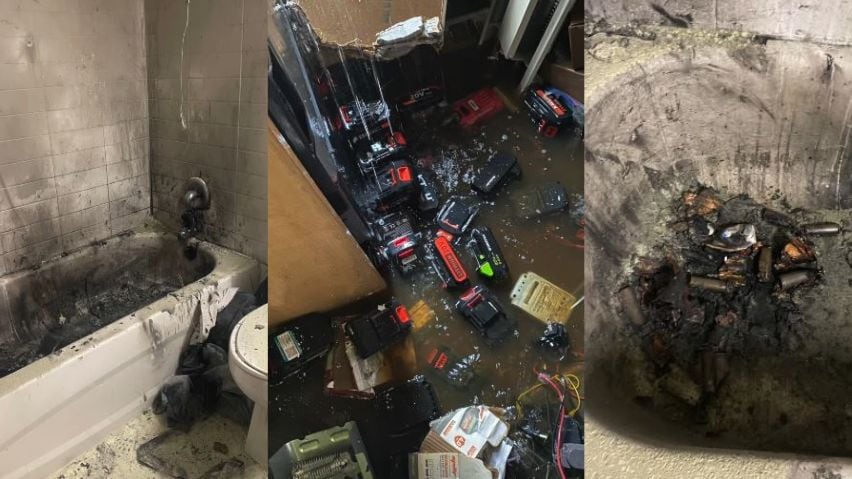 Toronto Fire Services has shared several images showing the aftermath of battery fires in videos on social media. Jessop says some battery fires can become deadly in a matter of seconds. (@torontofireservices/Instagram)
He said he’s been in contact with the provincial and federal governments and wants to work with them to implement solutions.
Health Canada is looking into proposing regulations for lithium-ion batteries, said agency spokesperson Mark Johnson in a statement to CBC Toronto last week. The Ontario fire marshal is also considering changes to the province’s fire code, office spokesperson Jim Demetriou said in a statement last week.
Jessop said he wants the bureaucratic process to move with more urgency.
“We don’t want to rush because that’s when you get bad regulations,” he said. “But at the same time this cannot continue to go on for years and years of consultation.”
In the meantime, the fire service is adapting to risks associated with the growing issue.
There are heightened safety concerns with fires caused by lithium-ion batteries, Jessop said. Entire rooms can become deadly within a matter of seconds and the burning batteries omit extremely harmful toxins.
WATCH | Toronto Fire shares video of e-bike bursting into flames: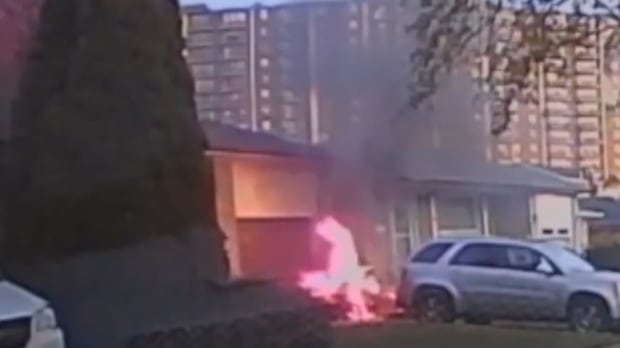
Toronto Fire warns about the dangers of e-bike fires
In a social media shared by the fire service on X, an e-bike can be seen instantly catching on fire and emitting dark smoke.
TFS has had to update how firefighters are decontaminated after responding to these kinds of fires, implementing new technology to clean the suits so the risk of getting cancer is lower, Jessop said.
“All we can do is, we can provide public education material, we can make recommendations, but we do not have the authority to introduce any regulations,” said Jessop.
TFS has made many posts on social media recently urging the public to use and store lithium-ion batteries safely.
They said to avoid overcharging the batteries, keep them out of direct sunlight and away from heat and to stop using the battery if you notice any changes in its odour, colour, shape, temperature or noise. TFS has also warned not to charge batteries near exits or escape routes.
Daryl Chong, CEO of Greater Toronto Apartment Association, said it’s difficult for landlords and building owners to enforce any rules regarding lithium-ion batteries in their properties. It’s become a bigger issue as the batteries gain popularity and he echoed the fire chief’s call for federal regulations.
He said it would be helpful if TFS or the fire marshal put up communications in condos and apartment buildings outlining the risks of the batteries and how residents can protect themselves.
“It would carry more weight if it came from an authority figure like that,” Chong said.