
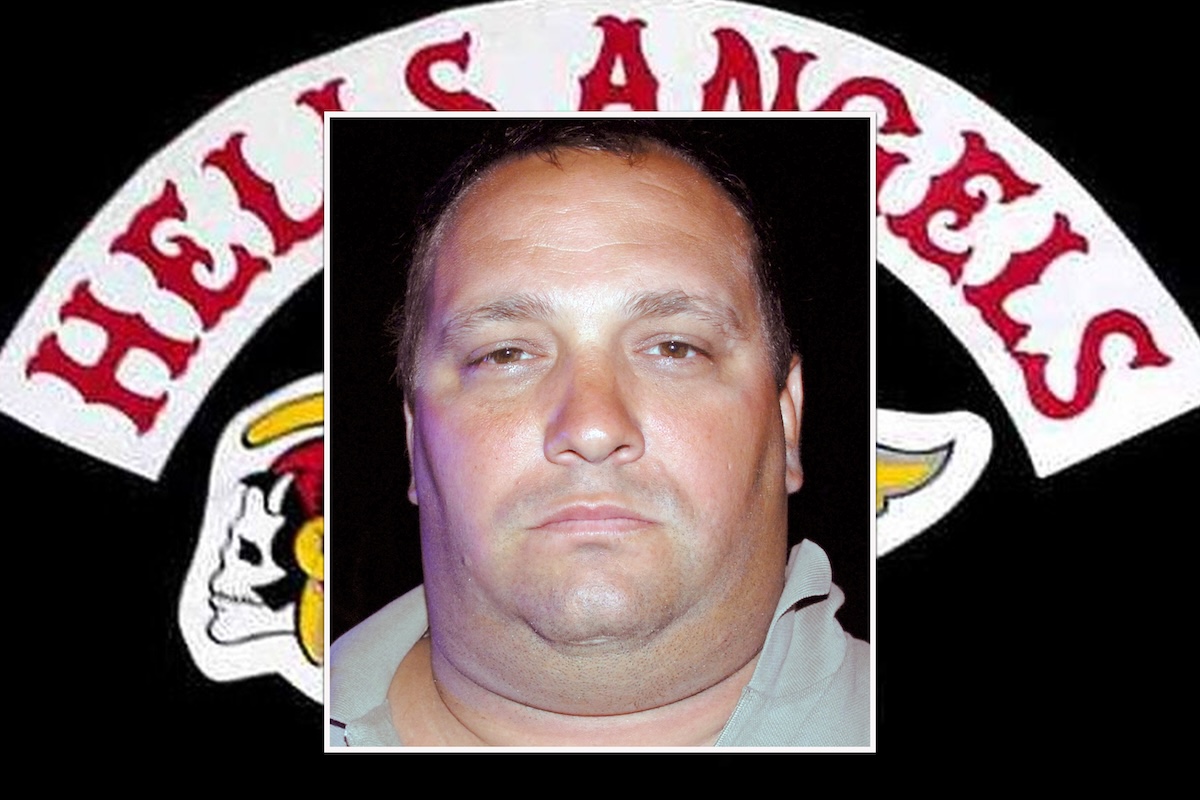
A man once considered to be one of the most influential Hells Angels in Quebec appeared before the Parole Board of Canada Wednesday and asked to be released again while he serves a lengthy sentence.
Marvin (Casper) Ouimet, 57, admitted to the board that he is still a member of the world’s most notorious outlaw motorcycle gang, despite having been incarcerated for most of the past 16 years. He claims he is still in the gang for the “cycling” and out of a need to belong to a group.
At the start of the hearing, his parole officer told the board that Ouimet’s sentence is considered “a notorious case” for Correctional Service Canada (CSC). She also said the CSC feels Ouimet should not be released.
“Do you admit that (the Hells Angels) are a group of criminals that, according to the authorities, constitutes a threat to society?” board member Joseph Lainé asked the biker gang member early on in the hearing.
“What I would say to that is (the Hells Angels are) individuals who, in part, are criminals. The Hells Angels are not recognized as a criminalized group in Canada. They are individuals, including me, who is a part of it. I am a criminal and there are others who are criminals, but there are also some who are not. I recognize that,” Ouimet said. “The Supreme Court of Canada has never declared them a criminalized group. It is not illegal to be a member of the Hells Angels.
“The police would say yes, but to me, it is not a criminalized group.”
Ouimet also said he has had little, or nothing, to do with the Hells Angels while behind bars or during the brief period where he was released and subject to a condition to have no contact with biker gang members.
“I read the newspapers. I watch TV. I am not involved at all in those (recent) stories, but the day that I am released, when I can see other (Hells Angels), I will certainly discuss some things. I will make a decision on my own” whether to remain a member, Ouimet said.
“What would it take to get you to quit this group?” Lainé asked.
“I told my daughter that crime is finished for me. I believe that I can do the cycling (a reference Hells Angels often make about the requirement to ride motorcycles annually in group formations) and be part of the group,” Ouimet replied.
He went on to explain he found a sense of belonging in the Hells Angels after going through a very difficult upbringing, especially after his mother died when he was a teenager.
“I know the path I have taken. I know what I want. I know what I don’t. I know the promises I made to my daughter. I am a man of honour. I have made promises and I will maintain them,” he said. “If there is a risk to my family, I will make my decision in that sense.
“I never want to go through the years between 1994 and 2001 (Quebec’s biker gang war) again. I don’t want to be implicated in something similar. That is clear. The biker gang war is finished. I won’t be implicated in drug trafficking again.”
Ouimet was referring to a conflict between the Hells Angels in Quebec and other organized crime groups over drug trafficking turf. It stretched between 1994 and 2002 and resulted in the deaths of more than 160 people, including several innocent victims.
Part of Ouimet’s lengthy sentence involves his role in the biker gang war. He pleaded guilty to being part of a general conspiracy to murder rivals.
In 2014, Ouimet pleaded guilty to conspiracy to commit murder. He also pleaded guilty to laundering the proceeds of crime and instructing people to commit a criminal act for the benefit of a criminal organization. From 2006 to 2009, he used his notoriety to impose himself on Quebec’s construction industry to launder money he made through such crimes as drug trafficking.
He was sentenced to a 14-year prison term and, in 2023, he automatically qualified for a statutory release because he was not previously granted parole. Months later, his release was revoked because, his parole officer said on Wednesday, he failed to disclose financial information to his case management team, a violation of his release conditions.
On Wednesday, Ouimet said he still doesn’t understand why his release was revoked and claimed the breach involved him selling a company he owned.
He asked to be released again, this time on day parole. His next statutory release date is in March and his sentence expires in 2028.
The two parole board members who presided over the hearing decided to deliberate on the matter and they will deliver their decision within the next 15 days.
Ouimet, an Algonquin from Maniwaki, addressed the board for nearly an hour during his hearing. He conceded it is difficult to be a Hells Angel as well as a member of an Indigenous group that does not condone drug trafficking, acknowledging the harm drugs have done to Indigenous communities across Canada.
Ouimet takes part in Indigenous ceremonies while incarcerated. It is considered to be part of his rehabilitation process.