
Council’s vote was based on ‘misinformation’ that was never corrected, the B.C. Supreme Court petition states.
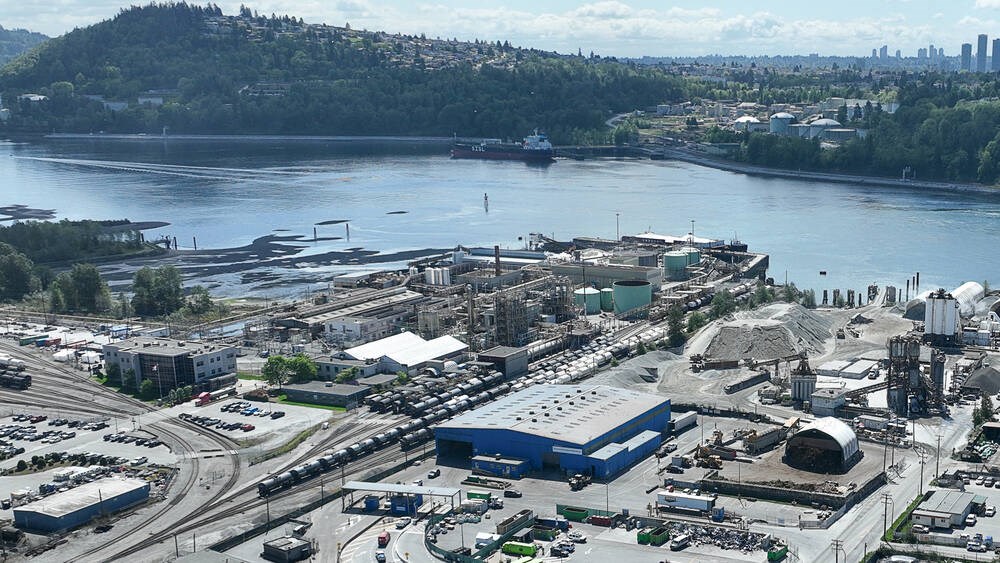
A District of North Vancouver resident is suing to overturn council’s recent decision to allow Chemtrade to continue producing liquid chlorine at its Maplewood plant.
In a petition filed in B.C. Supreme Court, Peter Teevan argues that the district’s process was procedurally unfair because council failed to consider relevant information and that council acted outside its jurisdiction.
District council voted 4-3 on July 20 to adopt a bylaw that allows chlorine production to continue but also puts a covenant on the property’s title stating chlorine operations at the plant must end by 2046.
The 29-page court petition relays mainly the arguments brought by opponents of Chemtrade’s application during the two public hearings held earlier this year – that the safety risk presented by the production, storage and transportation of liquid chlorine was too great and that it is a violation of the district’s official community plan.
The first district staff report that council considered contained “substantial and material misrepresentations and errors” that experts who spoke at the first public hearing called out, the petition argues.
Among the alleged misinformation: that Chemtrade’s liquid chlorine was critical to Metro Vancouver and Western Canada’s water treatment needs and that infrastructure improvements made by Chemtrade would make the site and surrounding community safer.
Those positions were then cited by both provincial leaders and district council members in their arguments for why the plant’s operations should continue, Teevan argues.
“The staff report misinformation creates the false impression that the continued storage and shipping of liquid chlorine from the chloralkali plant and consequent continued risk to the surrounding community has been subject to a full and robust assessment and are justifiable and necessary on public health grounds,” the documents state.
The district’s quantitative risk assessment didn’t address the risks posed by earthquakes, flooding or other natural disasters, or the risks associated with transportation of the chemical through dense urban areas, which district staff said was regulated federally and outside of municipal jurisdiction. A legal opinion submitted to council by Teevan’s lawyer concluded the municipality does have the power to regulate hazardous substances within its borders, including those being transported by rail, but that opinion was also not considered, Teevan says.
“The respondent has not given opponents of the amendment bylaw a fair hearing and/or has arbitrarily disregarded the clear evidence provided to it of material issues with the application’s submissions and staff’s advice,” the documents state.
Teevan’s petition also zeros in on the justifications some council members made prior to their vote. Concerns about the supply chain for chemicals used in drinking water purification and independence from American suppliers are “not matters of municipal responsibility,” he says.
“The respondent has relied on these improper purposes to justify permitting what is a known serious hazard and risk to the district’s residents,” the petition reads. “In doing so, it lost jurisdiction.”
The District of North Vancouver has not yet filed a response to the petition and none of the claims have been tested in court.
In a statement, district staff said they could not comment on the matter while it was before the courts.