
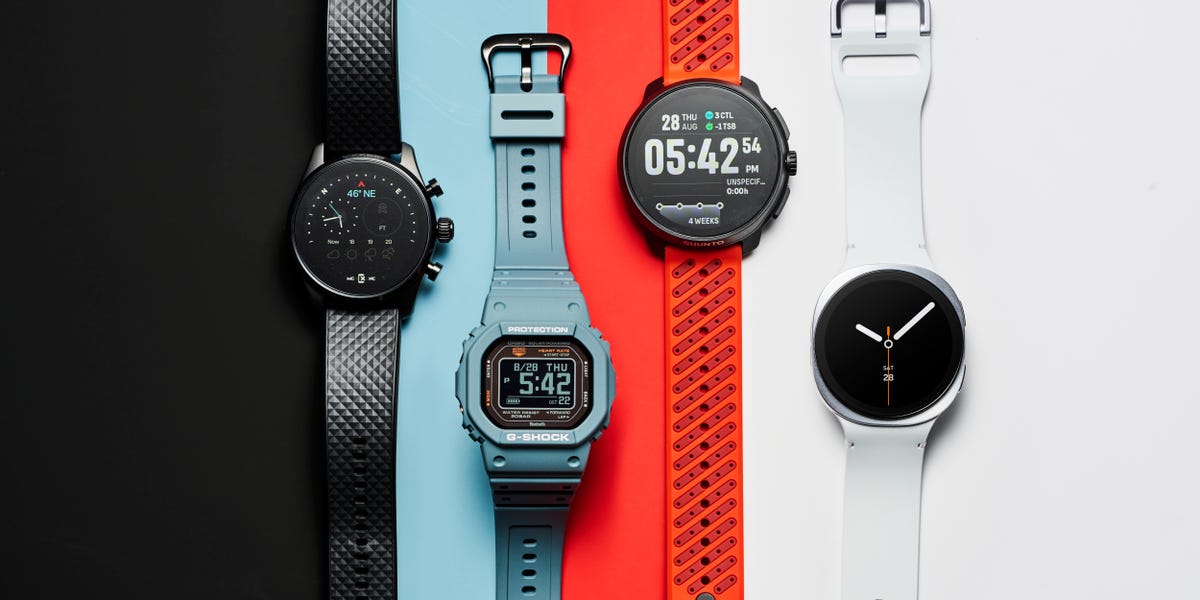
With the Galaxy Watch9, Samsung didn’t mess with a good thing. The aluminum case, “squircle” shape, and bright 3,000-nit screen all carry over from the Watch8 that was our previous favorite—so at a glance you’d be hard-pressed to tell them apart. The key changes are under the hood: a bigger battery, a more power-efficient processor, and a smarter set of health tools that turn your sleep and workout data into advice you can act on.
One of the most notable new additions is the Vitals tool, which learns your normal range for things like heart rate and blood oxygen, then flags you when something’s off. A jump in your resting heart rate or skin temperature, for instance, can signal a cold before you feel it—keep in mind these should be anecdotal. The other new features are for the data-driven crowd. A Heart Health Score rolls your sleep, activity, and blood-pressure trends into a single read on how your lifestyle is affecting your heart, with tips to improve it. My sleep schedule has been all over the place lately, making me feel lethargic at certain parts of the day, and the Watch9 has been recommending I go to bed earlier. Finally, a Fitness Index charts your body composition, cardio, endurance, flexibility, and strength on a spider graph so you can see where you’re strong and where you’re lagging.
There are carryovers from the Watch8 too, including the Running Coach that builds a plan off a 12-minute test run, with well-structured workouts, and the Antioxidant Index, which reads the carotenoid levels in your skin for a rough sense of your fruit and vegetable intake (to be taken with a grain of salt).
In a brief head-to-head test against the Apple Watch Series 11, the Watch9’s heart rate held within a few beats on runs and walks. I’ve been following a Couch to 5K program for the past four weeks, and the heart-rate readings during each run are reliable enough to pace by. Daily Cardio Load has also been a big help, nudging me to dial it back instead of pushing myself too hard, too soon.
Samsung dropped the older Exynos chip for Qualcomm’s Snapdragon Wear Elite, and everything feels snappier, from starting a workout to pulling up a stat mid-run to talking to Google’s Gemini. Now you just lift your wrist to say a command, rather than first saying a wake word.
The Watch9 keeps the excellent Dynamic Lug System, making it comfortable enough to sleep in, and its premium-yet-friendly design moves from a morning run to a business-casual meeting without looking out of place. It comes in 40mm and 44mm sizes with a wider band lineup, including Sport, Fabric, and a two-tone Misty. The battery is bigger on paper—390mAh on the 40mm, a 20 percent bump, and in my testing it still lands around a day of use. At $379.99, Samsung’s newest model costs a bit more than the Watch8 did at launch, but you’re getting the smartest, most feature-packed version yet.
Read More: Best Fitness Trackers for Men