
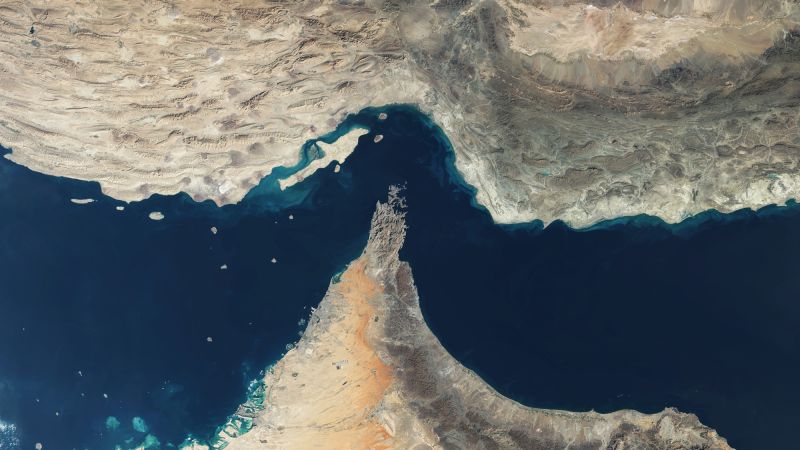
Oil prices are falling, despite few signs of a breakthrough in ending the war, and as traffic through the Strait of Hormuz remains severely constrained.
Brent crude, the global oil benchmark, is around 2% lower at $87.20 a barrel. WTI, the US benchmark, fell by a similar margin to $81.45 a barrel.
The declines, which tracked a broader pullback in commodity prices, come even as Iran and the United States appeared to harden their positions, with both countries claiming control of Hormuz. Traffic in the waterway is still well below pre-war levels of around 130-140 transits a day, but flows may be higher than official numbers suggest.
“Unofficial numbers suggest that the traffic may be higher given ship to ship transfer and ships going dark while passing through the strait,” Mohit Kumar, chief economist at investment bank Jefferies wrote in a note Thursday.
Several other factors are also helping soften the blow from a historic oil supply shock, he noted. China has reduced its oil imports, with other countries also relying on stockpiles, while the United States has increased oil production and Gulf producers have found alternative export routes via pipelines. “The supply demand picture doesn’t look that bad, despite the strait closure,” Kumar said.
Still, risks remain skewed to the upside. The International Energy Agency warned yesterday that the world faces a shortfall of 1.8 million barrels a day this quarter, more than double projections from a month ago, with global oil stocks falling rapidly.
“The market can’t keep pulling down inventories forever. Sooner or later, the cupboard runs bare,” Dan Pickering, chief investment officer at Pickering Energy Partners, wrote in a note. “It will be a challenging fall if the Strait of Hormuz remains contested.”