
Few major sports ask their competitors to master environments as varied as NASCAR does. Over a single season, the same drivers navigate half-mile bullrings, two-mile sweeping ovals, and technical road courses full of right and left turns. The result is less a championship of raw speed than an engineering and racecraft puzzle that shifts almost every weekend.
That variety is not accidental. All NASCAR tracks are different. They can differ in length, configuration, surface, and banking — and even tracks that share the exact same distance have characteristics exclusive to that specific facility, making each stop on the schedule genuinely unique.
Why NASCAR tracks are so different
The calendar’s diversity begins with basic classification. NASCAR races on four main track types: superspeedways of 2.5 or more miles like Daytona and Talladega, intermediate tracks of one to two miles like Charlotte and Kansas, short tracks under one mile like Bristol and Martinsville, and road and street courses like Sonoma and COTA. Each demands a genuinely distinct approach from drivers, engineers, and crew chiefs alike.
This week-to-week shift is precisely why analysts and fans who follow performance trends across track types — including the Odds Scanner team — lean on circuit-by-circuit differences to interpret driver consistency and form across the calendar, rather than reading raw finishes in isolation.
Please gamble responsibly. Gambling can be addictive. For 18+ only.
Track layout and configuration
Shape alone changes everything. A short oval crams four corners into a tight lap, while a triangular layout stretches physics in unusual ways. Pocono Raceway is a prime example: it features three corners of different radii, varying straightaway lengths, and differing degrees of banking, while also boasting the longest front stretch of any NASCAR track.
Road courses add a further dimension entirely, combining braking zones, elevation changes, and both left and right turns. Our own NASCAR Cup Series coverage of Circuit of the Americas illustrates just how far these venues sit from a conventional oval experience.
Banking and racing lines
Corner banking dictates speed, grip, and where cars can realistically pass. At the extreme, Talladega’s massive 33-degree banking in the turns produces pack racing, slipstream drafting, and the largest car fields in the sport. Compare that with the flatter geometry of Pocono, where each of the three corners rewards a different entry line and driving technique.
Short tracks carry their own signature. Martinsville Speedway measures 0.526 miles in its current configuration, with 12 degrees of banking in each of its four turns and no banking on the straights — a layout that forces constant braking and precision.
How track characteristics affect race strategy
Once layout is set, surface type and rules packages reshape the entire strategic picture. For a fuller overview, the official NASCAR track listings detail how venues vary in length, configuration, and banking across the full schedule.
Tires, fuel, and car setup
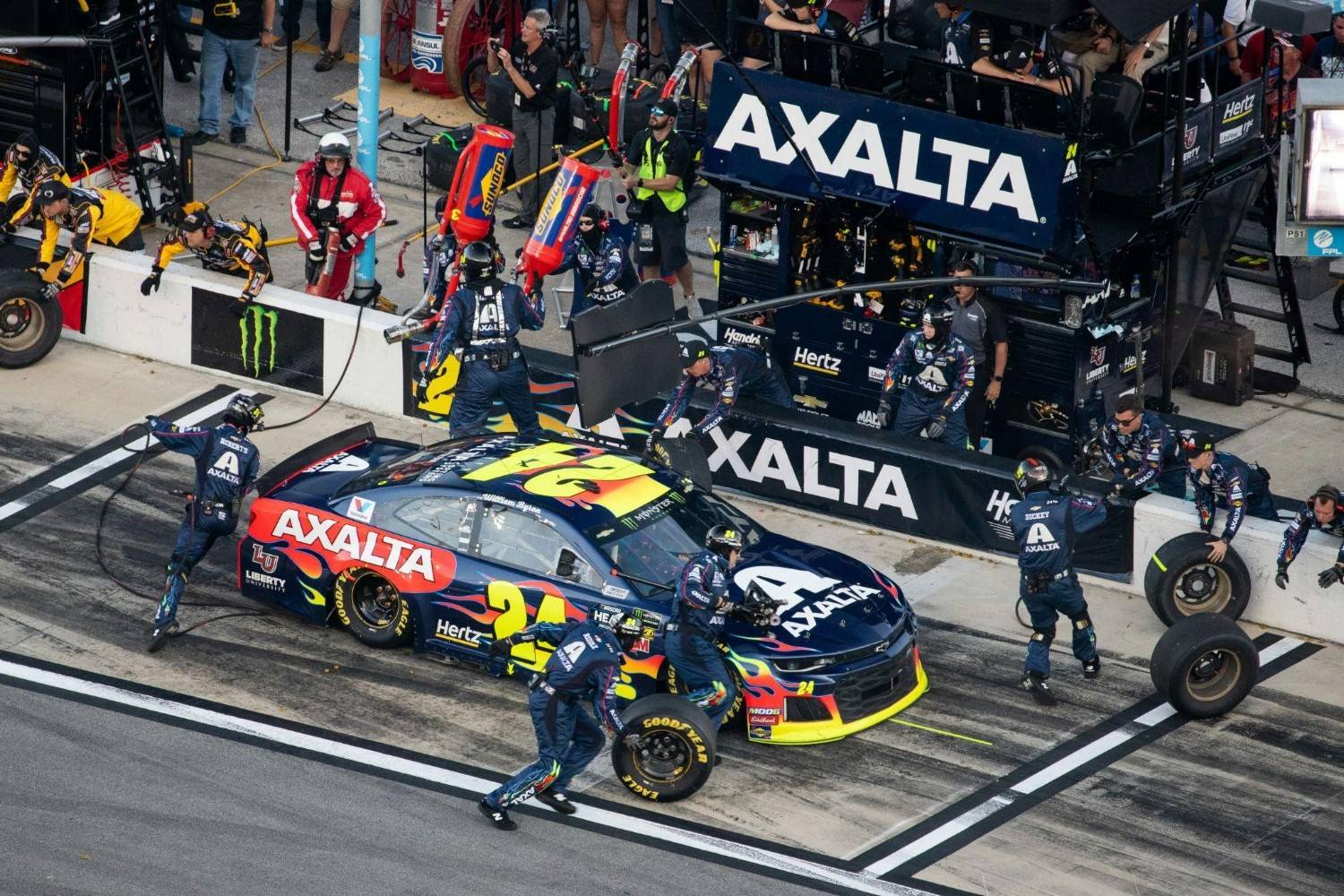
Surface type and tire wear drive the setup conversation from the moment a team arrives at a track. Concrete short tracks punish rear tires differently than abrasive intermediates, forcing engineers to balance grip against durability while crew chiefs weigh fuel windows against track position. Banking, aero package, corner shape, pit road width, and passing lane availability all feed into that calculation.
Short tracks vs. superspeedways
The clearest contrasts emerge when the categories are placed side by side. Each rewards a fundamentally different core skill:
Short tracks: tight corners, heavy braking, constant traffic, restart chaos, and close contact.
Intermediates: aerodynamic balance, tire management, and sustained cornering speed.
Superspeedways: drafting, pack racing, fuel mileage, and split-second positioning.
Road courses: braking zones, gear changes, and left-to-right rhythm.
Short tracks reward drivers who can manage traffic, protect the bottom lane, and stay composed through restart chaos. Superspeedways, by contrast, ask drivers to think in terms of pack dynamics rather than individual lap times.
What makes drivers and teams successful across different tracks
No single skillset dominates a full NASCAR season, which places a significant premium on adaptability.
Adaptability and preparation
Success flows from how quickly a team can recalibrate between events. Crew chiefs and engineers rebuild setups almost from scratch when moving between a flat paperclip oval and a high-banked drafting superspeedway. A driver who thrives in one environment may genuinely struggle in another, and managing that gap is where championships are won and lost.
Why versatility matters in NASCAR
Because the calendar refuses to reward any single specialty, consistency across all four track categories becomes the true competitive edge. The drivers who contend for titles are rarely the fastest at any one venue — they are the ones who lose the least ground on their weakest surfaces, turning NASCAR’s extraordinary track variety into the sport’s ultimate test of complete racecraft.