
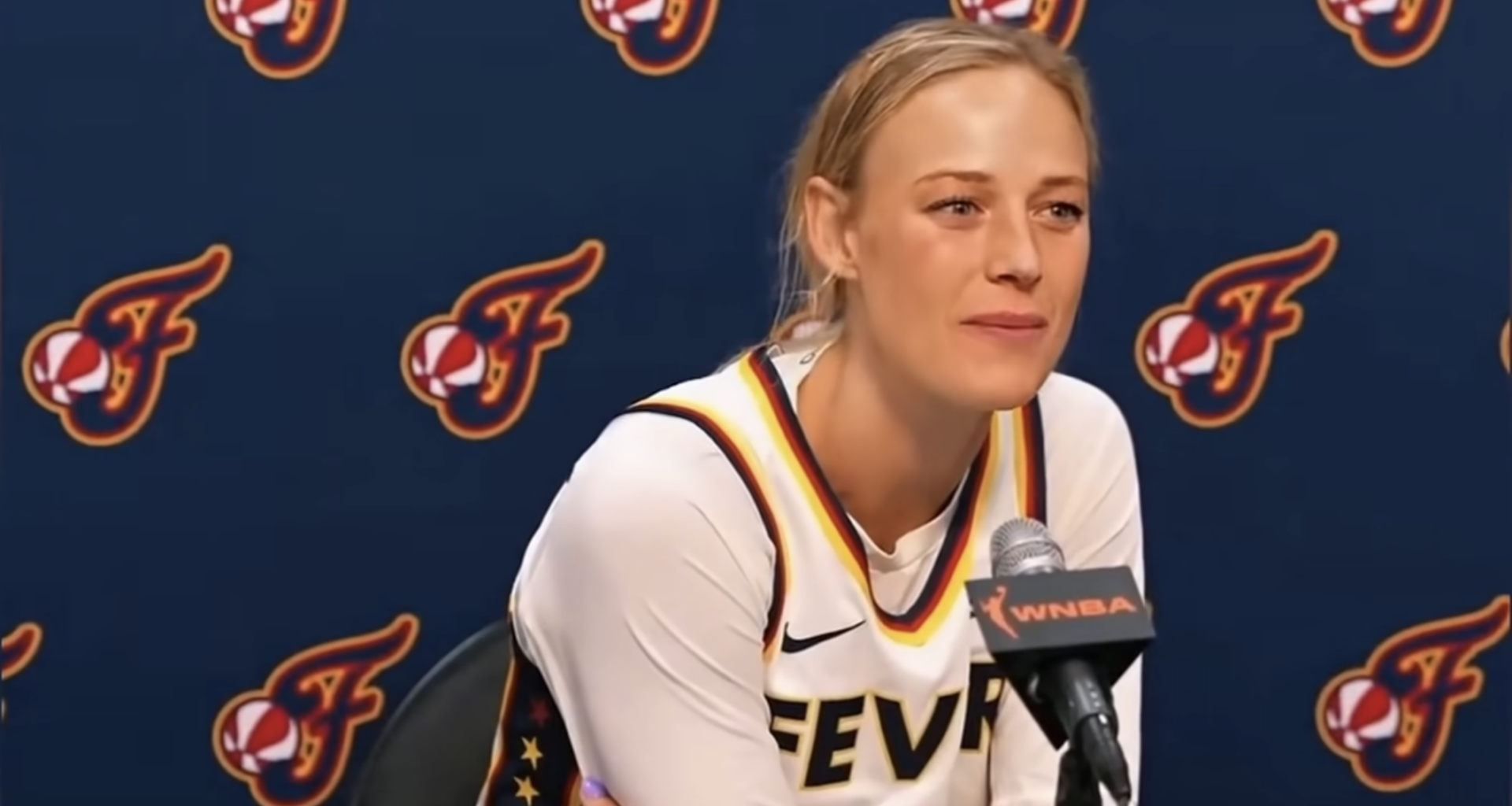
Consider this language from ESPN, while addressing current debates about whether players with male DNA should be eligible to play in all forms of women’s athletics, include basketball. Look for the key word in this sentence: “… [Cunningham] also insists that none of this is some Rosetta Stone to unlocking the true nature of her political worldview.”
Yes, the hoops star had used the word “political” when insisting that she didn’t want to be pulled into left-right political debates. The question is whether, in reality, the roots of her convictions may not be political, at all.
Writing at Religion Unplugged, journalist Clemente Lisi (a friend and academic colleague) connected some important dots in a feature with this headline: “WNBA Star Sophie Cunningham’s Faith Bigger Than The Culture War.”
“I’m going to let people just do the speaking for themselves, but for me, I want to get back to basketball,” Cunningham told reporters on Aug. 6. “It’s always been about basketball.”
That sounds like an athlete trying to escape controversy. Maybe it is. But it also reflects something deeper. For Cunningham, whose Christian faith has long been part of her public identity, basketball has never been just about winning political arguments. It has been about purpose.
The WNBA increasingly finds itself pulled into America’s culture wars. Every major social issue eventually seems to arrive on the league’s doorstep. Whether it is race, LGBTQ issues or transgender participation in sports, players and coaches are expected to take sides.
Near the end of the feature, Lisi offered this commentary:
Faith offers an interesting perspective here because Christianity has always distinguished between conviction and conflict.
Jesus never instructed His followers to avoid difficult issues. Neither did He encourage them to seek controversy for its own sake. Paul, for example, wrote that Christians should “speak the truth in love” (Ephesians 4:15). Those two concepts — truth and love — are often separated in modern debates. One side emphasizes compassion; the other. The Bible insists both belong together.
That is how Cunningham framed her original comments. She rejected accusations that she hates transgender people, insisting instead that her concern centers on protecting women’s sports while extending love to everyone involved.
I will end with one other interesting piece of Cunningham material, care of Basketball Network. The headline: “‘I want someone to lead our house’ — Sophie Cunningham opens up about what she wants in a husband.”
After years of speculation about her private life, including social-media whispers that she might be a lesbian, Cunningham openly stated her goals for marriage and family, while explicitly linking them to her faith.
Why didn’t these eyebrow-raising comments draw media attention? This small-media feature noted:
Aside from her preference for dating a taller guy, she also hopes to end up with someone who will take charge of the family
“I’m not shy about this at all,” Cunningham responded after confirming she is single and in response to the question of what the perfect man looks like for her. “I grew up in Missouri. Missouri was like the No. 3 party school. … Yeah, I went through the huge party stage. I’ve been with guys. But now that I’m actually where I’m at now today, my No. 1 thing is I want someone to push me towards Christ.”
Then there was this next quotation, offering a perspective that — if debated on cable-television talk fests — might be more controversial than Cunningham’s statements on gender and sports.
Speaking as if she was addressing a potential husband, she added:
“If you’re not about it, and you don’t talk about it, then don’t even talk to me. I have my blinders on. I still have a bunch of guy friends. I’m open to ideas and whatnot. But my No. 1 thing is I want you to lead our house, lead me, lead our future kids to serve and love a good, good God. …”
Truth is, that’s church talk. Pure and simple.