
It’s that time of year again! The Edmonton International Fringe Theatre Festival will once again take over the city. As the largest and longest-running Fringe Theatre Festival in North America, it’s a big celebration of creativity, storytelling and live performance.
I’ve been attending Fringe for most of my life, and many of my favourite summer memories have been made wandering between venues, taking chances on shows I knew nothing about, enjoying wild street performances and munching on green onion cakes at the main grounds.
If you’ve never been, my biggest tip is to go into it with an open mind, take risks and try new things! Fringe is all about embracing the unexpected — it’s an opportunity to experience theatre in an intimate setting and to see bold (and often unusual), experimental work you might never encounter elsewhere.
The spirit of artistic freedom, creativity and exploration are what make Fringe so special. It provides a platform for diverse artists and styles of performance to share their work with audiences of all ages. And Edmonton’s festival is always overflowing with talented performers! In fact, there is an embarrassment of riches with over 1,600 artists taking part in 209 theatre productions across 37 different venues.
Among these artists is my friend and U of A grad, Alysse Billings, also known as Loppity the Clown. If you’ve followed along with some of my other stories, you’ll know I’m a big fan of clowning as an art form.
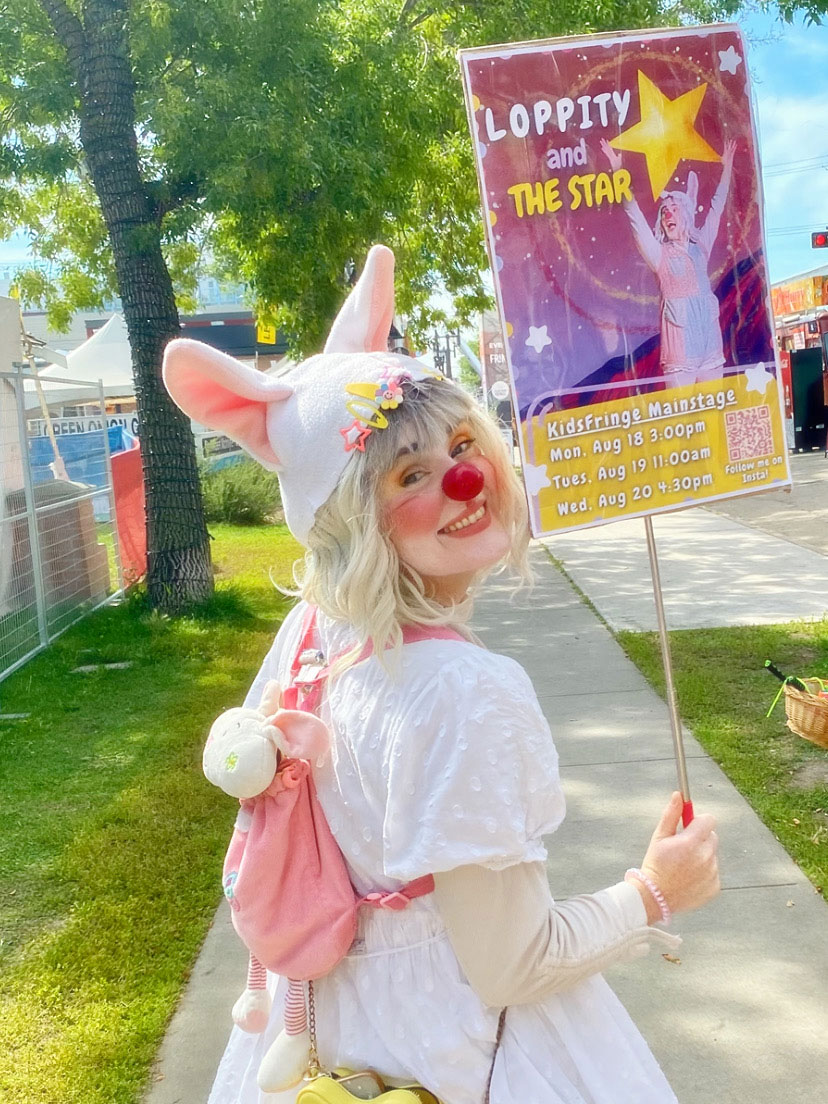
I recently sat down with Alysse to talk about her creative process, what draws her to clown, and the joy and magic she brings to performances.
How did you discover Loppity?
Loppity emerged as my core clown when I took a baby clown course with Jan Henderson in 2017. When you start as a baby clown, you make various masks that are different characters. Through the exploration of physicality and the masks, you bring them together into your core clown. Each mask is an aspect of yourself, and all of those come together as an expression of your core clown.
Developing a core clown and the ideas about what a clown actually is are what make me love clowning so much. It’s about trying to capture this most authentic and in-the-moment version of yourself. You can ride every emotion — but big emotions aren’t scary when you’re a clown because they live only in the moment. Clowning is an art form but also a very personal practice — it teaches you to make mistakes and embrace them.
Tell me about the development of your show, Loppity and the Star.
I’ve been clowning as Loppity for almost a decade. I did a piece during my undergraduate degree at the U of A’s Off the Cuff Cabaret in the Department of Drama and then started roving at festivals like Kaleido and Deep Freeze. I found my footing and just loved being at the festivals.
Then, a few summers ago, I had a brainwave about the star idea. I had this memory of roving at the lantern festival where I was carrying a star lantern and a bunch of kids came up to me and said, “Hey, we heard that you stole this star.”
I loved this idea that Loppity had stolen the star from the sky. After watching a bunch of clown shows at Fringe that year, I was committed to making this show happen, so I took a few more courses on solo and narrative clown to develop the ideas.
This is Loppity’s second appearance at KidsFringe. How has Loppity and the Star evolved in the last year?
During this year’s revision process, I had so much space and time to take a closer look at moments in the show and consider what was missing from the first iteration.
A big change this year is the addition of more music — I always clown with music when I’m at festivals, so it was a natural evolution. It was also great to have more time to design and play with the set and props. I focused on refining the details that help illustrate and build the world of Loppity.
What are your favourite parts of creating theatre for younger audiences?
Kids make a really fun audience because their suspension of disbelief is so high. They are so curious and ready to ask questions. Clowns are very playful by nature, and getting to play with kids and also inspire play in adults is another really exciting piece. It’s not just about igniting excitement in the kids, but also the parents.
Loppity is kind and magical and works really well with the kids — and they are just so ready to love a fun character.
What do you hope audiences, young and old, feel when they leave the show? Or after interacting with Loppity?
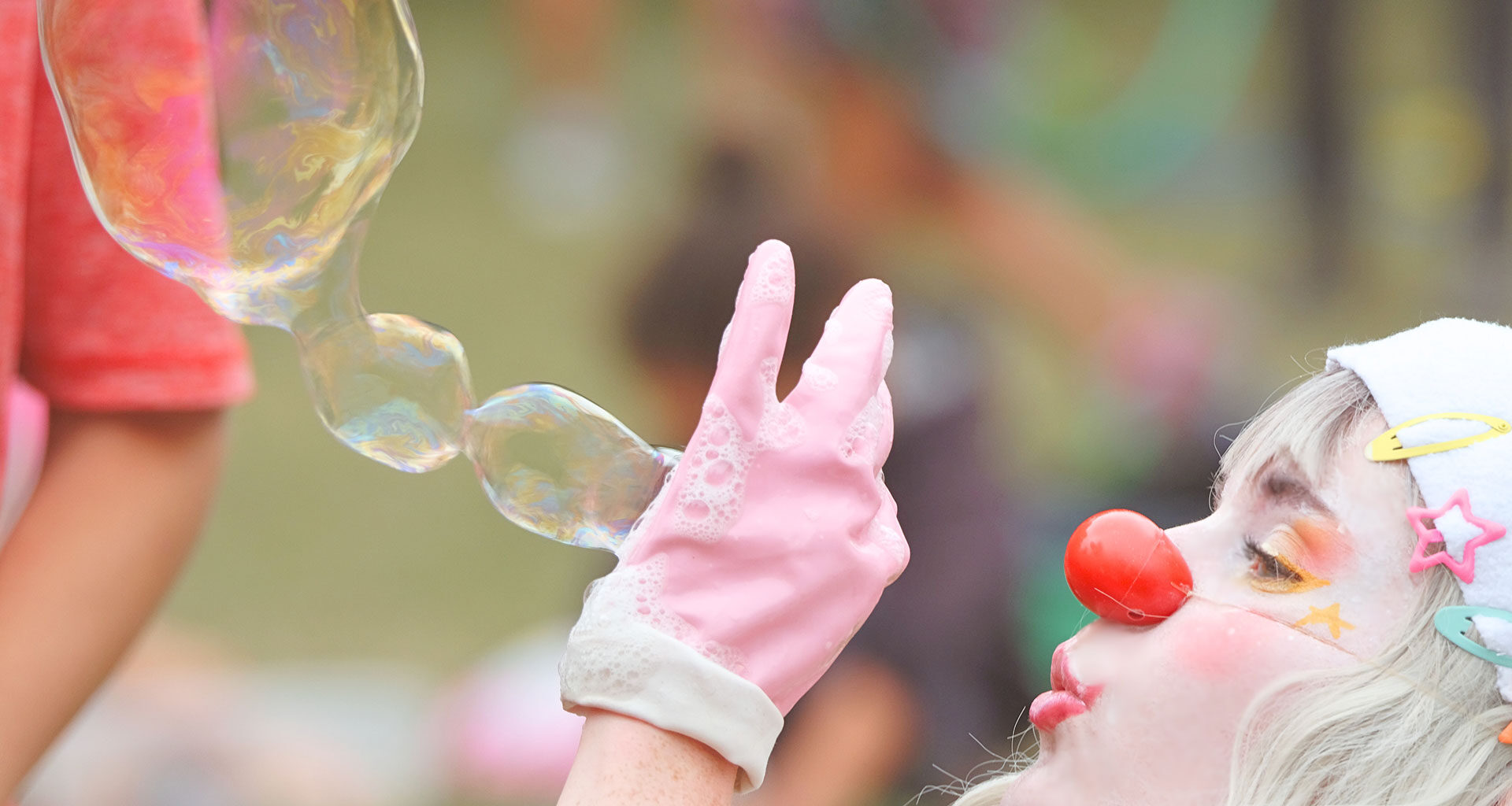
I always want to leave people with a sense of awe. I try to capture magic and whimsy, leaving people with big smiles on their faces. When I’m roving and I see an adult chasing one of my bubbles with a big smile on their face — that’s a feeling I’m trying to share.
One message that I try to carry through my work is that it is okay to show how you feel. Loppity goes through her highs and lows, but she never lingers in them too long before the next idea. That flexibility and resilience is something that I hope to impart on kids. It’s okay to be sad or angry if something doesn’t work, but it shouldn’t stop you from coming up with the next solution or idea.
As an educator, a big theme I see among kids and youth these days is that they are a little scared to make themselves look silly or take risks. For a clown, that’s their job — to be as silly as possible and to make mistakes, so that the audience can laugh along with them.
Don’t miss Loppity and the Star at KidsFringe and all the other amazing shows coming up at the Edmonton International Fringe Festival!