

Listen to this article
Estimated 5 minutes
The audio version of this article is generated by AI-based technology. Mispronunciations can occur. We are working with our partners to continually review and improve the results.
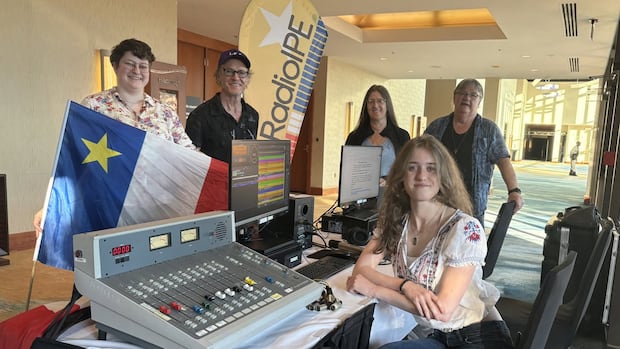
A French-language community radio station on Prince Edward Island has been steadily growing since it launched just over a year ago.
Radio l’Île-du-Prince-Édouard is an online station created for francophone and Acadian Islanders. It launched in June 2025 and is driven by community volunteers and local priorities.
“People have been waiting for such a long time for this radio station because it had been in discussion for well over 40 years,” said Paul Gallant, who hosts the morning show and helps lead the station’s programming.
“We’re not a big radio station … but it’s growing bit by bit.”
LISTEN | P.E.I.’s community-led francophone radio station:
Island Morning8:58P.E.I.’s community-led francophone radio station
Listeners have been tuning in to Radio Île-du-Prince-Édouard for over a year now. We check in with host Paul Gallant to hear how the community-led radio station has been getting on.
Gallant said the idea of a community French-language station on P.E.I. is not new. Francophone community radio stations have operated outside Quebec for decades, including stations across the Maritimes, helping preserve language and culture.
But when the group behind Radio l’Île-du-Prince-Édouard was ready to move forward, the CRTC had frozen new FM applications as it considered the future of radio and digital broadcasting.
Earlier community stations grew up on FM and later added online streaming. Radio l’Île-du-Prince-Édouard is doing the reverse.
“We’re kind of an experiment in terms of how do you make it function online,” Gallant said. “We know that we want to go to FM, but we know that it’s also changing.… We have to become a multimedia platform, and that’s a lot of work.”
For now, Radio l’Île-du-Prince-Édouard is on the air 24/7 through its website and a new app, with much of its programming focused on local artists.
“Our main focus is Island Acadian or francophone artists. Those are the ones we play as a priority,” Gallant said. “We also do anglophone artists from P.E.I. So that’s what a radio station is: it reflects the community.”
Gallant has seen the impact of that kind of programming before in a place he previously lived for decades. He said a community radio station there helped young people discover local musicians alongside global stars.
“Sure, they knew the American top 10,” he said. “But they also knew their local artists. The local artists were their heroes too.”
‘We’re wide open to the community’
Gallant said the station is not trying to compete with mainstream or commercial radio on the Island.
Instead, Radio l’Île-du-Prince-Édouard leans into hyper-local content and flexible programming that reflects its audience, something he said community radio can do best.
Volunteers can pitch niche shows that may never make it onto a commercial schedule.
“People can volunteer and say, ‘I want to do a show on jazz,’ whereas you might not find that on a commercial station. We’ll play it,” Gallant said. “We’re wide open to the community and what they want to hear and do.”
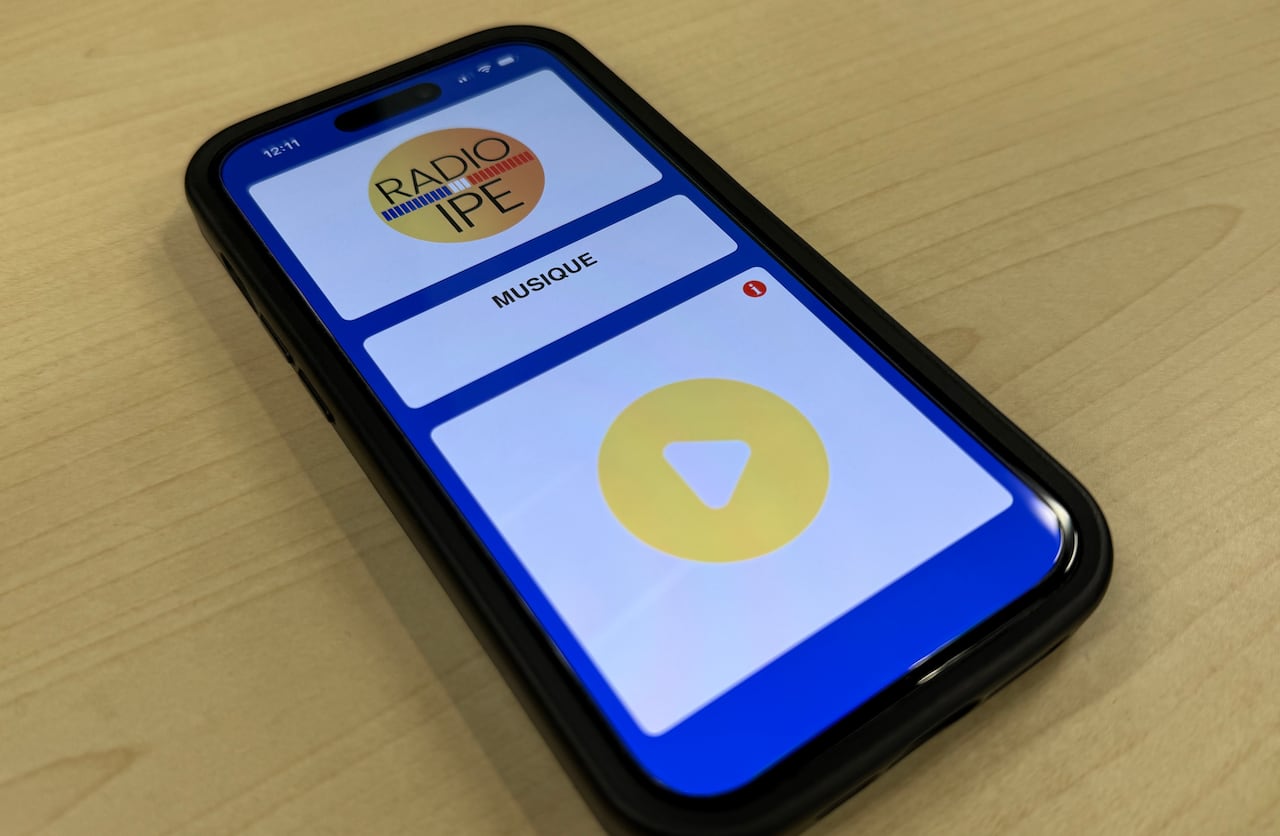 Radio l’Île-du-Prince-Édouard also has a free app, so listeners can tune in to the station on their phones any time. (Thinh Nguyen/CBC)
That openness extends to the Island’s increasingly diverse French-speaking population, he said.
“We try to maintain the Acadian language and culture and way of talking, but at the same time we’ve done some projects with the immigrant communities, and we want to do more,” Gallant said.
“Volunteer to do music in Arabic or music in Punjabi, whatever your language is — we’re welcoming in that sense too.”
To keep the station operating, Gallant said it sells some advertising and relies on a lot of community support.
“We do a lot of creative projects, if you will, to get some funding. But basically, we’ve got to maintain it on our own, and so far, it’s been going OK,” he said.
‘I have the best job in the world’
For Gallant, the work over the past year has been personally rewarding.
“For me, it’s two hours by myself listening to great music and discovering music. I think I have the best job in the world,” he said of his morning show.
Community radio, alongside public broadcasters, is part of protecting Canadian and francophone voices in a media environment dominated by U.S. content.
“It’s a reflection of our culture, who we are, and we don’t want to be too swept up by the American wave.”
Gallant pointed to recent discussions around cutting funding to public and community broadcasters, and he said that would have lasting consequences.
“The day that that happens is the day that we start to lose our democracy,” Gallant said. “You add community radio stations to that mix, make that stronger, and that’s good for everyone’s identity.”