
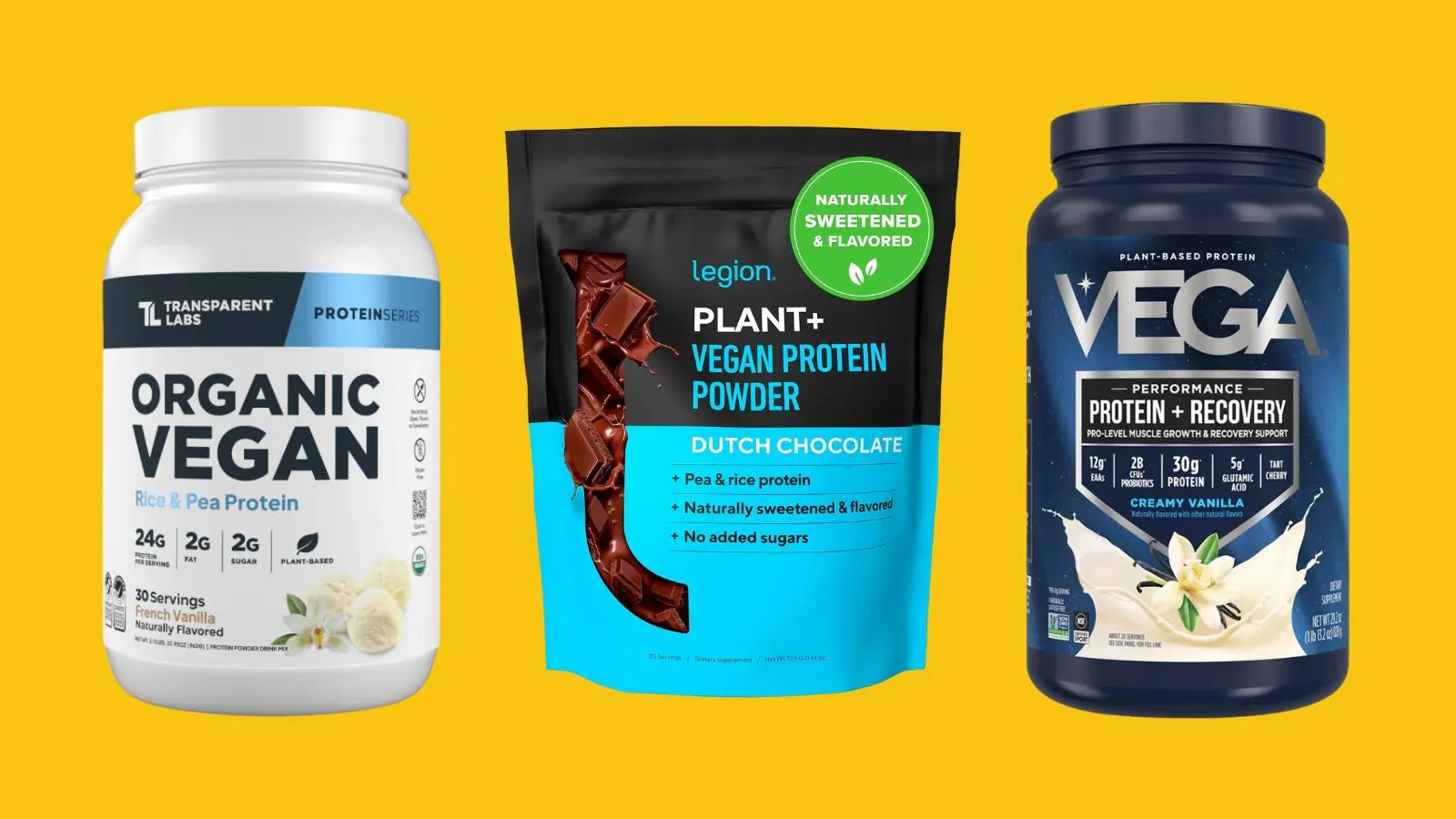
Plant-based protein powders have come a long way from the chalky, gritty blends on shelves less than a decade ago. Today’s vegan options taste good, mix well and can be effective alternatives to their animal protein–based counterparts. Still, it’s important to remember that plants can absorb contaminants from soil, so the vegan protein you’re using could contain substances you actually don’t want to consume. That’s why I consulted dietitians to find the best plant-based protein powders, naming Transparent Labs’ Organic Vegan Plant-Based Protein, the best overall for its simple ingredients and third-party testing. Since all of my picks are free of animal-based ingredients, they also qualify as vegan.
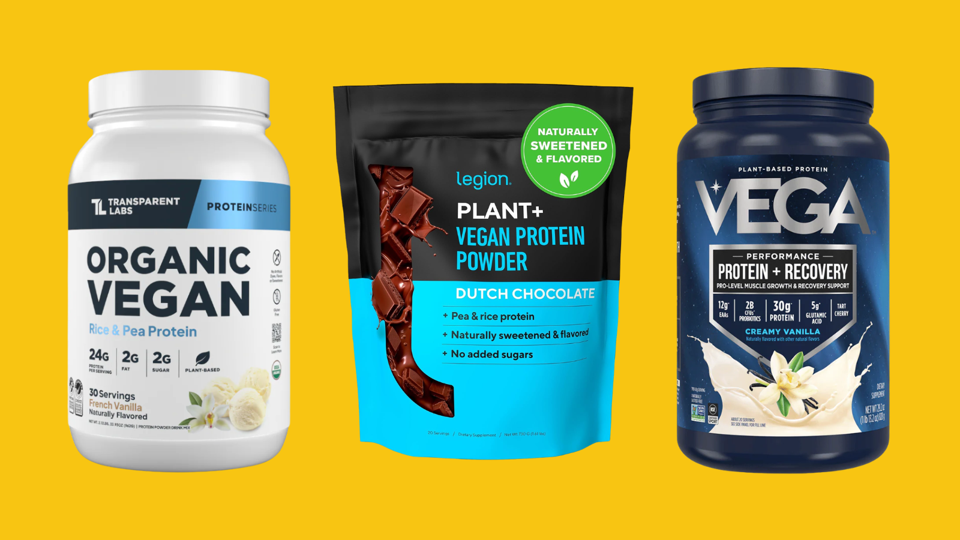
To find the best vegan and plant-based protein powders, we spoke with two dietitians.
ILLUSTRATION: FORBES / PHOTO: RETAILERS
“When choosing a plant-based protein powder, the ingredient list is one of the most important places to start,” explains registered dietitian Marissa Karp. “Another key factor is quality and safety.” With that in mind, I looked for blends with minimal additives and artificial sweeteners. From there, I focused on powders that have been verified for purity, potency and potential contaminants. What I found were four quality powders targeted to specific needs—whether you want to gain muscle or simply enjoy something that won’t upset your stomach.
Transparent Labs Organic Vegan Plant-Based Protein
Protein per serving: 24 grams | Serving size: 1 scoop (32 grams) | Protein source: Pea, rice | Ingredients: No artificial sweeteners, no artificial coloring, no artificial preservatives | Servings per container: 30 | Flavors: French vanilla and chocolate
What’s notable: This blend is easy on stomachs and packed with simple ingredients that have been third-party tested. We also appreciate its reasonable price.
What could be better: It only comes in two flavors, which isn’t ideal for those who like variety.
Want to read this story later?
Get a link sent straight to your inbox.
Remind Me
We’ve sent this story to your inbox.

 Why We Named It Best For Most People
The Transparent Labs Organic Vegan Plant-Based Protein is so widely recommended because it’s so simple. In fact, you don’t need an advanced degree to understand the nutrition label: It contains only pea protein, rice protein, cocoa powder, natural flavors, rock salt and stevia leaf extract for sweetness. The combination of pea and rice protein delivers the complete essential amino acid profile, and both protein sources are easier to digest if you have a sensitive stomach. Beyond the ingredients, Transparent Labs makes third-party testing results easily accessible, right from its website.
Easy to Digest, Yet Flavors Are Limited
Though I’ve called out Transparent Labs in the past for being expensive, it’s actually one of the more affordable blends in this guide at $1.66 per serving. That said, it only comes in two flavors: chocolate and vanilla. If you can look past the limited flavors, it still expertly balances quality ingredients, transparency and value, making it a great plant-based protein powder for most people.
Legion Plant+ Protein Powder
Protein per serving: 24 grams | Serving size: 1 scoop (34 grams) | Protein source: Pea, brown rice | Ingredients: No added sugars, no artificial sweeteners, no artificial coloring, no artificial preservatives | Servings per container: 20 | Flavors: 6, including French vanilla, apple pie and salted caramel
What’s notable: Made with pea protein, this blend helps you feel full—and it’s naturally sweetened.
What could be better: It contains xanthan gum to give the drink a thicker, creamier texture.
Why We Named It Best For Weight Loss
I’d like to kick off this recommendation with a disclaimer: Protein powder on its own will not cause you to lose weight. Instead, research shows that consuming protein can help increase satiety, making you feel fuller for longer periods of time. To that end, Legion’s Plant+ protein is well-positioned to help you feel full because it contains pea protein, a plant-based protein that lowers ghrelin, the appetite-increasing hormone that makes you feel hungry. Beyond its effects on hunger, I also like Plant+ because it’s naturally sweetened and tested for purity. Plus, it uses Puris, a premium pea protein derived from non-GMO peas grown without the herbicide glyphosate.
Contains Xanthan Gum, But Keeps You Full
All that isn’t to say Plant+ is a perfect blend. For one thing, it contains xanthan gum, a food additive used as a thickener or stabilizer that’s generally considered safe by the FDA but doesn’t have any nutritional value. And it’s pricey at $2.50 per serving, second only to the Vega Performance Protein + Recovery blend in this guide. Otherwise, it’s a great option to help manage hunger and combine with other weight-loss strategies if weight loss is your goal.
Vega Performance Protein + Recovery
Protein per serving: 30 grams | Serving size: 1 scoop (44 grams) | Protein source: Pea, pumpkin seed, sunflower seed | Ingredients: Cocoa powder, stevia leaf extract, sea salt, xanthan gum | Servings per container: 19 | Flavors: 5, including vanilla, berry and peanut butter
What’s notable: It has more protein per serving than any other blend in this guide. Besides protein, it contains BCAAs and tart cherry to support post-workout recovery.
What could be better: At $3.42 per serving, it’s more expensive than other powders in this guide.
Why We Named It Best For Muscle Gain
Packing 30 grams of protein and 5 grams of branched-chained amino acids (BCAAs) per serving—both large figures among plant-based protein powders—Vega’s Performance Protein + Recovery blend is a well-suited option to help you build muscle. In addition to pea protein and BCAAs, it also contains pumpkin seed protein to support muscle repair, sunflower seed protein to support muscle growth and tart cherry to help with muscle soreness and inflammation. Though you still need to put in the work to actually build muscle, it’s a well-rounded blend to support your efforts.
Effective, Although It’s Pricey
Much like Legion’s Plant+ blend, Vega has but two minor drawbacks: It contains xanthan gum to make it creamier, and it’s the priciest blend in this guide at $2.90 per serving if you opt for the 19-serving large tub (though the 44-serving XL tub comes out to $1.73 per serving). Again, neither of these are dealbreakers (xanthan gum is found in everything from salad dressings to dairy products), but according to dietitian Natalie Rizzo, long lists of fillers or gums can cause GI issues, like bloating. Consider this option if you’re looking for something that’s effective at supporting muscle growth and blends well.
Protein per serving: 20 grams | Serving size: 1 scoop (33 grams) | Protein source: Pea, pumpkin seed, chia seed | Ingredients: Vanilla powder, pumpkin seed, monk fruit extract | Servings per container: 20 | Flavors: 12, including vanilla, matcha and strawberry
What’s notable: Certain flavors are made with just three ingredients. It’s also easy to digest.
What could be better: At 20 grams of protein per serving, it has less protein than the other picks in this guide.
Why We Named It Best For Sensitive Stomachs
Truvani’s Plant-Based Protein Powder came recommended to me by Karp, who praised the “really simple, organic ingredient panel with no fillers or weird additives.” She went on to call it “a good choice if you’re sensitive or prefer cleaner formulas.” Reviewing the nutrition label, you’ll find organic ingredients and relatively simple formulas—the unflavored version has just three total ingredients. Combine that simplicity with the blend of pea, pumpkin seed and chia seed proteins, all of which are easy to digest, and Truvani makes for a great protein powder if you have a sensitive stomach.
Clean Ingredients, But With Less Protein Per Serving
Though Truvani doesn’t publish a full set of third-party test results, the brand explains its testing process on its website. According to Truvani, it tests each ingredient that goes into a product, followed by the finished product and each individual lot, which can amount to dozens or even hundreds of tests for a single blend. The brand says that volume makes publishing every result complicated, but it does outline its testing standards and “5 Rules for Truvani Ingredients” and shares an example lead test from one lot of its chocolate protein powder.
How We Chose The Best Vegan Protein Powders
We chose vegan protein powders based on a few simple but important criteria, reviewing blends for the following:
Protein type: To meet different fitness goals and dietary preferences, we included a variety of plant-based protein sources in this guide, from pea and rice to sunflower and chia protein. We also made sure each blend delivers at least 20 grams of protein per serving, which experts recommended as a good baseline.Ingredients: We looked for powders with simple ingredient lists and avoided options loaded with artificial sweeteners, fillers or additives that may cause digestive issues for some people.Effectiveness: We spoke with registered dietitians to source blends they approve of—those that support muscle growth, weight loss and well-rounded nutritional value, be it directly or indirectly.How To Shop For Vegan Protein Powders
When the time comes to shop for a vegan or plant-based protein powder, you’ll want to consider the protein source, quality of the ingredients and how well it mixes and tastes.
Protein Source
The type of plant protein you choose matters—because different sources offer different amino acid profiles. As Karp notes, “Many powders use complementary blends such as pea and rice to create a full amino acid profile. Some plant-based proteins, including soy, pea, hemp and chia, are complete on their own and also offer additional nutritional benefits like fiber, phytochemicals and omega-3 fats.” Here are the most common vegan protein sources to consider.
Pea protein: Pea protein comes from yellow split peas, is highly digestible and packs branched-chained amino acids (BCAAs), including leucine, which supports muscle growth. Though it doesn’t contain as much leucine as whey protein does, it’s easier on the stomach and hypoallergenic, making it one of the more popular plant-based protein sources on the market.Brown rice protein: Rice protein is also easy on the stomach, and it has a very mild flavor, which makes it easier to mask with other natural flavors like cocoa or vanilla. It’s often combined with pea protein to create a complete amino acid profile.Soy protein: Soy is actually one of the few plant-based protein sources that’s complete on its own, so it doesn’t have to be combined with other sources. Research also suggests it’s just as good at supporting muscle growth as whey, though some people prefer to avoid it due to soy allergies and its relationship with phytoestrogens—compounds that structurally mimic estrogen.Pumpkin seed protein: Pumpkin seed protein is rich in magnesium, zinc and healthy fats, and is usually blended with other protein sources to boost nutritional value.Chia and quinoa protein: Chia seeds and quinoa both provide complete protein sources, with the added benefit of fiber and omega-3s. Like pumpkin seed protein, they’re usually found in multi-source blends to boost nutritional value.Ingredients
Ingredient quality is especially important when it comes to vegan protein powders because plants absorb contaminants from the soil, like chemicals and heavy metals. In fact, a Consumer Reports investigation found that among 23 protein supplements tested for lead, plant-based options showed lead levels nine times higher than dairy-based blends and two times higher than beef-based ones, on average.
For this reason, Karp recommends looking for “well-formulated plant protein powders with simple ingredient lists, thoughtful blends and minimal additives.” Some artificial sweeteners, fillers and additives can cause digestive issues for certain people. Instead, look for natural sweeteners like stevia or monk fruit, and if you have any sensitivities, check the label for allergens.
Finally, “Third-party testing ensures safety, purity, and accurate labeling,” explains Rizzo, MS, RD. Though everyone benefits from testing and transparency, “NSF Certified for Sport and Informed Sport are gold standards for athletes concerned about banned substances.”
Taste And Texture
Vegan protein sources have traditionally been known for being chalky and gritty, but formulas have gotten a lot better over the years. I recommend reading reviews to ensure a blend mixes well in water, milk or smoothies, and keep an eye out for protein sources with earthy flavors, like pea and hemp, that might impact the taste.
Why Trust Forbes Vetted
We publish dozens of health and wellness guides each year, covering products across every stage of the wellness journey. From the best protein powders to the best protein bars, our coverage examines the latest products and trends in nutrition, fitness and more.
Former Forbes Vetted gear editor Cam Vigliotta has over six years of experience reviewing outdoor, training and wellness products. With a degree in kinesiology, he understands the importance of clean, simple supplements that help you gain muscle, recover or meet your personal dietary goals.Forbes Vetted managing editor Emmy Favilla, a 20-year media veteran, edited this guide. She primarily eats a vegan diet and has experience trying many plant-based protein powders.We regularly revisit this guide to make sure our recommendations are up to date. It was last updated in August 2026 by Forbes Vetted commerce writer Alexandra Garrett, who was vegan for six years and, like Favilla, personally tried many plant-based blends.Our Experts
Unlike drugs, dietary supplements do not require FDA approval for safety or effectiveness before they reach the market, which makes expert input and independent testing especially important. That’s why we worked with dietitians to find safe, effective plant-based protein powders and reliable information:
Marissa Karp, MS, RD, CDN, is a registered dietitian, and the founder and lead dietitian of MPM Nutrition.Natalie Rizzo, MS, RD, is a plant-based sports dietitian and the founder of Greenletes.