
This is not to say that Texas is a climate policy
paradise. It simply is following the Bush template: monetizing all the state’s
abundant natural resources. Texas isn’t forcing the phase-out of coal or
other fossil fuels, instead pursuing an “all of the above” energy policy, and they’ve
been welcoming to data centers. But this approach has strengthened the argument
that all new forms of energy are welcome, with the result that renewables don’t
have serious opposition, even in a state that normally loves
a culture war.
No serious opposition, that is, except from the Trump
administration, which has delayed
54 wind projects in Texas as part of its national
freeze. The president’s war on wind has
been criticized by conservative Texans, who see his moves as interfering in the
free market—and with their values and economic interests. Former GOP state Representative
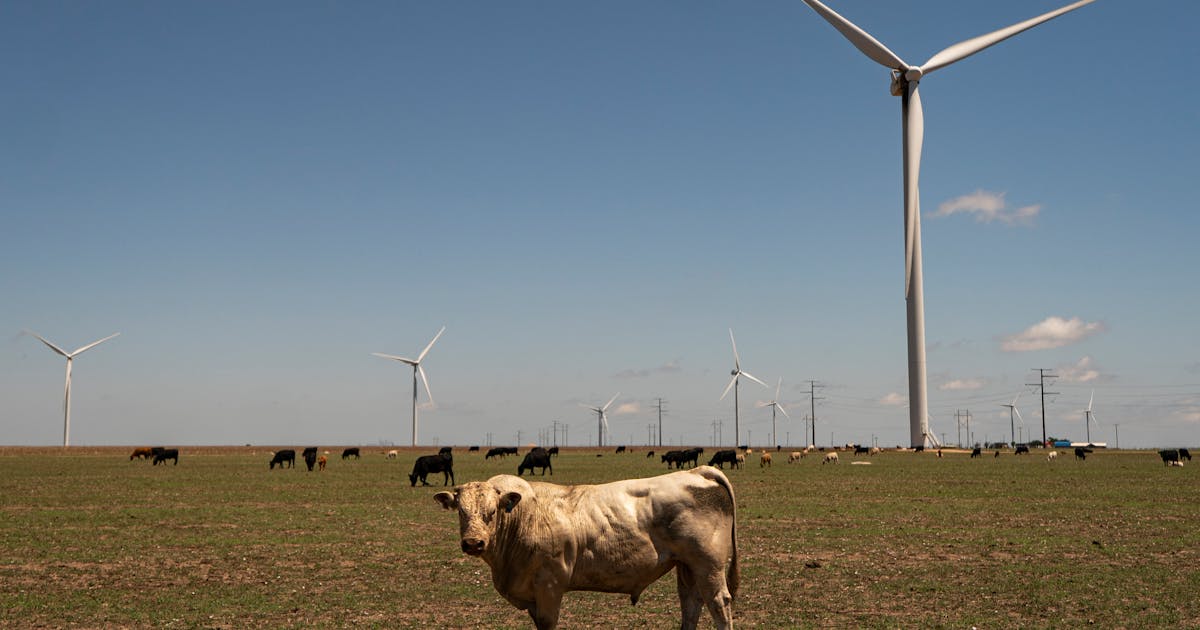
John Davis, a Trump voter who has seven wind turbines on his ranch, told
the Chronicle that wind energy was a “conservative idea” and that he
was frustrated with Republicans who have abandoned it: “Their own voters are
rural Texans, and it’s hurting their own voting base.”
Renewable energy makes practical sense in rural places all over the
country, where people are struggling with high energy bills yet have abundant
access to sun and wind. If Republicans nationally continue to back Trump’s
weird vendetta against wind it could hurt them in Texas but also in other conservative
rural states. After all, the state that produces the second most wind energy is
Iowa, a famously important state in the presidential election calendar. And
solar farms and battery storage on coal mines are not even unique to Texas, as similar
projects are underway
in Illinois, Kentucky, Tennessee, Virginia, and Louisiana.