

Listen to this article
Estimated 4 minutes
The audio version of this article is generated by AI-based technology. Mispronunciations can occur. We are working with our partners to continually review and improve the results.
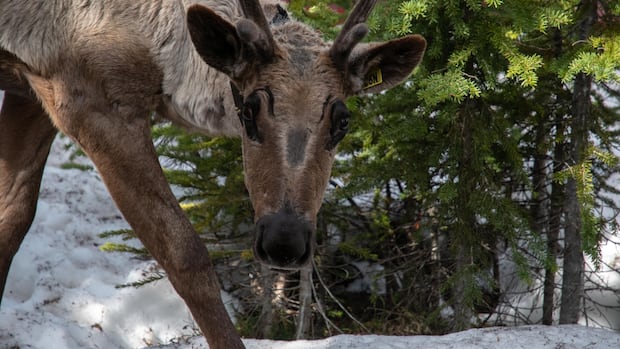
Five caribou raised in captivity are now roaming free alongside wild caribou in Jasper National Park’s Tonquin Valley.
The animals were raised at the first caribou conservation breeding centre in North America, run by Parks Canada to help boost the region’s caribou population.
Over the last two years, Parks Canada has captured wild caribou and brought them to a breeding facility 35 kilometres south of the Jasper townsite. The federal agency announced its first release of caribou in June – four male yearlings born in captivity, and one adult male from the Brazeau herd brought in for breeding.
Jean-Francois Bisaillon, program manager for the Caribou Recovery Program, said watching the animals step into the backcountry on June 24 was an emotional experience for staff, and a huge success for the caribou.
“To see that the whole cycle, the whole concept works is highly rewarding,” said Bisaillon.
Caribou populations have been listed as species at risk in Canada for more than 20 years due to habitat fragmentation and rising wolf predation driven by industrial development.
The Parks Canada program was conceived more than a decade ago to prevent local extinction in the Rocky Mountains.
There are 50 wild caribou, including 11 reproducing females, left in the Jasper-Banff local population unit, which encompasses the area south of Highway 16 in Jasper National Park and all of Banff National Park.
Bisaillon said when a group of caribou has fewer than 10 reproducing females, the herd is not self-sustaining.
“We’re just right at that threshold,” said Bisaillon. “And that’s why this project is so important.”
Leading up to the release
In March 2025, Parks Canada staff captured 10 wild caribou — including seven pregnant females — in Jasper National Park and brought them to the breeding centre.
Later that year, seven healthy calves were born, and one orphan caribou was brought in from British Columbia. In March 2026, six additional wild caribou were captured and added to the breeding herd.
WATCH | Inside the breeding facility: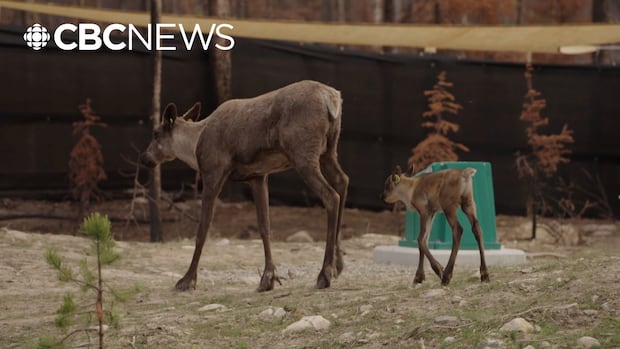
Can Jasper’s new breeding centre save caribou from local extinction?
Parks Canada let CBC take a tour of the Caribou Conservation Breeding Centre in Jasper National Park. Seven calves were born at the $40-million facility last spring, giving hope that the local population will once again thrive in the wild.
But June marks the first time caribou have left the breeding centre and joined the wild caribou in Jasper National Park.
The five male caribou were sedated and transported via helicopter on June 10 to a temporary soft-release pen close to Amethyst Lake, said Bisaillon. The caribou adapted from pellet food to natural food like lichen, and got used to navigating in the natural environment of boulder fields and running creeks.
After two weeks, Bisaillon and the team felt the caribou were ready to be fully in the wild. Within an hour of opening the gates, all the caribou had left the pen.
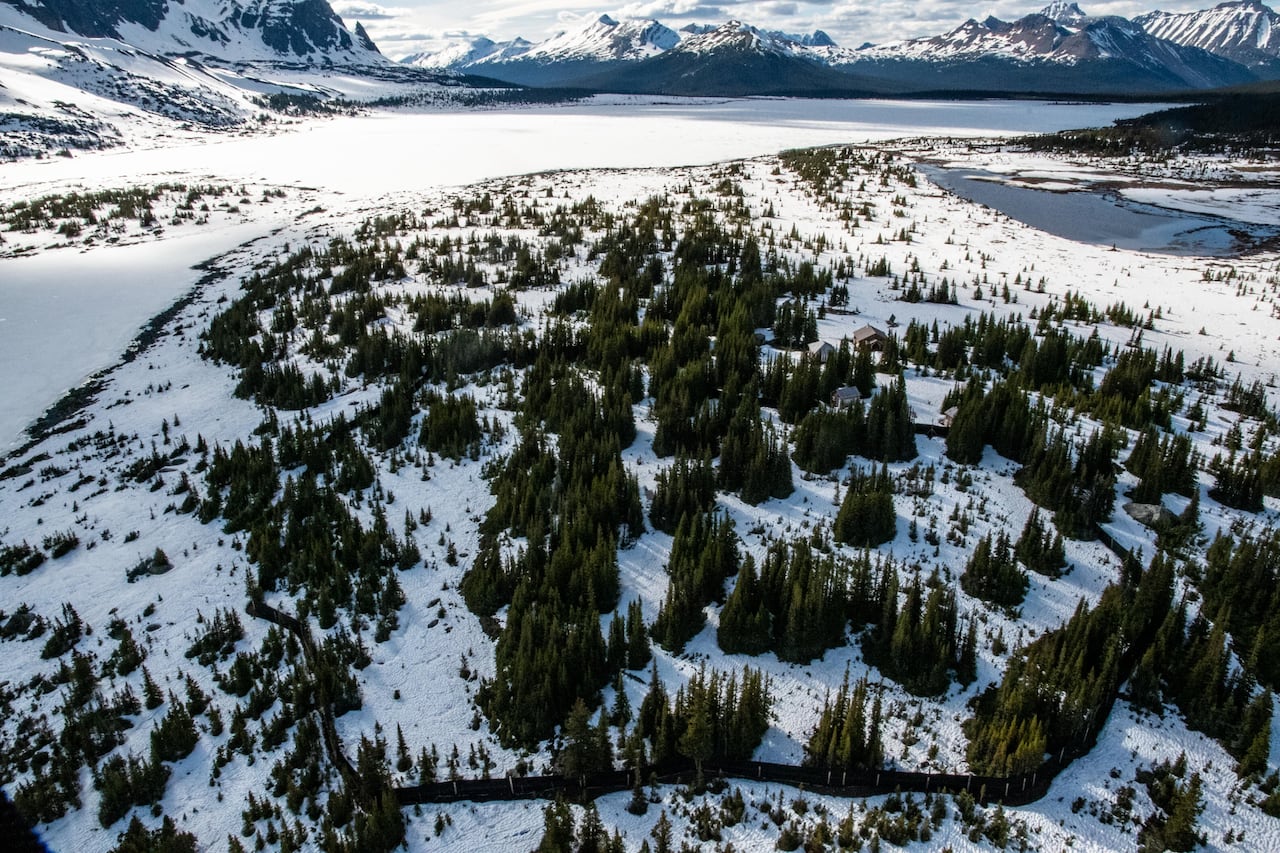 The transitional soft-release pen close to Amethyst Lake in the Tonquin Valley, Jasper National Park. (Lalenia Neufeld/Parks Canada)
The release was timed to match the movement patterns of local wild caribou. According to GPS collar data, the captive caribou gravitated toward the wild herd, and within a few days, they were actively travelling together.
“Caribou are social animals, so we were expecting the wild animals to accept the released caribou – and now we can prove that,” said Bisaillon.
“Mission accomplished.”
The female calves born in captivity remain there to populate the breeding herd. This will allow the captive caribou to produce more offspring, which will later be released into the wild.
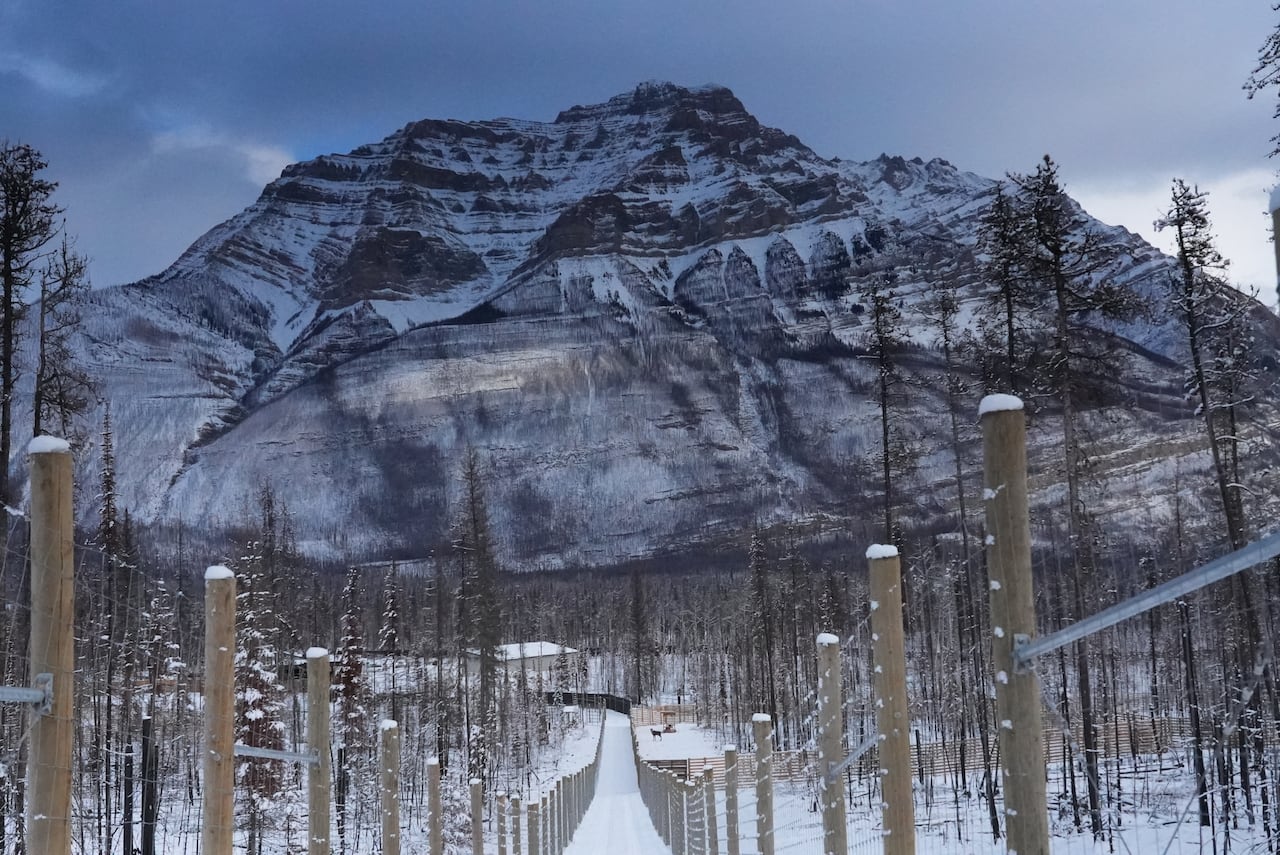 A lone male is spotted at the Caribou Conservation Breeding Centre in Jasper National Park. (Maggie Kirk/CBC)
The main objective of the program is to repopulate the Tonquin herd to 200 over the next 10 years, then reassess bringing back the Brazeau and Maligne herds.
Wolf prey
Mark Boyce, an ecologist at the University of Alberta, said that caribou decline in Alberta is tied to the forestry and oil industries, which he said disrupts the ecosystem.
“Not only are we destroying their wintering grounds — where they feed on lichen and find shelter — but we’re also creating an ideal habitat for deer, elk, and moose,” said Boyce.
Increasing prey animals also increases wolves, which also hunt caribou, explained Boyce.
While Jasper National Park is protected from forestry and oil development, Bisaillon said wolf populations are the biggest factor in the decline of caribou in the park.
Bisaillon warned the 2024 Jasper wildfire damage has potential to increase wolf populations because the burn on the valley bottom encourages grass vegetation – perfect for deer and elk grazing.
“We want the whole ecosystem to be functioning without human intervention,” said Bisaillon. “That’s our whole goal.”