

Listen to this article
Estimated 3 minutes
The audio version of this article is generated by AI-based technology. Mispronunciations can occur. We are working with our partners to continually review and improve the results.
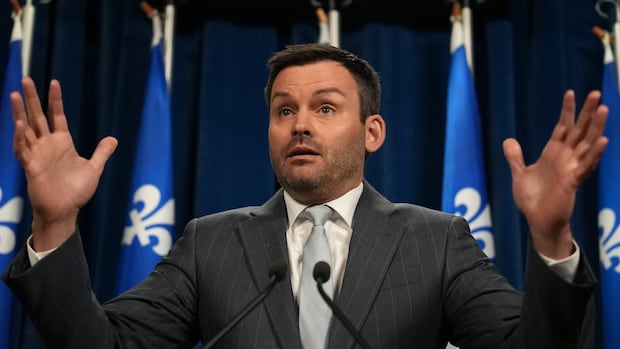
The Parti Québécois will not hold a referendum as long as U.S. President Donald Trump remains in power, party leader Paul St-Pierre Plamondon announced Tuesday morning.
In a news release, St-Pierre Plamondon said he wants to avoid having the issue “hijacked by the ups and downs of American politics.”
“An issue as crucial as the political future of Quebec requires conditions that allow for an informed and calm debate,” the PQ leader said.
He said the next government will be faced with “more than enough challenges” without calling a referendum.
“So I decided to completely defuse the argument that this would be the worst time to think about our future because of Trump, by ruling out the possibility of holding a referendum by the end of his second term,” St-Pierre Plamondon explained.
Trump’s second term is set to end on Jan. 20, 2029.
St-Pierre Plamondon said that, if elected, he would still consult Quebecers on the issue of independence during his first mandate, but only after Trump leaves office.
The announcement comes just over a week ahead of the official launch of the Quebec provincial election campaign. Voters are scheduled to head to the polls on Oct. 5.
Across the country, Canadians are waiting to hear what comes of last-minute negotiations to avoid a fresh batch of American tariffs expected to take effect this week.
Prime Minister Mark Carney said the discussions are “delicate” and “intense.” He plans to speak to his American counterpart before the Wednesday deadline to broker a mutually agreeable deal.
WATCH | More on the PQ’s decision: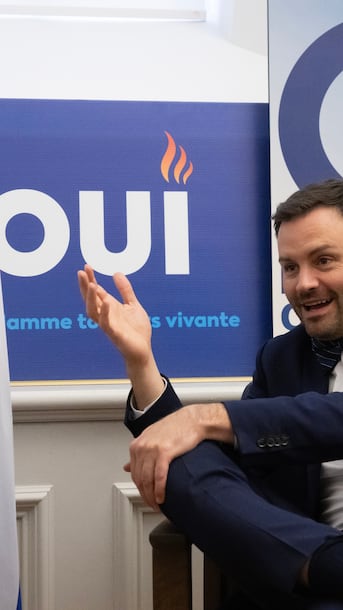
PQ says referendum on Quebec independence won’t happen while Trump in power
In a post to social media Tuesday, Paul St-Pierre Plamondon said he doesn’t want to risk the debate being “hijacked by the ups and downs of American politics.”PQ leader seeks to appeal to anglophones
The separatist leader has promised to hold a referendum in his first mandate, and while anglophone voters have largely supported Liberals in the past, St-Pierre Plamondon has been making an appeal to them in recent weeks.
In an open letter published in the National Post last week, St-Pierre Plamondon said he has heard from anglophones who “share the same realities and concerns” as francophones in the province.
As examples, he points to issues related to the cost of living and purchasing a home as well as struggles in the education and health-care systems to provide sufficient services.
“We are all in the same boat,” he wrote. “We live under the same institutions. We pay the same taxes. We deserve the same high-quality public services and individual financial well-being.”
Speaking of the PQ’s announcement in an interview Tuesday morning, Quebec Liberal Party Leader Charles Milliard said the postponement “tells me that the option of separating Quebec from Canada is a weak option.”
He says this announcement is an attempt to manipulate public opinion.
“It’s a party that’s saying yes and no at the same time.”
In a recent poll published by Angus Reid and surveying just over 900 people, only 15 per cent of respondents said they would “definitely vote to leave” if a referendum were held today.
An additional 11 per cent responded they would “lean toward voting to leave.”
Regardless, the PQ is ahead in the polls.
According to political aggregator 338Canada, the Parti Québécois holds a lead in overall voting intentions, placing them ahead of the Quebec Liberal Party and the governing Coalition Avenir Québec.
WATCH | What political ads tell us about the coming election:
What Quebec parties’ pre-campaign ads suggest ahead of the election
The Coalition Avenir Québec and Parti Québécois have launched pre-campaign ads, and analysts believe these messages provide a better idea of the parties’ priorities. Public relations consultant Victor Henriquez says a key focus for the CAQ is the economy, while the PQ is aiming to win back voters from the governing party.