

Listen to this article
Estimated 4 minutes
The audio version of this article is generated by AI-based technology. Mispronunciations can occur. We are working with our partners to continually review and improve the results.
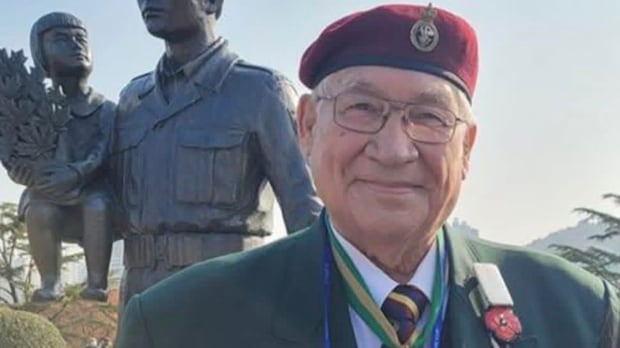
Claude Petit lived a life defined by action, from his time in the Korean War to his championship boxing career and his three-decade commitment to the Western Canadian Native Minor Hockey Championships, which he founded.
Petit died on Aug. 11 at the age of 90, according to his obituary.
Many remember Petit, who was Métis, as an activist for Indigenous veterans and for youth in sports. His family fondly recalls his vibrant, active life.
Petit grew up in Duck Lake, Sask., about 80 kilometres northeast of Saskatoon. He was a decorated Korean War veteran, following the footsteps of his dad and other family members.
“He joined the army at 16. He actually told me the story. He went down to Regina with one of his uncles and he signed up there with his uncle and they went overseas to Korea,” said his nephew, Claude Roy Petit.
“My dad signed up with him not long after. And yeah, 16 and 17 years old, and they were on a boat to Korea.”
Petit would go on to be the five-time Canadian Army heavyweight boxing champion and the only Canadian to win the British Army heavyweight title.
“When he came home, it was boxing,” his nephew said.
He said his uncle and his dad started boxing clubs at friendship centres in Saskatoon and other areas of the province.
“He started clubs everywhere. He’d pick up kids and ask them if you want to go boxing or play baseball or whatever. He was very active in sports,” Petit’s nephew recalled.
Petit’s son, Garth Okemaysim, said boxing wasn’t the only sport he was involved in, pointing to the Western Canadian Native Minor Hockey Championships.
“He started [it] for Aboriginals to play and get a chance to get scouted, get seen all the way up from novice all the way up to midgets. [He] did it for 30 years,” Okemaysim said.
Okemaysim said his dad was also very proud of his children’s accomplishments.
“When the first Indigenous Games started, they were in Edmonton. I went there and I won the gold medal and he still has it in his house. He was very proud of that,” Okemaysim said.
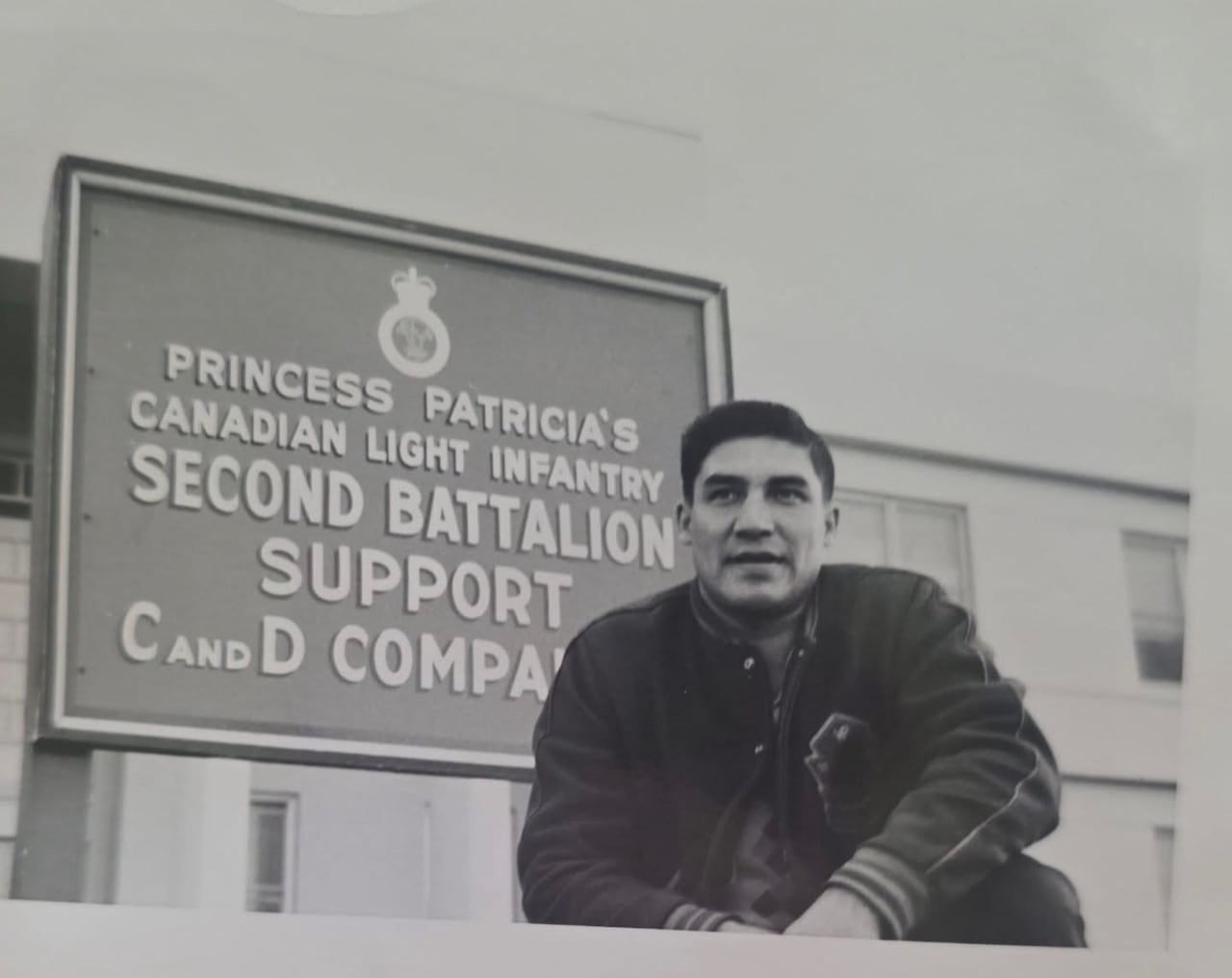 Claude Petit joined the military after a day trip with his uncle. (Submitted by Garth Okemaysim)
Petit’s work in sports got him inducted into the Saskatchewan Sports Hall of Fame (SSHFM) in 2014 under the builder category.
“He’s an interesting case because I think a lot of times with an athlete and a builder, the line is pretty fine between their contributions. Claude was a great athlete. Obviously, primarily a military boxer,” said Matthew Gourlie, SSHFM communications co-ordinator.
Gourlie said Petit also made great contributions after his time in the military.
“He was a great coach. He worked with the national teams for a couple events as a coach in boxing. He started [an] Indigenous hockey league. Yeah, as a builder he had great, really impressive accomplishments,” Gourlie said.
“A really well-rounded career and I guess, ultimately, a well-run life.”
Petit was awarded the Order of Canada in 1998 and the Saskatchewan Order of Merit in 2002 for his outstanding community contributions.
“He was very successful in the military, obviously, with a great athletic career in the military as well. But then had this other chapter where he became a member of the Order of Canada. You know, he sat next to Queen Elizabeth and had dinner with her in 2005,” Gourlie said.
Petit was a big advocate for Korean War veterans, and helped get the National Aboriginal Veterans Monument put up in Ottawa.
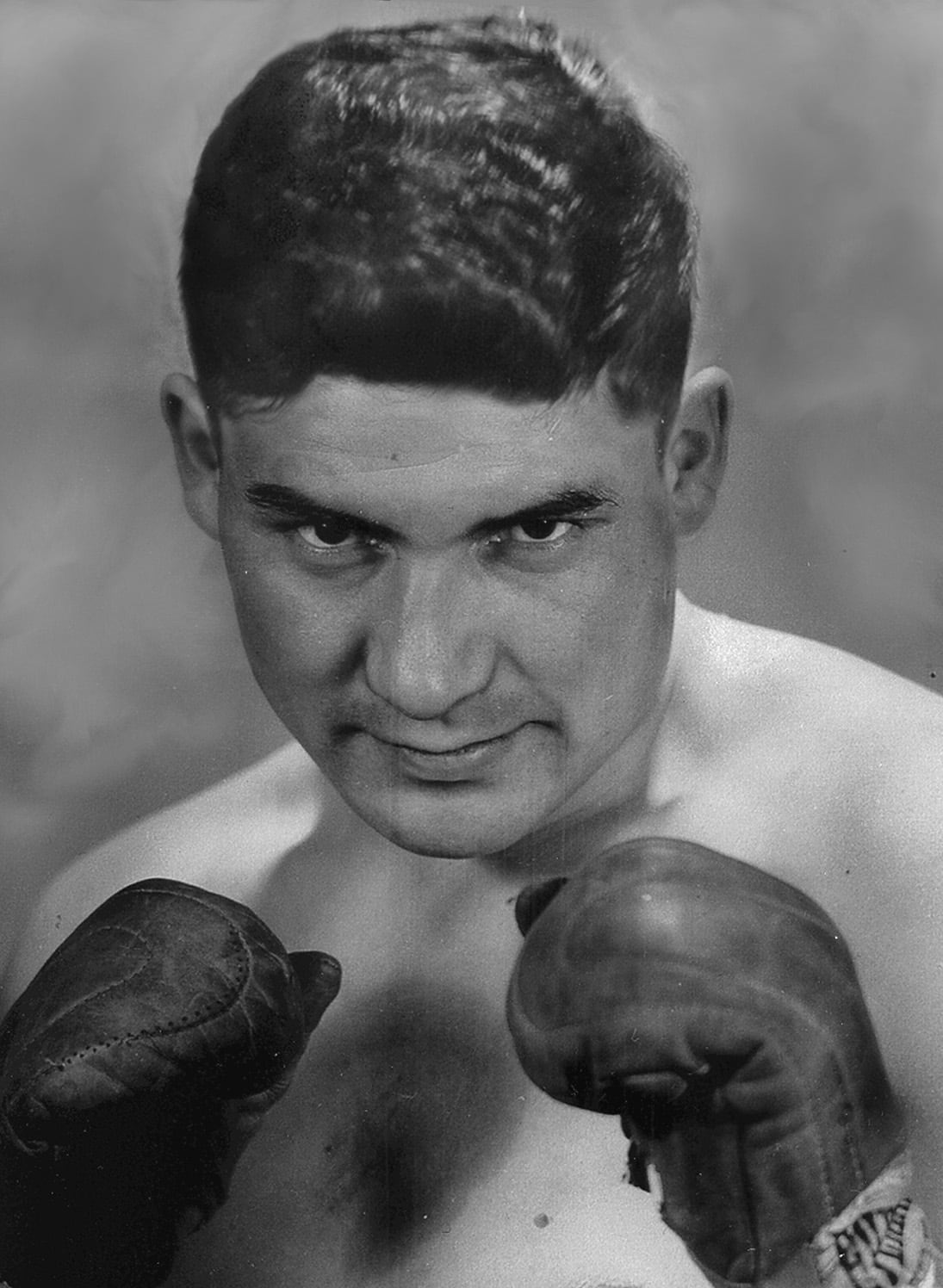 Claude Petit was a five-time Canadian Army heavyweight boxing champion and the only Canadian to win the British Army Heavyweight Boxing Championship. (Saskatchewan Sports Hall of Fame)
While Petit is now gone, family and friends will carry his memory on. Among them is friend John Brady McDonald, a military historian.
“His words carried a lot of weight. He was one of those men that when he started talking, you just sat and listened,” McDonald said.
“Even if you weren’t at the same table, you would turn around and listen to him when he started talking.”