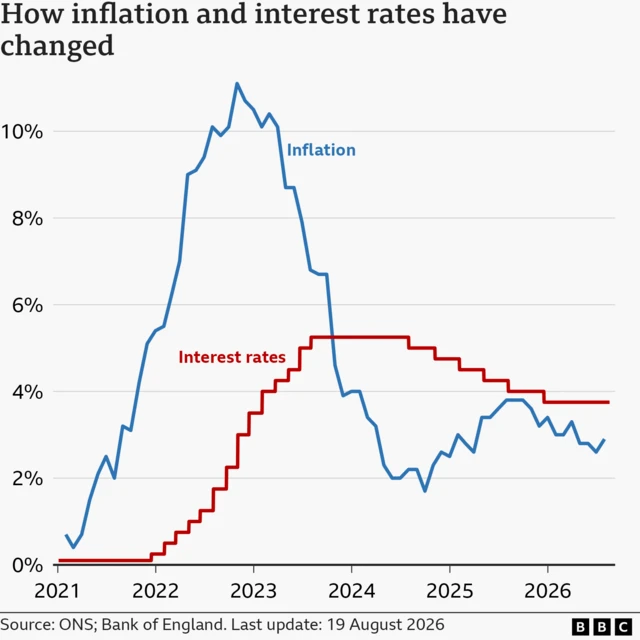
 What the inflation rate could mean for interest rates and mortgagespublished at 08:27 BST
08:27 BST
 Dharshini David
Deputy economics editor
Among the bills many households have to contend with are mortgages and rent – so where do the latest inflation figures leave the Bank of
England?
Remember, interest rate changes take a while to impact
prices, with the Bank setting rates to influence future inflation.
And there is little in these figures to change its belief
that, in the medium term, inflation will come down to its 2% target.
Actually, the fact that the likes of food inflation has
remained muted may give it hope price pressures remain fairly contained.
Yesterday’s flat jobs and moderate wage growth figures also may lead the Bank to think
that firms have little opportunity to get away with hiking up prices.
That’s why some economists think rates may not rise this
year after all.
But there are still risks of a rise – if inflation does rise
by more than analysts expect later in the year, or if the war Iran drags on,
threatening more upheaval for energy costs.
A reminder: Interest rates are a key tool the Bank of England can use to keep inflation on track with its 2% inflation target. It can raise interest rates to reduce inflation, and lower them to stimulate growth.