
Federal–territorial meeting highlights different priorities within northern healthcare
Published 5:00 pm Wednesday, August 19, 2026
Federal and territorial health ministers used an Aug. 18 meeting in Whitehorse to outline differing priorities for northern healthcare, with Ottawa stressing national pressures while the Yukon pressed for major infrastructure commitments.
The discussion formed part of federal Health Minister Marjorie Michel’s week‑long visit, which she said was intended to give Health Canada a clearer understanding of conditions shaping care in the North.
Michel said her department is focused on access to care, the opioid crisis and supports for Indigenous communities, describing those issues as consistent across Canada. She said travelling with her deputy minister helps federal officials see realities on the ground and adjust their work accordingly.
“I would say the challenges that we are seeing here are quite the same as the ones that I see across the country, like access to care, the opioid drug crisis, particularly in the remote communities,” Michel said.
“It’s across Canada.”
The Yukon’s early adoption of the federal Working Together agreement, a seven‑year mental‑health funding program, was cited as one example of how Health Canada supports territorial health priorities. Michel said the federal government’s role is to support territorial priorities rather than define them, noting the federal government does not deliver healthcare services directly.
Michel also highlighted the $5‑billion national health‑infrastructure fund announced last year, saying the Yukon has signed on for roughly $74.8 million. She said Health Canada has moved to a 75-25 funding model for projects in the territories, with Canada covering 75 per cent of costs to account for their unique needs and capacity.
The federal minister’s visit included an announcement on Integrated Youth Services, which will feature a Whitehorse facility and a mobile unit designed to bring full‑service supports to communities. She also announced the establishment of the Yukon Network Environments for Indigenous Health Research.
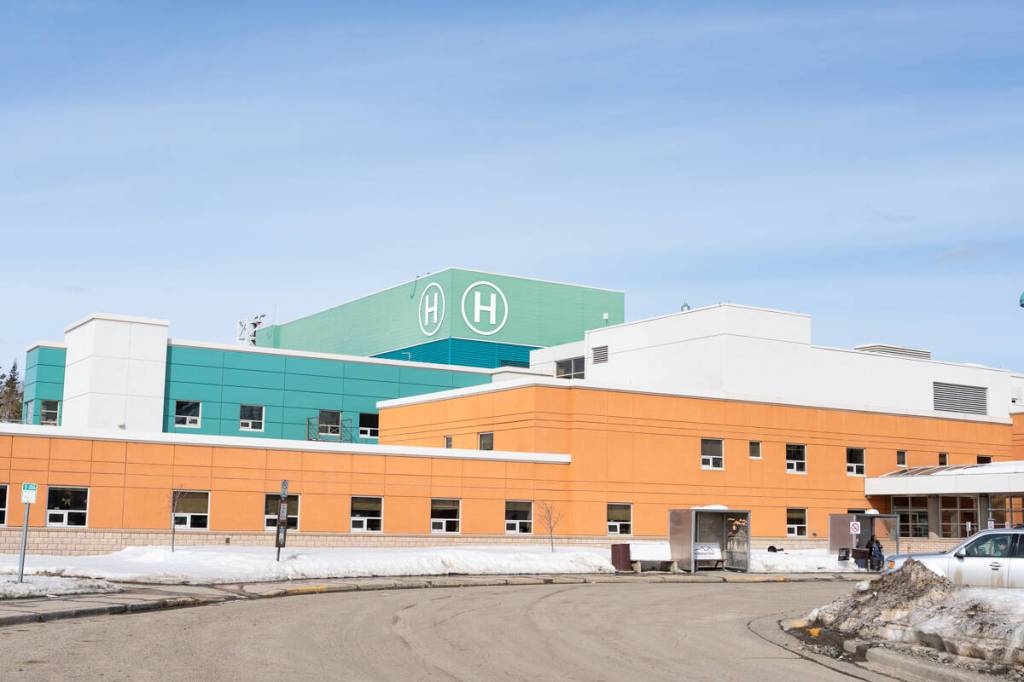
The Aug. 18 meeting gave territorial Health Minister Brad Cathers an opportunity to restate the Yukon’s top priority which is expanding Whitehorse General Hospital. He told the News the facility is overdue for additional beds and surgical capacity for a population that has grown since the hospital was built in 1990.
Cathers said the expansion, estimated at more than $1 billion, is also tied to Arctic sovereignty. He noted Whitehorse General is one of only two hospitals north of 60 capable of supporting military operations, arguing the project is a matter of national interest.
“It is in our view in the national interest to support the Yukon in moving forward the Whitehorse General Hospital expansion project,” Cathers said.
While he said federal infrastructure funding is appreciated, Cathers argued it is insufficient for the territory’s needs at its current level, noting the $74‑million allocation is easily outstripped by identified projects. He said the Yukon is continuing to press Ottawa to partner on the Whitehorse General Hospital expansion.
Both ministers acknowledged staffing shortages across the territory. Michel said provinces and territories are discussing more seamless licensing, though national accreditation remains complex. She noted the Yukon has recruited 11 doctors this year, including two from Quebec.
Cathers clarified those doctors were Canadian‑trained and eligible for full licensure. He said his recent declaration of need allows an expedited licensing process for doctors from the U.S., U.K., Australia and Ireland, but the legal provision applies only to physicians under the territory’s Medical Profession Act.
The federal minister said her visit helped build relationships and hearing directly from communities. She said she hopes to see improved outcomes for Yukoners as Health Canada works to strengthen its understanding of northern conditions and deepen its relationships in the territory.
“I hope to see progress on the ground. I hope to see better outcome for people of the Yukon, because we are really dedicated. It’s my commitment in my role as minister,” Michel said.
Contact Jake Howarth at jake.howarth@yukon-news.com