
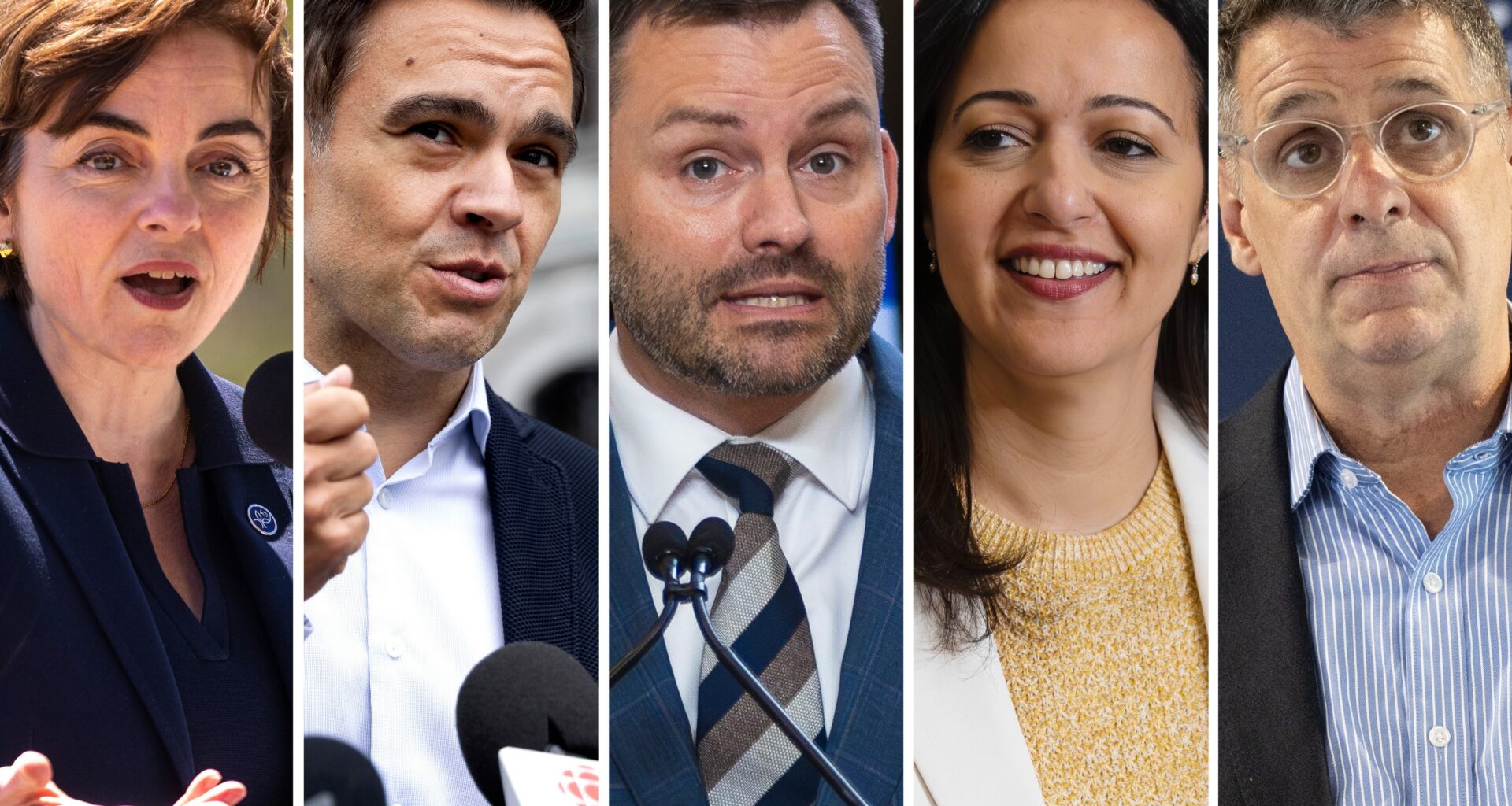
QUEBEC — The election Quebec is about to experience will be a game-changer.
Start with the fact that the Oct. 5 vote will usher in a largely new crop of politicians setting up shop in the newly renovated Salon bleu of the legislature. That’s because so many others have opted not to run again.
Of the 90 Coalition Avenir Québec MNAs elected in 2022, 45 won’t be on the ballot again in 2026 (and two others are running with other parties).
Gone from the slate of candidates are such familiar names as Christian Dubé, Geneviève Guilbault, Lionel Carmant and Sonia LeBel, plus former premier François Legault, who stepped down in January but is finishing his term as an MNA.
Some, like Transport Minister Benoit Charette, left it to the last minute; Charette announced on Wednesday that he will not run again, a mere week before the expected campaign launch.
Four out of 11 Québec solidaire MNAs have thrown in the towel. The Liberals are down one. All seven Parti Québécois MNAs are running again.
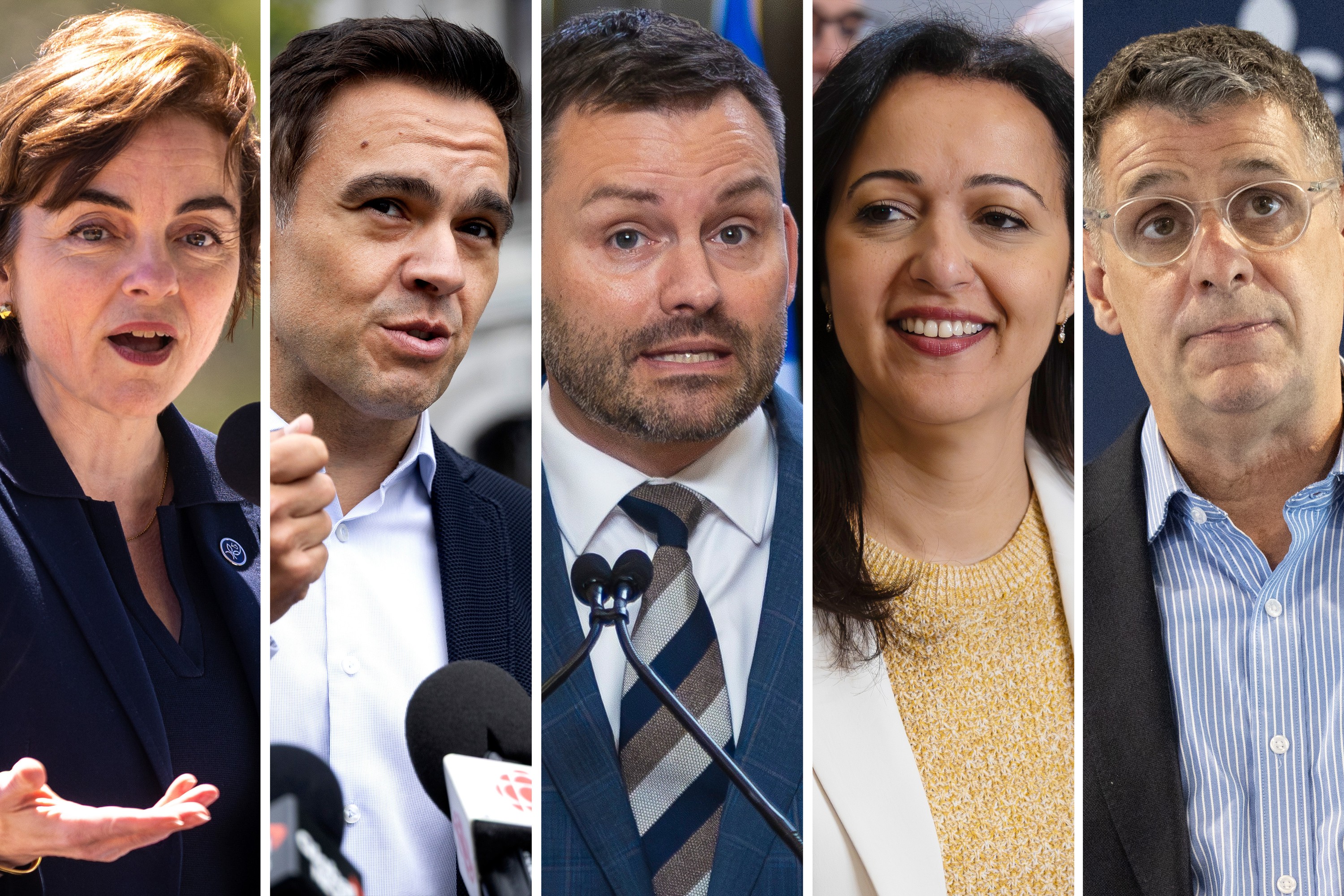 From left: Coalition Avenir Québec Leader Christine Fréchette, Quebec Liberal Party Leader Charles Milliard, Parti Québécois Leader Paul St-Pierre Plamondon, Québec solidaire co-spokesperson Ruba Ghazal and Conservative Party of Quebec Leader Éric Duhaime. Evan Buhler, Allen McInnis, Francis Vachon and Tim Snow / Montreal Gazette
Of the five party leaders, only the Parti Québécois’s Paul St-Pierre Plamondon and the Conservatives’ Éric Duhaime have experienced the full cut and thrust of a campaign, both in 2022.
CAQ Leader and Premier Christine Fréchette, Liberal Leader Charles Milliard and Québec solidaire co-spokesperson Ruba Ghazal are all first-timers.
But as the election campaign’s official launch nears — Fréchette is expected to pull the plug on the current legislature on Aug. 27 and call the vote for Oct. 5 — the battle is well underway.
If it feels like the parties have been campaigning for weeks, it’s because they have.
The five main parties — the CAQ, the Liberals, Québec solidaire, the PQ and the Conservatives — have spent the last few weeks announcing the names of candidates. The smaller Canadian Party of Quebec has 25 candidates listed on its website.
The campaign — which could run between 33 and 39 days — will focus on policies, personalities and the ability to debate under pressure. The television ad campaigns are already rolling.
There are two additional ridings now up for grabs, for a total of 127. The magic number of seats to form a majority government is now 64.
Overall, between 800 and 1,000 candidates representing 20 political parties will be in the running. A total of 6.4 million Quebecers are eligible to vote.
So, what is the lay of the land as the parties gas up the traditional campaign buses that will criss-cross the province for five weeks?
In the 2022 campaign, it was pretty clear the CAQ was heading for the domination of Quebec. The party went on to win 90 seats and a second majority government.
The same cannot be said about Quebec’s 44th election.
The CAQ enters this race in decline. The downturn started in 2023 when the party lost a byelection in the Quebec City riding of Jean-Talon to the PQ.
The once-moribund PQ has roared back to life under St-Pierre Plamondon and starts the race perceived as the front-runner, despite its plans for an independence referendum most Quebecers don’t want.
But on the eve of the election call, Quebec remains divided, voters undecided.
In an analysis of three separate polls (Pallas Data, Léger and Synopsis) last week, polling projection analyst Philippe J. Fournier said five parties in the race “leaves plenty of uncertainty” over the composition of the legislature.
All three polls show more or less the same data: the PQ leads with about 30 per cent support. The Liberals are in second with about 26 per cent and the CAQ is at about 20 per cent.
The Conservatives’ support is pegged at about 15 per cent, while Québec solidaire is at the bottom of the list with around nine per cent.
The PQ leads in the critical francophone voter category, which decides the fate of the vast number of ridings off the island of Montreal.
The Synopsis poll, done for La Presse, gives the PQ 37 per cent of the francophone vote, the CAQ 24 per cent and the Liberals 16 per cent. That gives the PQ a good shot at forming the next government, but campaigns are often full of surprises.
The level of undecided voters remains high in all three polls, with Léger concluding one out of two voters (about 49 per cent) says they might change their mind.
As is usually the case in Quebec, it will be a battle for regions and 20 or so ridings that pivot each election.
An epic showdown is expected between the PQ and Conservatives in the Quebec City region. Montreal could see some battles between the Liberals and QS, while in the suburbs around the island — known as the “450” ridings — the PQ and CAQ will be fighting over francophone nationalist voters.
There will be three debates. All of them will be in French.
In this campaign, Fréchette is expected to position herself as a beacon of economic and political stability compared to St-Pierre Plamondon, who promises a referendum.
In the four months she has been leader, Fréchette has managed to distance herself from the unpopular Legault and is campaigning under the Équipe Christine Fréchette banner, with no mention of the CAQ.
She has almost single-handedly given the party new life.
St-Pierre Plamondon enters the race brimming with confidence but needing to soften up his image with voters, many of whom see him as a distant academic with a short fuse around reporters. He has been seen playing tennis with star Alexis Galarneau and mini-putt with the legendary Carl Carmoni.
Last week the PQ leader extended a hand to the English-speaking community, which traditionally votes Liberal, via an open letter in the National Post.
This week he made another strategic move, announcing that a PQ government would not launch its independence referendum as long as Donald Trump is still president.
What remains to be seen is how much the PQ’s independence agenda figures into the day-to-day dynamics of the campaign. The party is campaigning on a good-government ticket, telling voters the CAQ has not respected its promises and mismanaged Quebec.
Meanwhile, polls show Milliard is an unknown figure for many Quebecers. Taking over the Liberals following the abrupt departure of former leader Pablo Rodriguez in December 2025, Milliard has scrambled to get himself seen and improve the image of the party, which has been rocked by ethical issues.
He is expected to appeal to Quebecers who want a change of government but don’t want the referendum the PQ is promising.
Duhaime never really stopped campaigning after the 2022 election. This time, he will focus most of his efforts in the Quebec City region, where his Conservatives consistently poll higher than the CAQ. This week he became the first to present an election platform, which includes massive cuts in government spending.
Analyst Fournier’s vote projection site Qc125 says the Conservatives should win three ridings and have a probable chance of seven or eight others. The magic number for the Conservatives is 12, which would give them official party status in the legislature.
QS, which has struggled in the polls for two years, will be battling to stay relevant in a crowded field and not lose ridings it managed to win in 2022.
Whoever wins on Oct. 5 faces some big challenges. In her pre-election report on the status of Quebec’s finances, released Monday, auditor general Christine Roy said the next government will face a gaping $5-billion hole in the budget.
That may temper the zeal of some politicians to promise the moon to Quebecers on the campaign trail.
Editor’s Picks

Philip Authier joined The Gazette in 1989 and has spent most of his career covering Quebec politics and government. From Sherbrooke, he is the Gazette reporter covering the National Assembly in Quebec City.
pauthier@postmedia.com