

Listen to this article
Estimated 4 minutes
The audio version of this article is generated by AI-based technology. Mispronunciations can occur. We are working with our partners to continually review and improve the results.
For John Bennett, it’s not just about Canadian art history — it’s also family history.
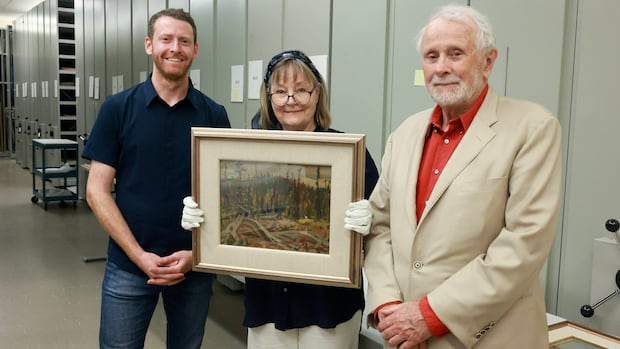
Bennett, who lives in Montreal, is on a mission to find and document all the paintings and sketches made by the Canadian painter A.Y. Jackson during trips Jackson made to the N.W.T. more than 70 years ago. Bennett’s father helped organize those trips for the famed painter.
That recently brought Bennett to Yellowknife, where there are several of Jackson’s pieces.
“There are critics don’t know anything about these periods,” said Bennett. “He [Jackson] did delightful, delightful work on these trips and people should get to see them.”
Jackson was a member of The Group of Seven, a collective of Canadian painters that formed in Toronto in the 1920s and became famous for their depictions of Canadian scenes.
Jackson made multiple trips to the North starting in the 1920s, painting the northern landscape and the mining industry. That’s where Bennett’s father, W.J. Bennett, came into the picture. As the head of Crown corporations such as Eldorado Mining and Refining and the Northern Transportation Company Limited — which provided transportation up the Mackenzie River for much of the last century — W.J. helped arrange the painter’s trips to the N.W.T. in the 1940s and ’50s.
“That started the whole process and my father obviously became good friends with him,” John said.
It’s a less well-known part of Jackson’s legacy, but it’s one that is deeply personal to John.
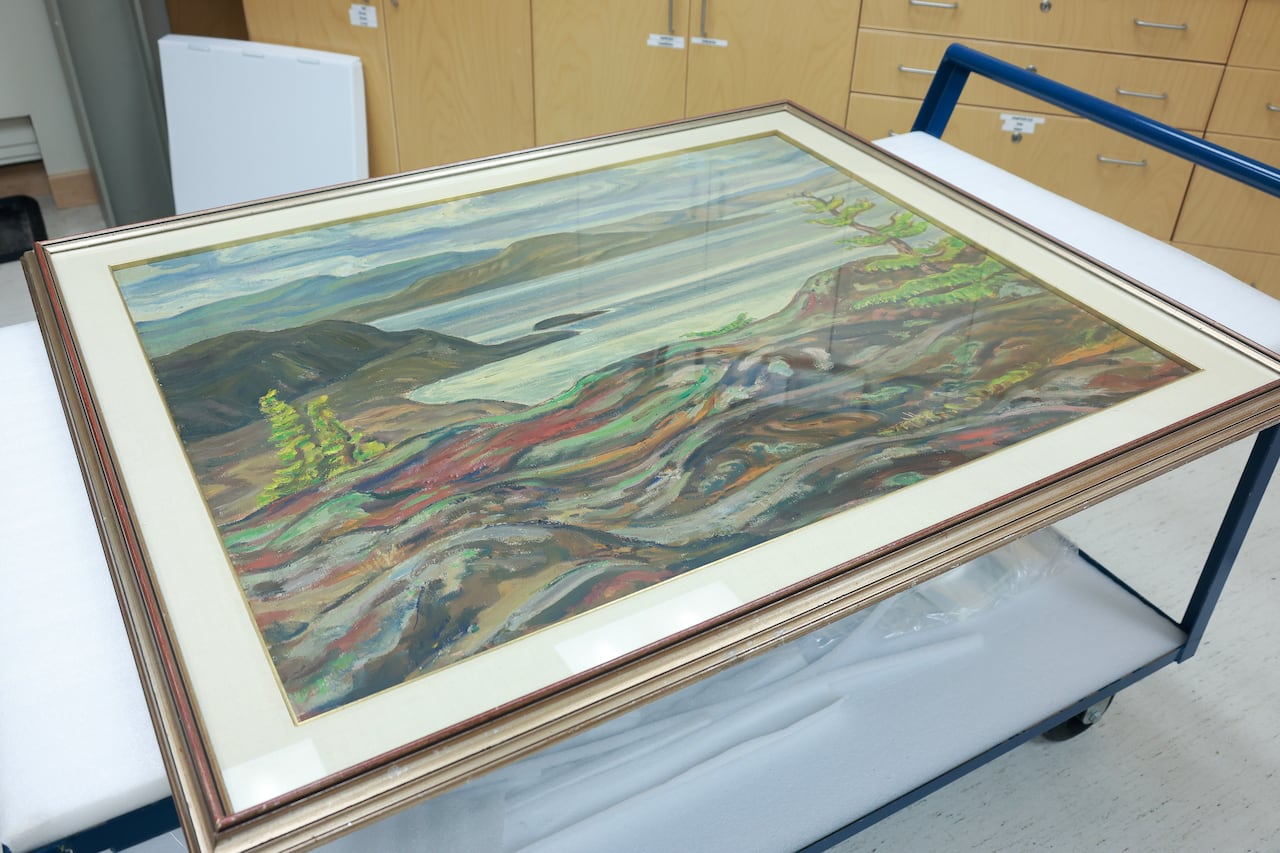 ‘Great Bear Lake’ by A.Y. Jackson, held at the Prince of Wales Heritage Centre in Yellowknife. (Jocelyn Shepel/CBC)
He said Jackson extended his gratitude to his father by giving him paintings, though W.J. insisted on buying them for an agreed-upon price of around $50 — considerably less than the five or six-figure asking price many of those works would see today.
After W.J. died, John acquired the Jackson paintings from his family estate. Since then, he’s made it his mission to track down all the other paintings his dad was connected to.
Aside from locating the pieces online, John has been to see some in person as well, in Montreal and Ottawa, and also in Alberta. Seeing Jackson’s work held in Yellowknife marked a first for him.
“It’s been in the back of my mind for a long time. I’m up here probably 10 years too late, but I turned 81 and I figured, well, we got to get it done,” said John.
A ‘particularly inspired group of paintings’
John’s goal is to collect all his research in a book he’s working on alongside Craig Klinkhoff, a Montreal-based art advisor and dealer specializing in Canadian fine art, including works by the Group of Seven.
During his visit to Yellowknife, John saw ten of Jackson’s oil pieces which are on permanent display in the Muskox Room of the N.W.T. Legislative Assembly building. He also visited the Prince of Wales Northern Heritage Centre, where 11 Jackson paintings — donated by Eldorado Mining and Refining — are held in the museum collection along with various sketches.
John said that seeing the paintings his father helped make happen was a joyous and reflective experience.
“Knowing that he would have actually selected those paintings was sort of emotional, in the sense that, here it is — so that emphasizes the family connection.”
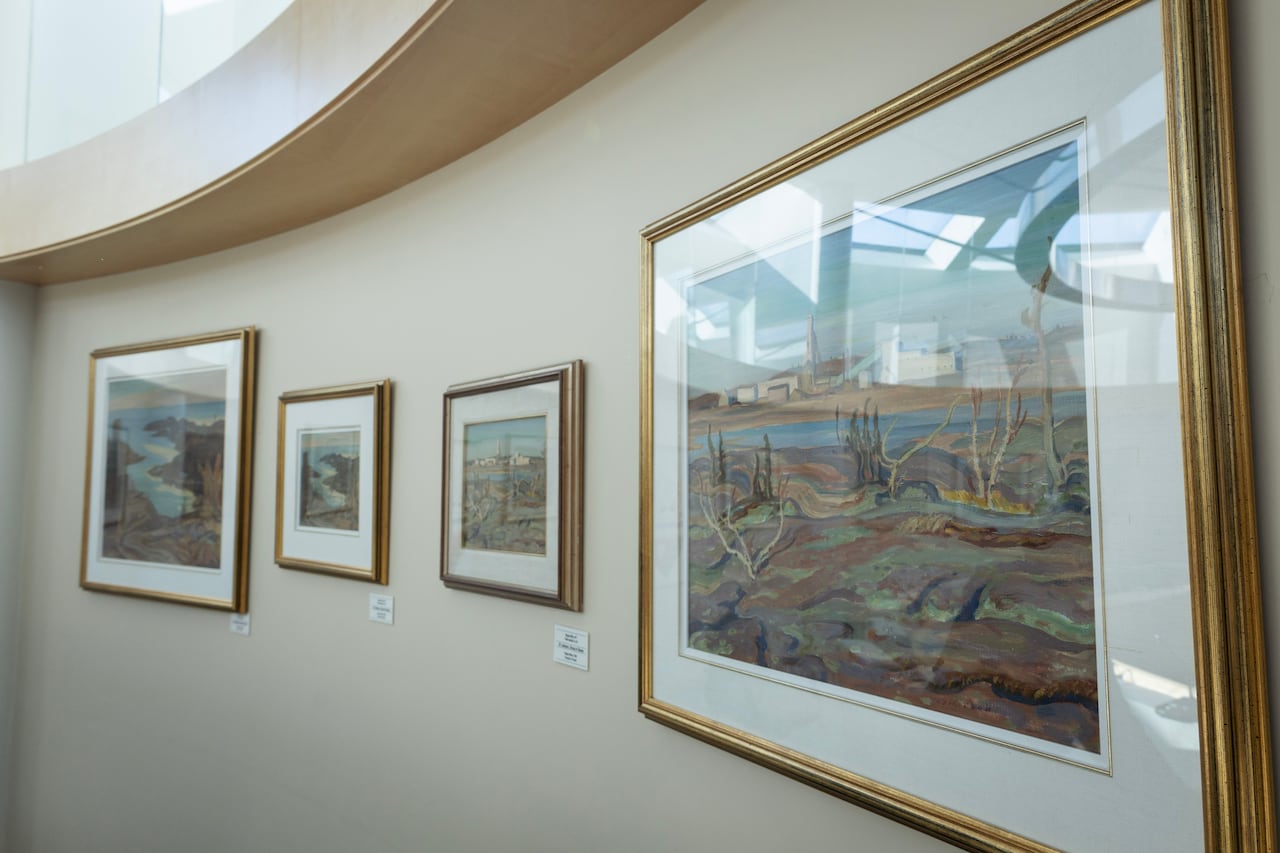 The Prince of Wales Heritage Centre has several of Jackson’s paintings and sketches, and other Jackson works are on display at the N.W.T. Legislative Assembly building (Jocelyn Shepel/CBC)
Klinkhoff, who accompanied John on his trip to the N.W.T., said it was a pleasure to see the works in person. He called them “a particularly inspired group of paintings.”
“It’s conveyed in the quality of his [Jackson’s] output by just looking at the paintings… up here, he saw a beauty in the landscape and you can feel the energy in the artwork that he produced.”
Bennett and Klinkhoff both hope that by publishing an account and history of the work, more will be learned over time about this period of Jackson’s career.
“I think that that’s potentially something that could evolve from this type of initiative. And it’s already happening because the museums share information with us and we share back with them through this process,” said Klinkhoff.
“We’re going to be shedding light on the people who were part of these expeditions. And from that, who knows what we’re gonna learn.”