
Elizabeth Jolicoeur
[email protected]
Local Journalism Initiative Reporter
Each year on Aug. 31, communities around the world mark International Overdose Awareness Day by remembering those lost to overdose and drug poisoning, supporting the people left behind and sharing information that can save lives.
The 2026 theme, “25 Years On. Still Needed,” recognizes 25 years of the international campaign while acknowledging that overdose remains a serious public-health crisis.
Organizers behind International Overdose Awareness Day say the occasion is intended to reduce stigma, encourage open conversations and remind people that overdose can be prevented.
In British Columbia, the unregulated drug supply continues to claim lives in communities large and small. The province declared a public-health emergency over drug-related deaths in 2016.
According to the BC Centre for Disease Control, unregulated drug toxicity was the leading cause of death among British Columbians between the ages of 19 and 59 in 2024. Fentanyl and similar substances remain the primary drivers of drug-poisoning deaths.
The language surrounding the crisis has also begun to change. Health organizations increasingly use the term “drug poisoning” because people may not know the contents or strength of substances obtained from the unregulated supply. A person can be poisoned without deliberately taking an unusually large quantity.
Overdose Awareness Day also recognizes that every death leaves grief behind. The person lost may have been a parent, child, sibling, partner, friend or neighbor, while stigma can leave families feeling unable to speak openly about what happened.
Reducing that stigma can also help save lives. Interior Health says fear of judgment remains one reason people may use substances alone, where nobody is present to recognize an emergency or call for help.
Signs of an opioid overdose or poisoning can include an inability to wake the person, slow or absent breathing, choking or gurgling sounds, blue or grey lips, tiny pupils and cold, clammy skin.
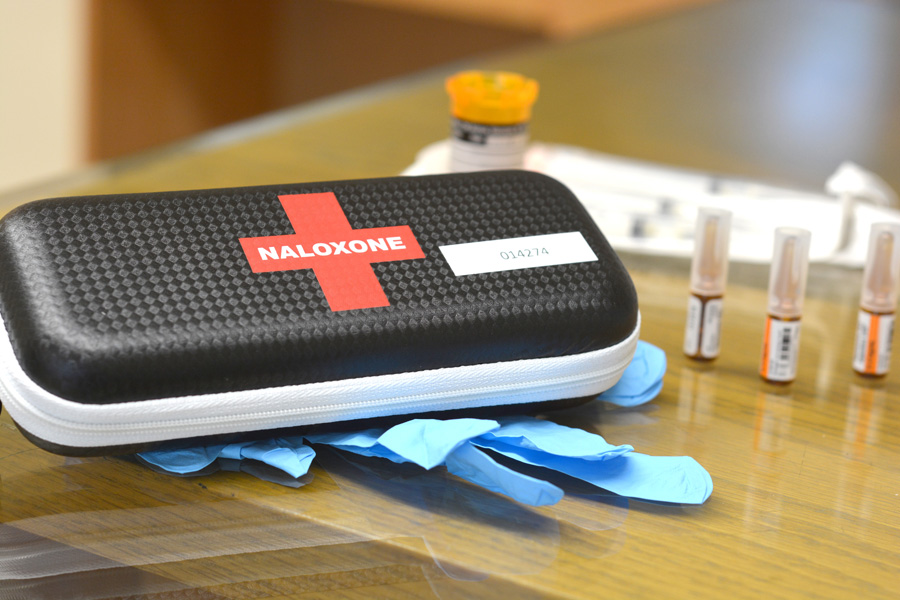
Anyone who suspects an overdose should call 911 immediately and administer naloxone if it is available. Naloxone temporarily reverses the effects of opioids, but it does not replace emergency medical care and may wear off before the substance involved does.
People are encouraged to remain with the person until emergency responders arrive.
The Good Samaritan Drug Overdose Act provides some legal protection from simple drug-possession charges to people who call 911 for help during an overdose. The protection applies to the person seeking assistance and others at the scene, although it does not provide immunity for more serious offences or outstanding warrants.
A number of services are available to people affected by substance use in Merritt and the surrounding Nicola Valley.
Merritt Mental Health and Substance Use provides assessment, counselling, treatment, education and referrals for residents of Merritt and Logan Lake. No referral is required. The Interior Health service is located at 3451 Voght Street and can be reached at 250-378-3401 or through the regional Mental Health and Substance Use line at 310-6478.
Scw’exmx Community Health Services Society provides culturally rooted mental-health and addictions services for members of the Coldwater, Nooaitch and Shackan communities. Its main office is located at 1926 Quilchena Avenue and can be reached at 250-378-9745.
ASK Wellness Society’s Merritt outreach program supports people affected by homelessness, mental-health concerns or substance use. It also offers individual and group naloxone training. Its Merritt office is located at Unit 1, 2196 Quilchena Avenue, with information about naloxone training available at 778-257-1292.
The Nicola Valley Shelter and Support Society is also listed by Toward the Heart as a local harm-reduction service. Because hours and available supplies can change, residents are encouraged to contact the organization before visiting.
Free take-home naloxone kits may also be available through participating pharmacies and other community locations. An updated list can be found using the Toward the Heart site finder, although people are advised to call ahead to confirm that kits are in stock.
People using substances are advised not to use alone, to carry naloxone, begin with a small amount and have a plan for getting help. Those who may use alone can contact the National Overdose Response Service at 1-888-688-6677 or use the Lifeguard app, which can alert emergency responders if a person becomes unresponsive.
International Overdose Awareness Day is represented by the colour purple. People can participate by wearing purple, learning how to recognize and respond to an overdose, obtaining a naloxone kit or remembering someone whose life was lost.