
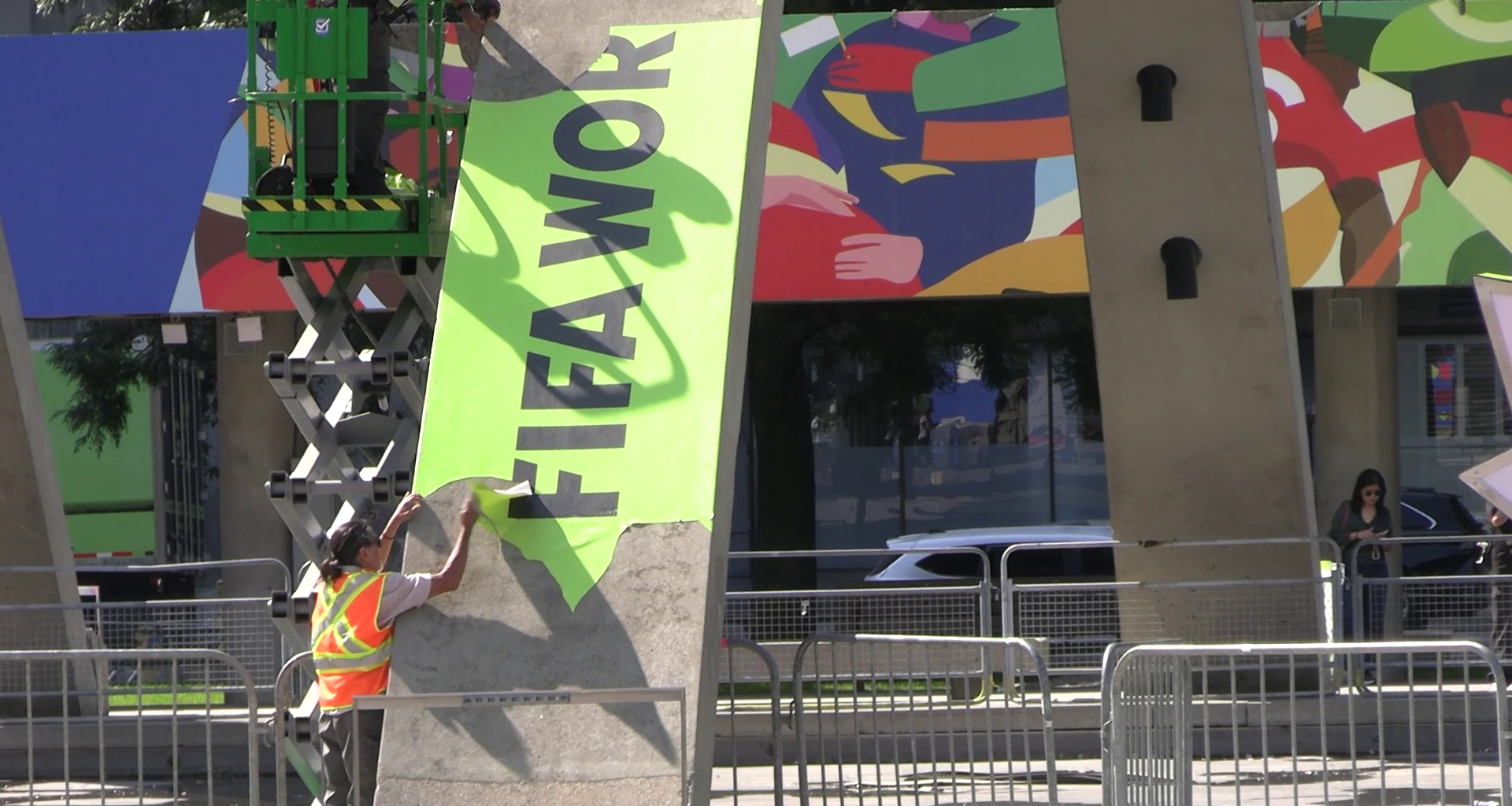
Councillors examine public costs, transportation improvements, neighbourhood impacts and the treatment of people experiencing homelessness.
By Fred Alvarado
Fred is a LJI Community Journalist with FOCUS MEDIA ARTS CENTRE
At the July City Council Meeting, councillors examined what the city can learn from hosting a major international sporting event, including its impact on public services, transportation, spending and communities across Toronto.
For residents in Toronto’s Downtown East, the experience also raises questions about who benefits from major events and how people experiencing homelessness are treated when public spaces are being prepared for large crowds. Reports of people being moved from public spaces during the event have added a human-rights dimension to the broader conversation about the city’s responsibilities to vulnerable residents.
Councillor Chris Moise highlighted the community impact in Regent Park. He recalled visiting the Centre for Excellence, where young people gathered to watch the games. “People who don’t normally actually come together. It did that,” Moise said, also pointing to celebrations in Jamestown. “It brought the world here and people loved it.”
At the same time, Councillor Josh Matlow called for greater financial scrutiny. “I just think from a financial perspective, this was a failure,” he said, while praising city staff, TTC workers and first responders.
Matlow supported a value-for-money audit, saying Toronto should “learn from the mistakes so that we can do better.”
Transportation was another focus. Mayor Olivia Chow called for the city to consider keeping measures introduced during the event, including traffic management, traffic cameras and transit signal priority. “The tournament might be over, but I believe that we can continue from the lessons and keep the city moving ahead,” Chow said.
The event also brought celebrations into neighbourhoods beyond downtown, with councillors pointing to fan gatherings and community viewing events across Toronto.
For Toronto’s Downtown East, the legacy conversation goes beyond transportation and economic benefits. It also includes whether major events can be delivered without pushing vulnerable residents out of public spaces—and how the city can balance a welcoming image with its obligations to people experiencing homelessness.
As Toronto considers future mega-events, councillors are now looking at what should remain: transportation improvements, stronger coordination, accountability for public spending and a clearer commitment to the rights of all residents.