
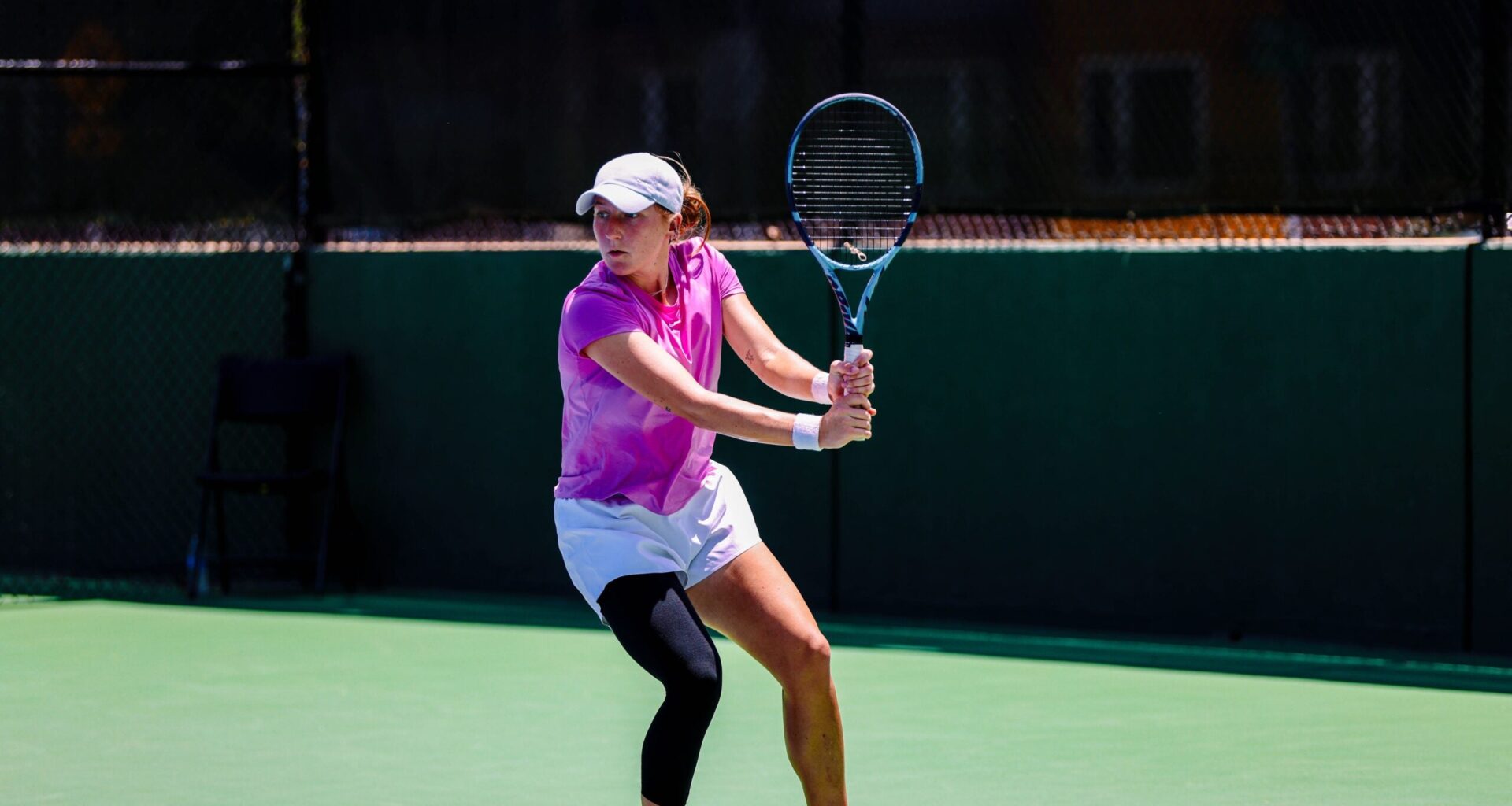
Reese Brantmeier could have gone pro as a tennis player right out of high school.
The native of Cold Spring, in Jefferson County just outside of Whitewater, started winning national tournaments at 14, but she turned down significant amounts of prize money to maintain her college eligibility.
After four years and two national championships at the University of North Carolina at Chapel Hill, Brantmeier is ready to pursue the professional opportunities that have been awaiting her.
Understanding Wisconsin, Together.
WPR’s “Wisconsin Today” newsletter keeps you connected to the state you love without feeling overwhelmed. No paywall. No agenda. No corporate filter.
She qualified for the singles main draw of the U.S. Open starting this week in New York, and on Thursday, she will find out where she slots in the Grand Slam tournament.
Brantmeier’s time in college helped her build a stronger sense of community in tennis, and she used her athletic success to support that community back home.
Her nonprofit Reese Brantmeier Project raised money to rebuild community tennis courts in Whitewater last summer, and she hopes to stay involved in local tennis efforts as her career advances.
She joined WPR’s “Wisconsin Today” to discuss her upbringing in Wisconsin and her preparation for the U.S. Open.
The following interview was edited for clarity and brevity.
Kate Archer Kent: What does it mean to you to qualify for the U.S. Open?
Reese Brantmeier: Growing up in the U.S., that’s the tournament you watch as a little kid, and that’s kind of what you picture in your head when you say “pro tennis.” This is going to be my first appearance in the singles main draw, so it’s just such a special moment for me and a really huge milestone in my career.
It’s the best of the best. It’s going to be the highest ranked players in the world. I’ve previously played in the qualifying draw, which is held the week prior, and that is to earn an opportunity into the main draw. The main draw is the real deal.
KAK: How much of a step up in competition are you anticipating against the pros in New York?
RB: That’s going to be a new experience for me. It’s luck of the draw to see who I play, and that top-20-in-the-world level is something that I really haven’t seen before. College tennis has really been bridging that gap between collegiate and the professional level. We’re seeing a lot of success from past collegiate players in the main draw.
My freshman year, for example, when we won the national title in 2023, in the final I was playing against Diana Shnaider, who I believe is top 20 in the world now and will be playing in the main draw at the U.S. Open as well. She was at NC State during my freshman year. So that stage is an adjustment, and playing at that level, mentally, the atmosphere, all of that comes into play. But the level itself is definitely getting closer and closer between collegiate and the professional level.
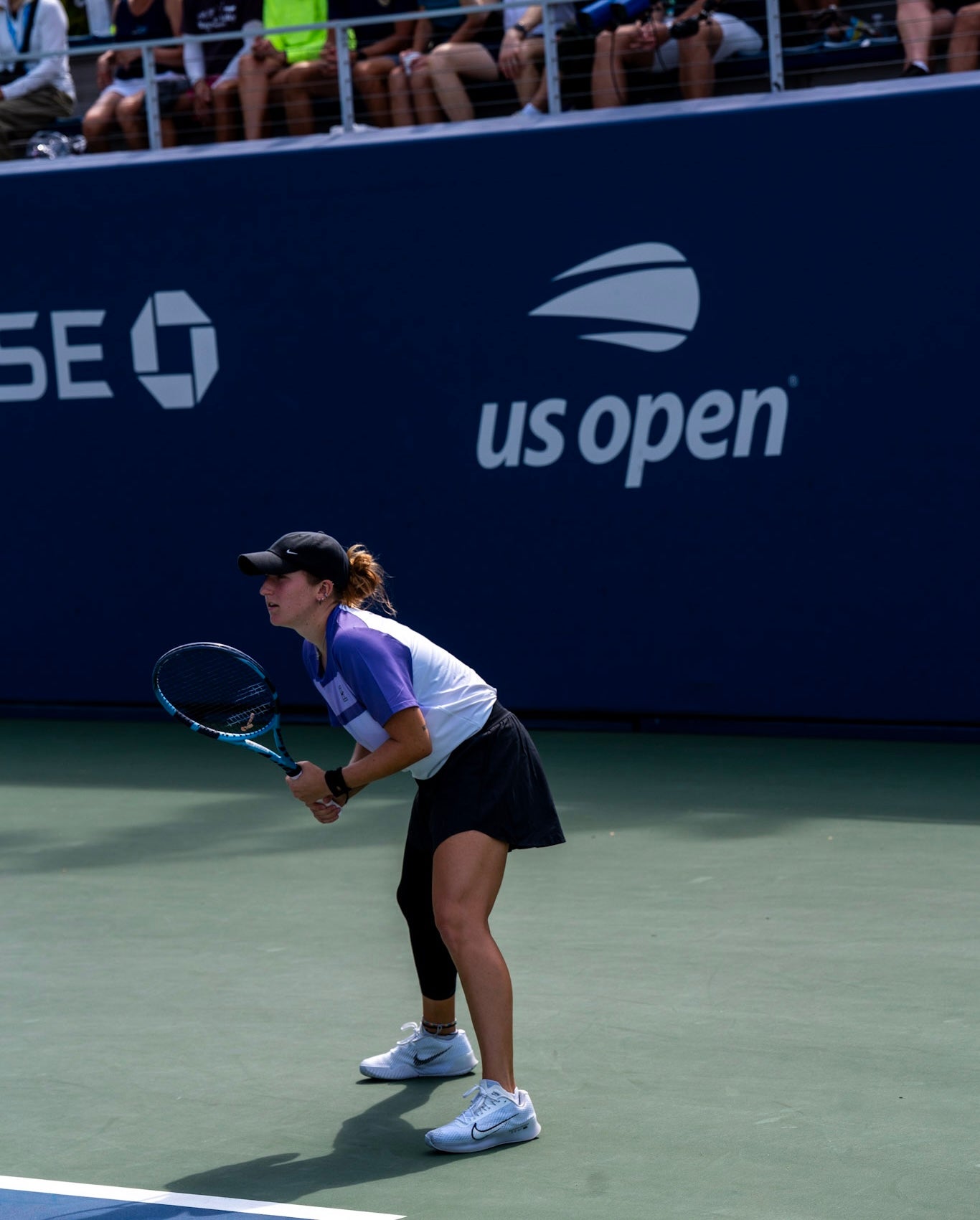 Whitewater native Reese Brantmeier previously competed in U.S. Open qualifiers but will participate in the singles main draw for the first time this year. Photo courtesy of Reese Brantmeier
KAK: How do you find community in the sport, outside of the team environment that you felt at UNC?
RB: Tennis can definitely be a lonely sport. But getting to play for a team is so rare, and it was such an incredible opportunity, and it’s something that I enjoyed so much at UNC. So that’s definitely something I’m trying to cultivate going into my pro career now.
It’s not as much like in college tennis where it’s 10 girls out there playing alongside you, but in the same way, you’re forming a team of your coach, your athletic trainers, your fitness coaches. The people you surround yourself with become your team in that way. Even though I’m no longer playing for North Carolina, I’m definitely trying to still represent them in what I do going forward, and connecting myself to that organization bigger than myself is really meaningful to me.
KAK: You started winning national tournaments at age 14. Have you gotten used to the pressure of those big moments? Or do the nerves still get in the way?
RB: I think you don’t really get over nerves. You just get used to managing them. Winning national championships at 14 and my most recent national championship at the NCAA level, it’s really not that different. At the end of the day, you’re out on the court and you want to win, and that pressure really is similar. So yeah, it doesn’t go away. You just adjust and learn different ways to manage it while you’re out there.
KAK: When you’re down a set or you’re staring at match point, how do you keep your mind in the game or how do you stay positive?
RB: I think that’s the beauty of tennis. It’s not like basketball or football, where you’re bound by this time constraint, and when you’re down, it’s impossible at a certain point to make that comeback. With (tennis), it really can turn at any point. So I always just try to focus as much as I can on the point in front of you. That’s the only thing that you have control over, that next point that you’re about to play. And that’s what matches are: just stringing together points.
KAK: How did your upbringing in Whitewater shape your tennis career?
RB: It is so special for me to be from such a small town, and especially somewhere where tennis is not super popular. It’s really common that you see professional tennis players coming out of California or Florida or places where tennis is a little bit more accessible.
But I think that’s what made tennis so special for me. It was something that was really my choice. No one in my family played tennis. It was never something forced on me. It was never even something that convenient. It was always something I really had to seek out and wanted to do.
KAK: You started the nonprofit Reese Brantmeier Project to support tennis back home. Can you tell us about this project and what you’re trying to do?
RB: So there are two community tennis courts in my hometown of Whitewater, Wisconsin, that were built in the 1960s by the former principal of Washington Elementary, which is where I went to school. When I started playing tennis when I was 8, they were pretty demolished. They were locked up. There were no nets. There were cracks everywhere. There were trees growing in the middle. They just got taken by time a bit, and they were totally unplayable.
When I started playing, my parents would drive me an hour every single day to the closest tennis club. We would sit outside at our school and look at these courts, and I just wished, “Oh, it would be so much fun if I could play here with my friends.” But instead, we have to drive this far every day.
So it started as an idea. I got the opportunity to start the Reese Brantmeier Project to raise money to rebuild these tennis courts and bring grassroots tennis back to Whitewater, and that was so special for me because it was so meaningful to me from when I was 8 years old and seeing the impact it has on the next generation of kids in that community.
We fundraised, and we were able to break ground last summer and have two completely free, 24/7 accessible-to-the-community tennis courts. We accepted donations of tennis rackets and tennis balls that we distributed to all of the local schools and public libraries, so we were really trying to lower any financial barrier to tennis, because that’s unfortunately something that can keep a lot of kids out of the sport. Especially in the community of Whitewater, a significant number of those families are economically disadvantaged, and tennis is really not popular because it’s just simply not an option for a lot of those families. We wanted to make sure everyone had the opportunity to experience tennis at any level.
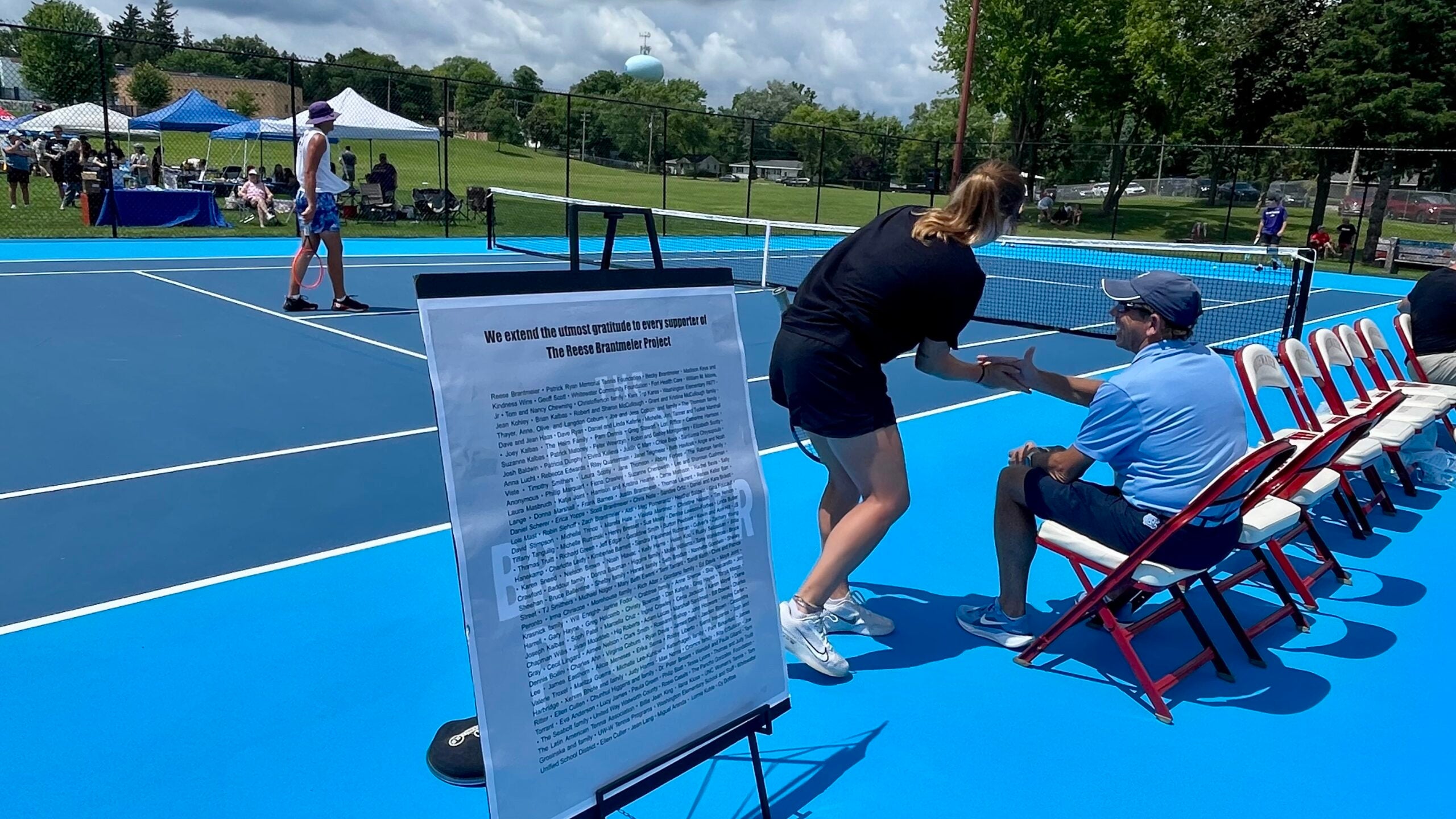 The Reese Brantmeier Project raised money to rebuild free community tennis courts in Whitewater last summer. Photo courtesy of Reese Brantmeier