
A new round of U.S. tariffs on Canada could lead to job losses and economic uncertainty across Alberta, several experts said on Monday.
Some provinces like Ontario, British Columbia and Quebec are taking a larger direct hit to their U.S. exports from 50 per cent tariffs announced Saturday by U.S. President Donald Trump on billions of dollars of Canadian goods.
But University of Calgary economist Trevor Tombe projected Alberta could lose as many as 9,000 jobs as a long-term result of the new measures. The potential job losses would come from Alberta businesses that must now operate with a new, large tax on their U.S. exports, he said.
But he noted the indirect effect of tariffs, resulting in ripple effects across the entire supply chain, is almost just as large on businesses that sell materials or services to exporters.
“A lot of [Alberta’s] exporters are not directly affected by these new tariffs, but there are many Alberta-based firms that supply services to others or inputs into the production of goods that are exported into the United States,” said Tombe.
“So the economic consequences, the job losses, are felt here in Alberta as well, despite the fact that the tariffs are landing much more elsewhere.”
WATCH | New tariffs hit Alberta-based businesses: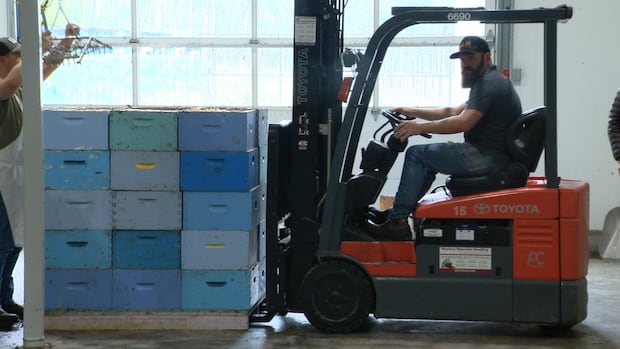
Tariffs on Alberta businesses kick in after trade talks collapse
Premier Danielle Smith says she’s urging the federal government to restart negotiations with the United States after trade talks fell apart late Friday night, bringing the Trump administration’s 50 per cent tariffs on a wide range of Canadian exports into effect. As CBC’s Jo Horwood reports, small business owners in Alberta are figuring out how to survive this trade dispute, while politicians and local business leaders consider whether walking away from negotiations was the right decision.
The new tariffs came after Canada and the U.S. failed to complete a last-minute trade deal. In return, Prime Minister Mark Carney promised “dollar-for-dollar” retaliatory tariffs beginning Sept. 8, but it is unclear which products will be included under the counter measures. More information about Canada’s response is expected Tuesday.
Alberta’s agricultural sector, including greenhouses and nurseries or farming equipment, are directly vulnerable under the new tariffs, Tombe said. He also pointed to industries like plastics or electrical components that are at indirect risk as inputs into other sectors.
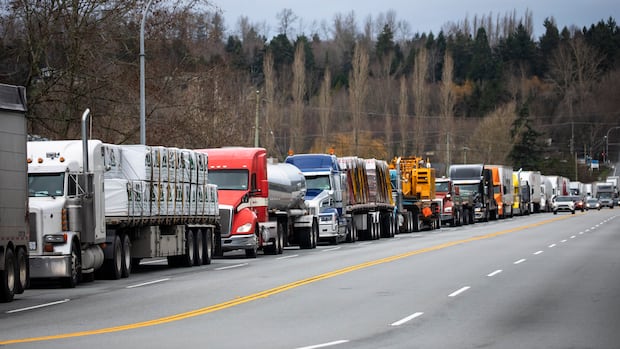
Truck transportation is an industry especially at risk of job losses if fewer goods are being shipped, Tombe added.
Robert Harper, president of the Alberta Motor Transport Association, said his industry is concerned that as economic activity declines, it will lead to less goods moving by truck, affecting employment.
Harper noted his industry is more negatively affected in other provinces, as Alberta’s energy industry is still active. But he added that trucking is often a bellwether of economic activity.
“It feels the pain before the public, and it sees the gain before the public, because people start moving goods in advance of a lot of the economic indicators,” said Harper.
“So the industry will start feeling it fairly quickly.”
LISTEN | Gitane de Silva on what new U.S. tariffs mean for Alberta:
Calgary Eyeopener11:03How does Alberta fit into the trade war between Canada and the U.S.?
Following collapsed negotiations on Friday, a new wave of American tariffs have been triggered. For more on what this means, we spoke with Gitane de Silva; Alberta’s former senior trade representative to the United States.
While most of Alberta’s exports are not feeling a direct hit from the new tariffs, Gitane De Silva told CBC Radio’s Calgary Eyeopener on Monday the province’s major industries are not immune to the consequences of the trade dispute.
“If these tariffs do have an overall cooling effect on the economy, that always impacts the energy sector,” said De Silva, executive director of the University of Alberta’s Peter Lougheed School of Politics and Democracy.
“So we will still feel it here.”
Businesses pivot in face of tariffs
Some Alberta businesses have already adjusted their workflow in response to threatened tariffs throughout the second Trump administration.
Connor Curran, founder of the Calgary-based apparel brand Local Laundry, said his business was retail-first for 11 years. But due to tariff threats, it pivoted to focus on custom orders.
“It was a change that was necessary for the business, because we’ve seen the writing on the wall,” said Curran.
“The U.S. is not a place we can expand into at the moment; it’s not a business-friendly environment.”
LISTEN | Alberta at Noon hears from the public about new U.S. tariffs:
Alberta at Noon52:39What questions do you have about the trade war between Canada and the U.S.?
The U.S. has now put 50 per cent tariffs on some of our exports, amounting to 5 percent of our trade, worth about 28 billion dollars. Canada has promised dollar for dollar retaliatory tariffs, starting September 8th. What do you make of the path Canada has taken so far in this trade war?
Graham Sherman, founder of Tool Shed Brewing, said aluminum tariffs hurt Canadian breweries that can sometimes feel the cost twice on Canadian material that travels to the U.S. to be turned into cans before being bought back north of the border.
When tariffs were first raised early last year, Curran said his Calgary-based brewery decided to buy cans from China instead of the U.S. that were a similar quality for a cheaper price.
“We just completely pushed the United States partnership out of the way as far as cans go,” said Sherman.
Uncertainty clouds economic future
In an online post Monday, Trump threatened to increase tariffs on Canadian automobiles, car parts and steel to 50 per cent on Jan. 1.
The potential for more tariffs being introduced by either side of the trade dispute is part of the overall cloud of uncertainty that Tombe argued is its biggest economic effect. He said it could lead to pauses on some investment or hiring decisions in Alberta, and around the country, creating a drag on economic growth.
“We may very well see a slowdown in economic activity right across the board nationally, Alberta included, that goes far beyond just the tariffs themselves,” said Tombe.
“This is a type of shock that is very broad, and there’s not a part of the country nor a sector within Canada’s economy that looks to benefit from the heightened uncertainty this trade war creates.”