
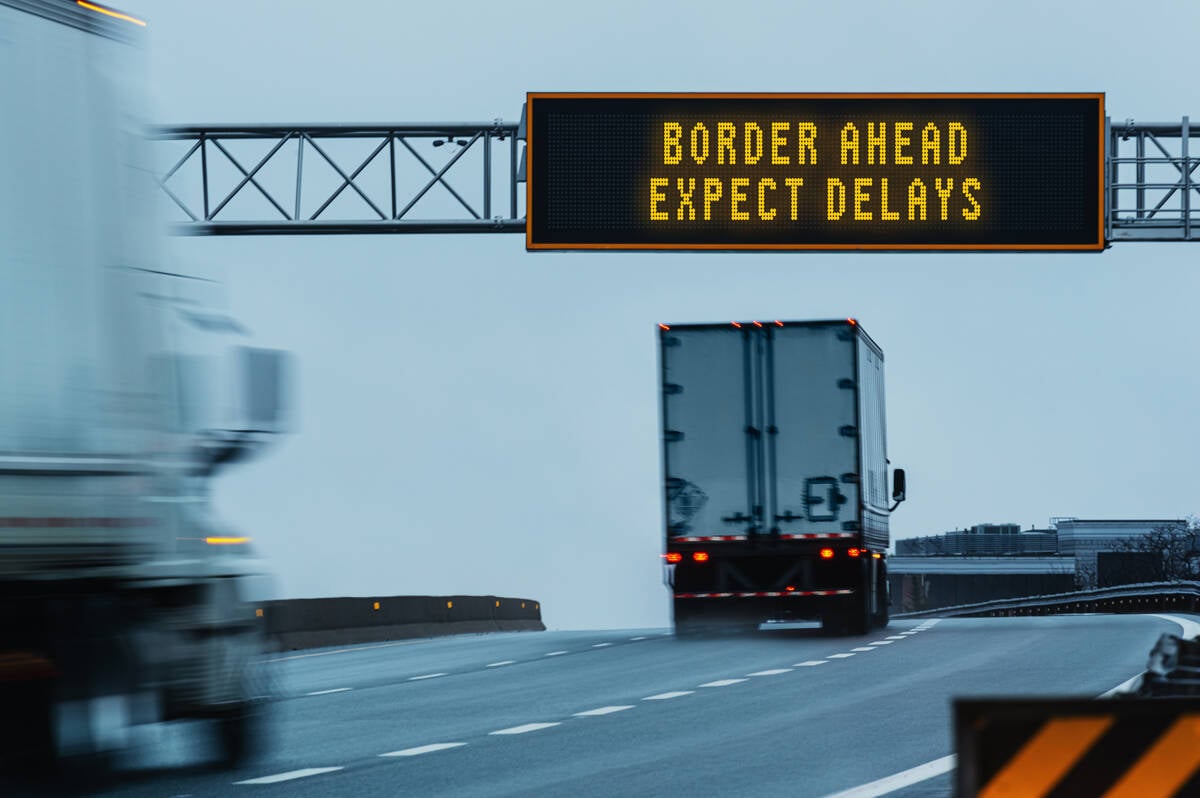
UPDATED – New tariffs, the breakdown of trade talks with the U.S. and the spectre of counter-tariffs have left many Canadian agricultural groups on unsteady footing.
“The breakdown in negotiations creates uncertainty for farmers at a time when stability in our trading relationship is critically important,” said Canadian Federation of Agriculture president Keith Currie in a statement, Saturday.
The CFA said it was concerned the escalation of tariffs could disrupt supply chains and reduce food affordability.
Canadian farmers are heavily export-dependent with a huge chunk of agriculture and agri-food products going to the U.S. Deteriorating relations means greater uncertainty for all of primary agricultural producers, not just the ones directly hit by tariffs.
The past 18 months have been marked by frequent tariff threats from south of the border, as well as lingering uncertainty about the future of the Canada-U.S.-Mexico Agreement (CUSMA), which the U.S. decided to not renew.
On Saturday, 50 per cent tariffs took effect on a swath of Canadian dairy ingredients, honey, some wool and wool products, alcohol and many other products. This, after negotiations over a trade deal broke down in their final hours. Prime Minister Mark Carney has vowed to implement retaliatory tariffs.
Read Also

While much of primary agriculture isn’t implicated in new 50 per cent levies, the deterioration of the Canada-U.S. relationship “should concern every export-dependent sector,” the Wheat Growers Association said in a statement, Saturday.
“The United States is our largest customer, our closest ally and the world’s biggest market sitting directly on our doorstep,” said Wheat Growers president Gunter Jochum. “Canadian farmers depend on trade. We cannot treat access to that market as something we hope works itself out.”
The need for urgent negotiation
The Wheat Growers noted that negotiating is tough, however it questioned the timing and urgency of Canada’s earlier trade negotiations as Mexico and the U.S. advanced bilateral discussions.
The association said Canadian agriculture sector cannot afford a strategy that relies on witing for American politics to change.
“Our job is to deal with the America that exists, not the America we wish existed,” Jochum said.
The release also cautioned the government against letting Canadian agri-food become collateral damage in escalating trade disputes.
“Farmers are not pawns. Our crops are not bargaining chips,” Jochum said. “Trade wars too often deliver benefits to the few by distributing the costs across the many. Canadian agriculture should not be asked to carry those consequences.”
“Farmers aren’t asking our government to surrender,” he added. “We’re asking it to negotiate.”
The CFA also urged the government to return to the negotiating table and “work toward a swift resolution that protects the competitiveness of the highly integrated North American agricultural sector while minimizing unintended consequences for farmers, agricultural supply chains and food affordability.”
Wool “caught in the crossfire”
Tariffs on wool and wool products will hurt sheep farmers and textile industry workers, the Canadian Wool Council said in a Monday statement.
“This is not the first time our industry has been caught in the crossfire of this trade dispute, and each escalation cuts deeper,” said Matthew Rowe, Chairman of the Canadian Wool Council, adding what began as a 25 per cent tariff in 2025 has now doubled.
The council said that many high-value wool textile products cross the Canada-U.S. border multiple times during production.
“For example, wool from a Canadian farm may be washed in Canada, sent to the U.S. for spinning and weaving into blankets, and then re-imported for sale to Canadian consumers,” it said.
Canada exported $1.3 million worth of wool products in 2022, the council said. The U.S. was the primary market.
In 2022, Canada exported a total of CAD $1.3 million in wool products, with the U.S. as the primary market
Canada exported $335,000 worth of wool in 2025, OEC stats show. The bulk went to the U.S.
Machinery makers worry on both sides of border
Tariffs and retaliatory tariffs would hurt economies in both Canada and the U.S, the Associated Equipment Distributors (AED) said in a statement, Sunday.
The Associated Equipment Distributors represents equipment makers on both sides of the border.
“Any measures that target equipment that builds, feeds and fuels both countries are detrimental regardless of if they’re imposed by Canada or the United States,” said Brian P. McGuire, AED’s president and CEO.
“AED will continue to work with officials and political leaders on both sides of the border to encourage a return to the bargaining table.”