

Listen to this article
Estimated 5 minutes
The audio version of this article is generated by AI-based technology. Mispronunciations can occur. We are working with our partners to continually review and improve the results.
The province says it’s backing a grizzly bear monitoring research project, but it’s not the population count advocates have been calling for.
“Alberta’s government remains committed to supporting the sustainable, science-based recovery of grizzly bears,” Environment Minister Grant Hunter’s office told CBC News in a statement.
“To help confidently identify population trends, Alberta is supporting a grizzly bear monitoring project led by fRI Research,” the province said. “The project will provide valuable scientific information on grizzly bear populations, habitat use and ecology to help guide future management and recovery decisions.”
Grizzly bears have been a threatened species in Alberta since 2010.
Darío Fernández-Bellon, who leads fRI Research’s grizzly bear monitoring team in Alberta, says the project aims to discover new ways to monitor grizzly bear populations. Launched in 2023, it involves collecting and analyzing grizzly bear hair samples in specific west-central Alberta sub-populations.
The organization says this work will offer insight into how grizzly populations in those areas are doing in terms of survival and possible range expansion.
Neither fRI Research nor the Alberta government are conducting a count of Alberta’s grizzly bear population.
“To date, there’s no confirmed intention [or] funding confirmed for any further inventories to happen,” Fernández-Bellon said.
He says such a large-scale population survey hasn’t been repeated because those studies are very expensive and require a large amount of resources and people in the field simultaneously, including in remote areas.
Any population estimates beyond 2018 are based on ‘anecdotal’ info
There hasn’t been a provincial grizzly bear population study since 2018.
“Anything beyond that currently is based mostly on anecdotal information, or personal observations or impressions of whether there’s fewer or more bears than before,” Fernández-Bellon said.
The Alberta government says the grizzly bear population has increased “from approximately 700 in 2010 to about 1,000 today,” according to an emailed statement from the Ministry of Environment and Protected Areas.
“Monitoring grizzly bears is both costly and labour-intensive due to their wide-ranging movements and elusive nature,” the province said.
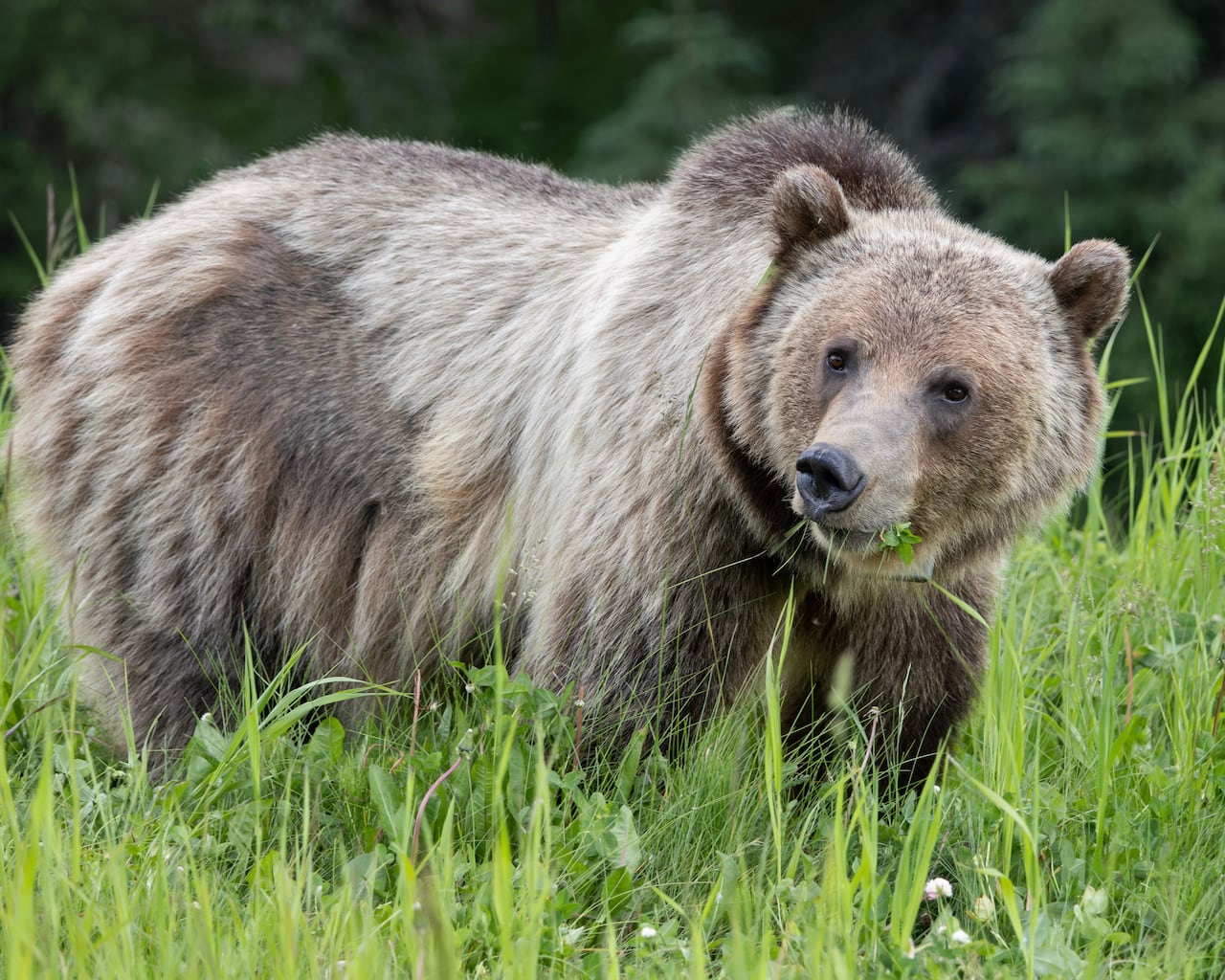 A grizzly bear wearing a GPS tracking collar in Kananaskis Country. (Amir Said/CBC)
Fernández-Bellon says because large-scale inventories are too costly, fRI Research and the Alberta government are collaborating to test new, less-expensive monitoring methods.
“The hope is that in a few years we’ll have solid conclusions from our work, and that these methods can be rolled out, and then we’ll be [able] to continue to monitor this species without these huge, large-scale investments,” he said.
Alberta’s Grizzly Bear Recovery Plan states that each “bear management area” — locations where the provincial government focuses its efforts on grizzly bear recovery and support efforts — should ideally be surveyed every five years.
“It’s good to bear in mind that some of the sub-populations have not been surveyed in a very long time,” Fernández-Bellon said.
He pointed to the grizzly bear population around Grande Cache in west-central Alberta, which hasn’t been surveyed since 2008, as a example.
“Actually getting a population number for the whole of Alberta requires this ongoing work, which simply is not happening,” Fernández-Bellon said.
The province says the Endangered Species Conservation Committee will be provided a report on grizzly bear status “at a future meeting,” and that “the committee’s advice will help inform the next Grizzly Bear Recovery Plan and ensure Alberta’s recovery efforts continue to be guided by the best available science.”
Count needed before making any grizzly bear management decisions, wildlife advocate says
Exposed Wildlife Conservancy executive director Maggie Spizzirri says the province’s support of grizzly bear monitoring research is “a great step in the right direction,” but stressed the need for a count to be done before making any management decisions regarding the species.
“Without doing a count, we’re making decisions based on hearsay and thoughts and feelings, instead of the actual number of a threatened species that is around,” she said.
“I think everyone seems to be on the same page when we say we want grizzly bears to thrive and prosper. We don’t want them to go extinct, and that’s ultimately the goal.”
To address what it says are increased reports of grizzly conflict with humans and livestock in parts of the province, the Rural Municipalities of Alberta has called for the government to open a grizzly bear hunting season.
Forestry and Parks Minister Todd Loewen told CBC News in June that there are “no plans right now” to legalize grizzly bear sport hunting, which has been banned in Alberta since 2006.