

Listen to this article
Estimated 3 minutes
The audio version of this article is generated by AI-based technology. Mispronunciations can occur. We are working with our partners to continually review and improve the results.
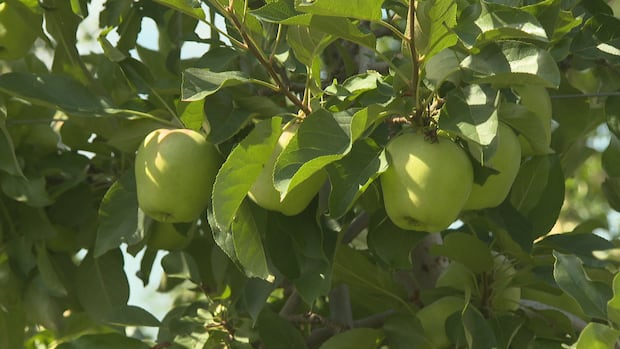
An apple grower in Nova Scotia’s Annapolis Valley says his orchard is recovering after last year’s extreme drought.
Stephen Van Meekeren, a third-generation fruit grower in Lakeville, N.S., said he had never seen a drought like the one that parched the province in 2025.
According to the Canadian Drought Monitor, parts of the province experienced a one-in-50-year drought, which led to tree loss, reduced yields and smaller fruit for farmers like Van Meekeren.
But this year, things are looking up.
“We’ve had much more steady rains and trees have come back fairly well. Fruit size is good. You know, trees seem to be healthy,” said Van Meekeren. “Healthy trees are going to produce healthy, good-tasting fruit.”
Emily Lutz, executive director of the Nova Scotia Fruit Growers’ Association, said people in the industry are “a little more optimistic” because current conditions are much more favourable. But for many, it is still a slow recovery.
“The drought was so severe that [some] trees themselves didn’t make it. That is one of the consequences of the drought we’re still dealing with,” she said. “But for the trees that survived, we are seeing a relatively normal-sized crop and things are sizing up.”
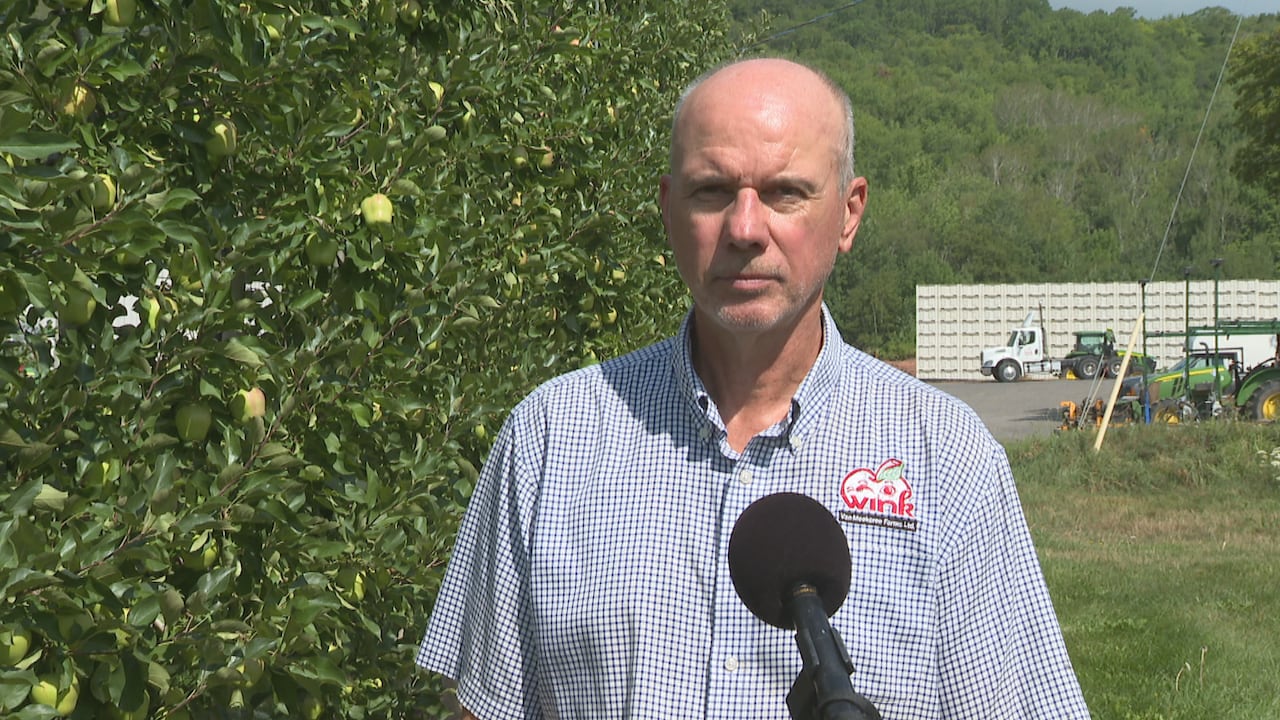 Stephen Van Meekeren says his apple trees are looking much healthier this year than they did during last year’s drought. (Paul Legere/Radio-Canada)
Lutz described the mood last year among fruit growers and farmers as “tense,” as many watched their crops wither in the extreme heat and dry weather. Some growers endured a significant loss of revenue due to having fewer apples to sell.
And even when fruit did survive, it was often not suitable for markets.
“A sizable portion of the fruit was simply not marketable and did not reach the size standards that’s required to be sold in a regular grocery store,” she said.
Some undersized fruit did make it to secondary markets for juice, processed apples and pies. But even then, Lutz said, those markets also prefer oversized fruit rather than undersized.
She said growers “could probably use one more rainfall prior to harvest,” but said that so far, things have been stable.
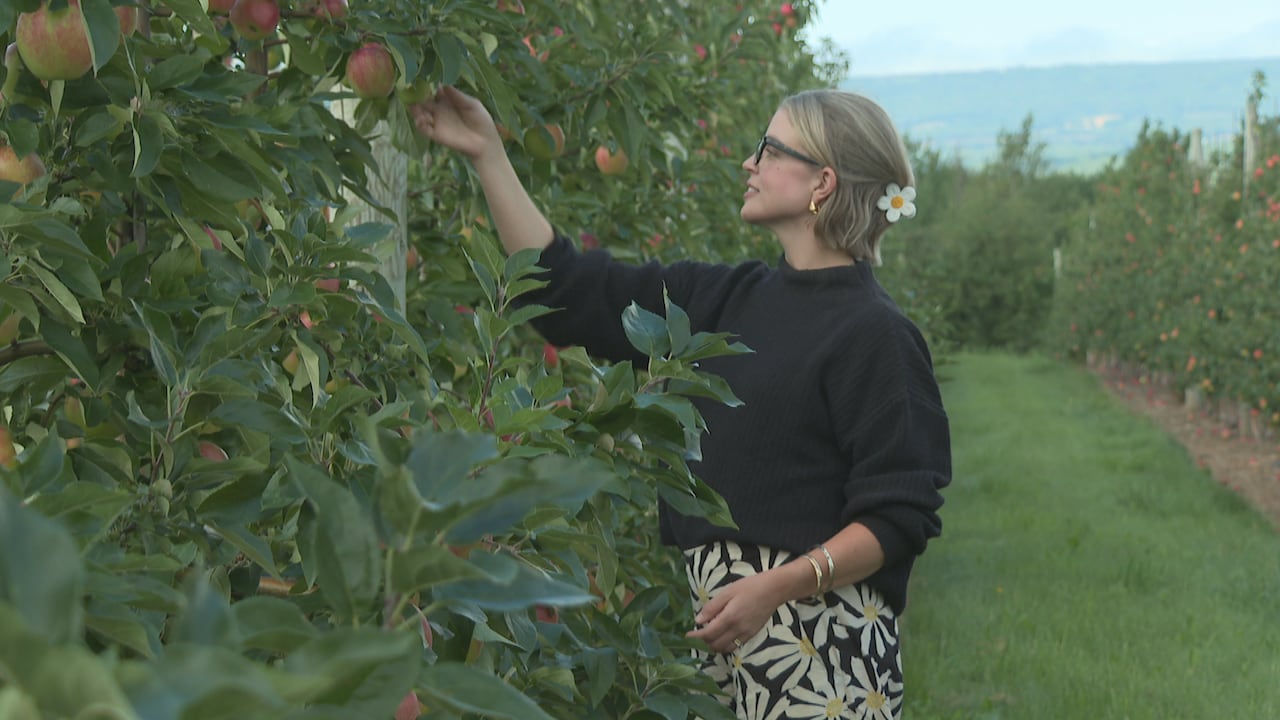 Emily Lutz is the executive director of the Nova Scotia Fruit Growers’ Association. (Paul Legere/Radio-Canada)
Van Meekeren is now hoping no major weather event comes his way, as that could damage trees and undo their progress.
“Any of the hurricanes or the tropical storms that would come up from the south, which can happen in the fall,” he said. “But otherwise, I think we’re set for a really nice crop.”
MORE TOP STORIES