
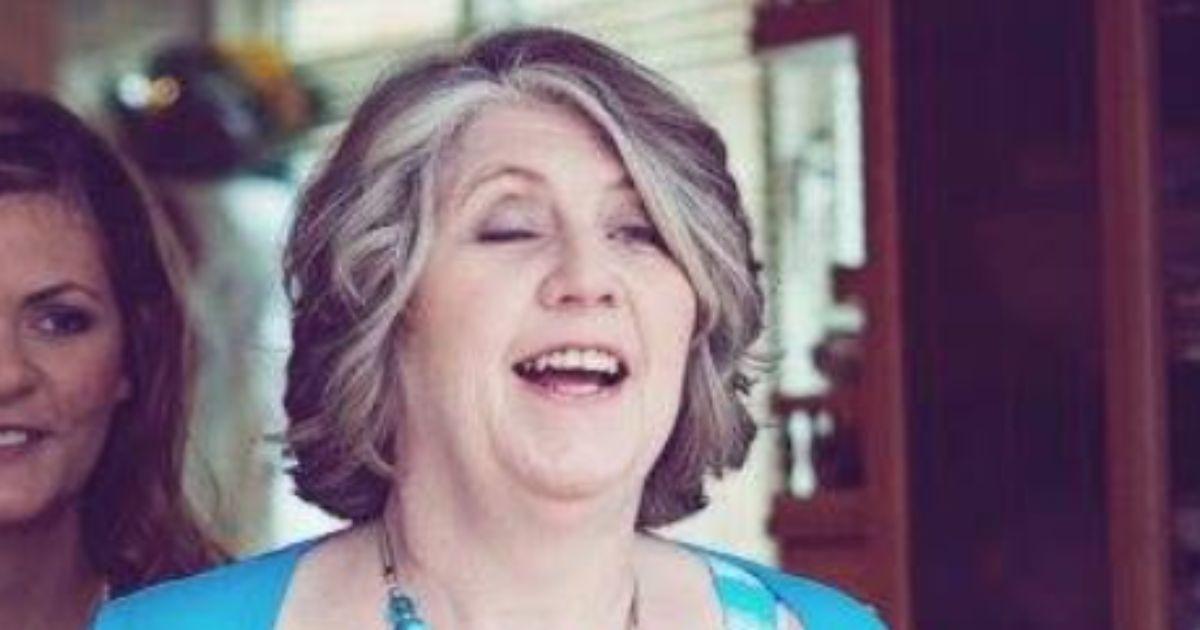
Caroline Savage, a grandmother and mother from Wortwell, near Harleston, died after collapsing at her home while trying to go to bed in October 2024.
Mrs Savage, who had been privately prescribed Mounjaro for around four months, fell seriously ill shortly after being advised to raise the amount of the weight-loss drug she was taking.
Caroline Savage died aged 73 (Image: Facebook)
A post-mortem found Mrs Savage died from faecal peritonitis – a leaking of faecal matter into the abdominal cavity – caused by perforation of part of her intestines.
An inquest held at Norfolk Coroner’s Court examined if her death was linked to the weight-loss drug, which is known to have gastrointestinal side-effects.
However, area coroner Yvonne Blake told the court that there was not any established evidence that her death was caused by Mounjaro.
Mrs Savage had been taking the drug to lose weight and ease symptoms associated with lipoedema – the build-up of fat cells in the lower body and arms – and lymphoedema, which causes swelling.
Person injecting Mounjaro (Image: Niall Carson/PA Wire)
This came after she had previously been unsuccessful in losing weight through diet and exercise.
Although on the morning of October 18, Mrs Savage developed acute and constant abdominal pain.
An ambulance was called at about 1.30pm after her husband found her doubled over in pain.
Caroline Savage had increased her dose of a prescribed weight loss drug before her death (Image: Facebook)
She was taken to the Norfolk and Norwich Hospital’s (N&N) rapid assessment and treatment area at about 2.45pm but remained in an ambulance because the emergency department was too busy.
Outside the Norfolk and Norwich Hospital she was looked after by two paramedics before two doctors and two nurses attended to her.
She was assessed by a senior clinical fellow in emergency medicine who said his initial concern was pancreatitis, a known but rare complication associated with weight-loss medication.
Norfolk and Norwich University Hospital (Image: Newsquest)
However, Mrs Savage’s blood results did not indicate pancreatitis and, following examination, he concluded she did not require admission or a CT scan, which uses x-ray.
After being assessed by a second doctor, who performed an ultrasound on her abdomen, she received three doses of morphine and paracetamol.
She was seen by an advanced nurse practitioner who said that Mounjaro’s recognised side-effects, including abdominal pain and bloating, formed a reasonable working diagnosis in the absence of any evidence pointing towards a surgical emergency.
With her blood tests coming back as “normal”, it was subsequently “decided that she could be discharged”.
Norfolk and Norwich University Hospital (Image: Newsquest)
However, following discharge at about 6.30pm, she later “fell on to the floor” in her home after her husband had tried to help her get to bed.
She suffered a cardiac arrest and despite an ambulance coming to the home, she died the following day during the early hours of October 19.
Concluding the inquest, Ms Blake said: “Given that all Mrs Savage’s results and her blood was normal – a venous blood gas was taken – it was decided that she could be discharged home.
Yvonne Blake, area coroner, sitting inside a court room, with a picture of the outside of Norfolk Coroner’s Court (Image: Newsquest)
“She was discharged early that evening and roughly six hours later her husband had to help her get to bed and then she fell on to the floor at home and went into a cardiac arrest.
“An ambulance came but unfortunately they weren’t able to save her.”
Ms Blake decided to file a prevention of future death report to the N&N and the East of England Ambulance Trust after identifying issues with communication between paramedics and staff, record-keeping and written handovers.
She said: “All three clinicians did the same thing and didn’t communicate. They hadn’t had information passed on to them by others.
Norfolk Coroner’s Court (Image: Newsquest)
“When she was examined by doctors, she was not in a great deal of pain. She had had morphine only ten minutes before.
“I find evidence of record-keeping that could be better, very much better and evidence that she was not diagnosed with anything particular and was sent home.”
Over the course of the inquest, Mrs Savage’s family – represented by barrister Jasmine Leng – argued that her symptoms should have prompted further investigation.
They submitted that Article 2 of the European Convention on Human Rights – the right to life – should be engaged because of potential systemic failures in communication, documentation and clinical decision-making at the hospital.
However, coroner Blake did not find “evidence of a breach of the system” or “any systemic defect in these systems operating in the emergency department”.
“I don’t find that Article 2 is engaged”, she concluded.
Ms Leng, also raised concerns about “diagnostic overshadowing and Mounjaro”.
However, Ms Blake said she did not agree, adding: “It’s not clear to me from the evidence that the doctors were fixated with Mounjaro.
“I don’t think there was an overshadowing by doctors.”