

Listen to this article
Estimated 4 minutes
The audio version of this article is generated by AI-based technology. Mispronunciations can occur. We are working with our partners to continually review and improve the results.
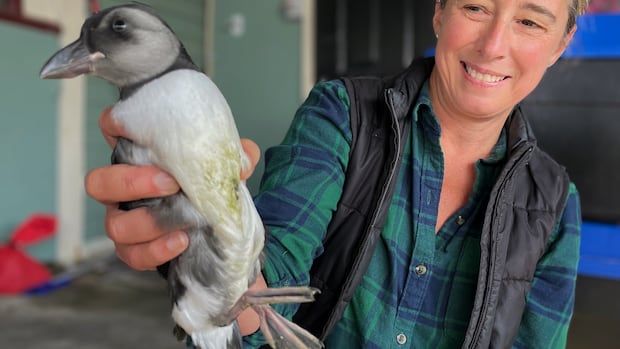
Tammy Somasundaran was pulling into a convenience store parking lot in Witless Bay, N.L., when she saw something small and dark waddling in the glow of her headlights.
It was an Atlantic puffin chick — which, surprising to some, is closer in size to a pigeon than a penguin.
“He turned around and just started walking towards me, which was objectively one of the most adorable things I’ve seen in my life,” said Somadundaran, who was visiting from New England.
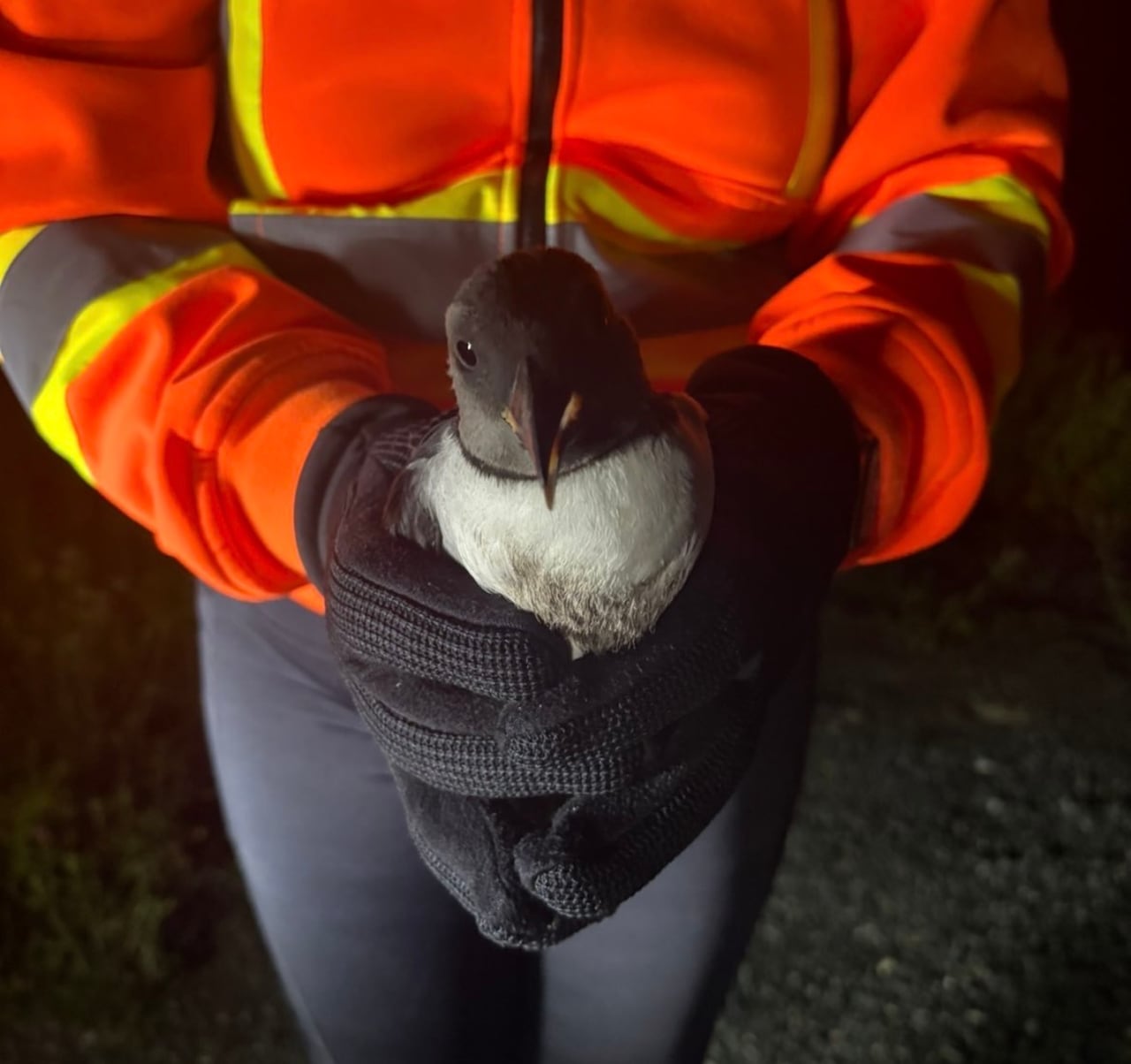 On their first shift with the Puffin Patrol, Carly Morgan and Leah Kelly found this baby puffling. (Submitted by Carly Morgan and Leah Kelly)
Every August, puffin chicks, known as pufflings, leave their burrows on the islands of the Witless Bay Ecological Reserve for the first time and head out to sea.
They use the moon to help navigate, but artificial lights in nearby communities can disorient them and lure them inland, where they become stranded on roads, lawns and parking lots.
That’s where the Puffin Patrol comes in.
The program was started in 2011 by Jeugen and Elfie Schau, a German couple who bought a vacation home in Witless Bay and noticed dead puffins on the road. It eventually grew into a major conservation effort co-ordinated by CPAWS, the Canadian Parks and Wilderness Society.
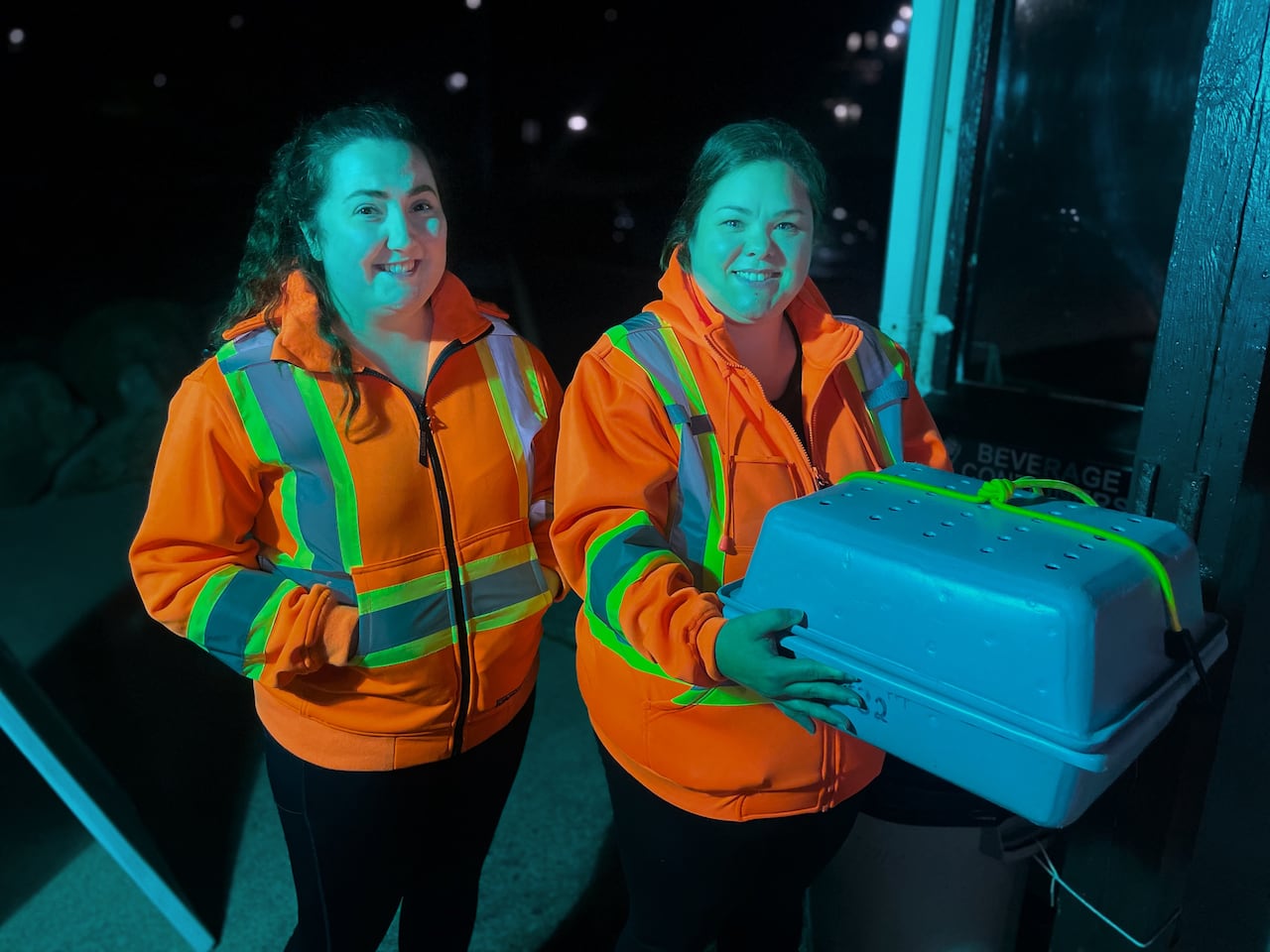 After Morgan and Kelly found a puffin, they put it in a crate, where it will stay overnight until it’s released back to the sea. (Caroline Hillier/CBC)
Jeurgen Schau, known as the puffin man, recently died. His legacy lives and is known by visitors from around the world.
“He had big dreams,” said Suzanne Dooley, the conservation director for the Newfoundland and Labrador chapter of CPAWS.
“All he wanted to do was just make sure these baby puffins, he would call them ‘his darlings,’ would be protected. So we keep doing this as much as we can to respect his wish and his legacy.”
More than 100 puffins found this season
Last year, fewer than 10 pufflings were found during patrols — a sign that there may not have been enough food available for chicks to survive.
“We were able to then corroborate that by going on the islands and finding a lot of dead puffin chicks on the island. So basically they starved,” said Sabina Wilhelm, a seabird biologist with the Canadian Wildlife Service.
As of earlier this week, a total of 123 pufflings had been found during this year’s patrols. Wilhelm says the increase suggests food was more plentiful and more chicks survived long enough to leave the colony.
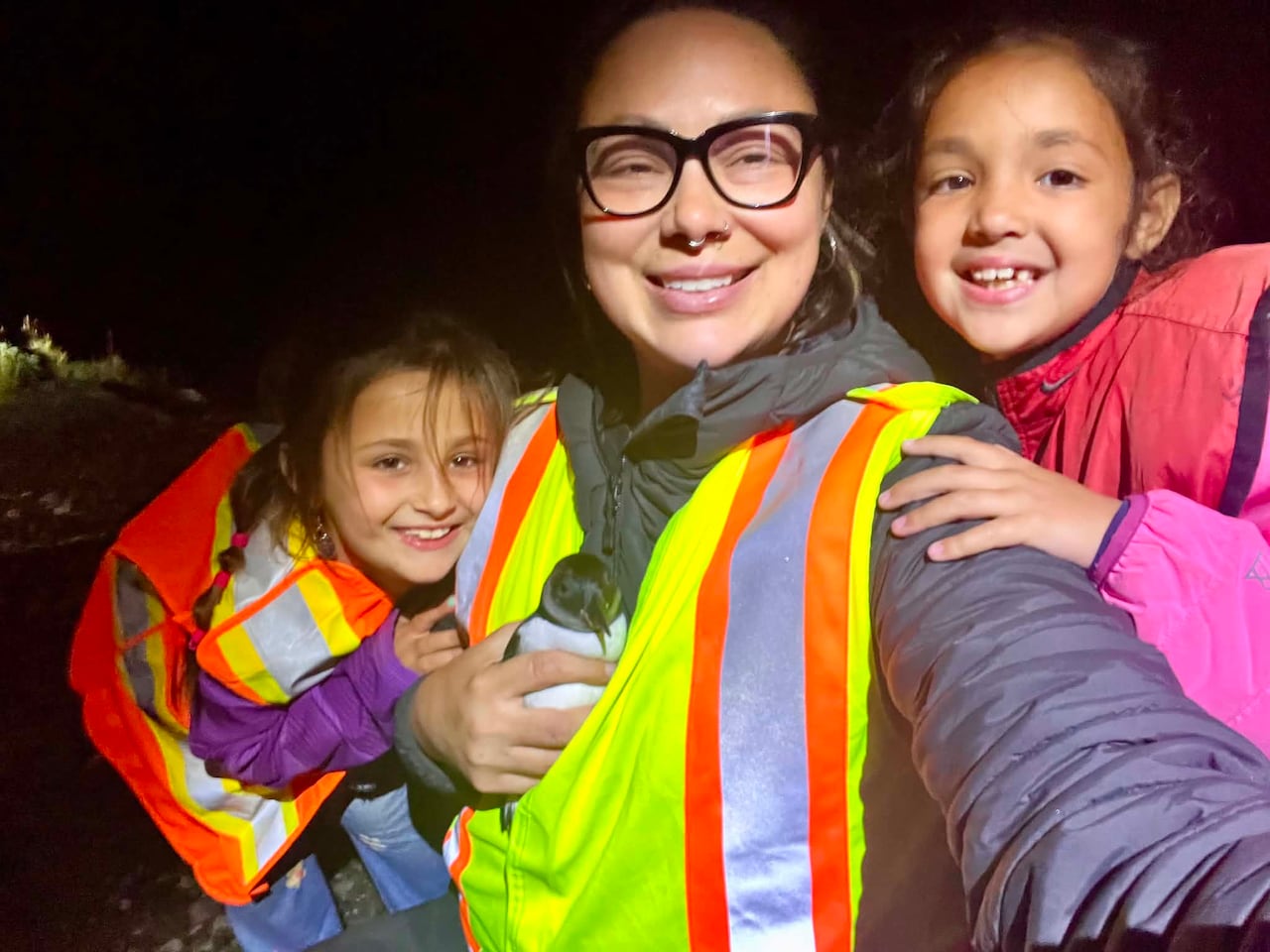 Autumn Banks, Leanne Guzzwell and Marlee Foley found two puffins on their Puffin Patrol shift. (Submitted by Leanne Guzzwell)Light pollution
While the “charismatic puffins” bring people out, the bigger message is about what brought the birds into the communities in the first place: light pollution.
“We like the safety of lights, but it actually has a negative impact, not not just puffins, but on all wildlife and on humans as well,” said Wilhelm.
“So we’re not supposed to always have lights on all night long. We are supposed to have a dark landscape.”
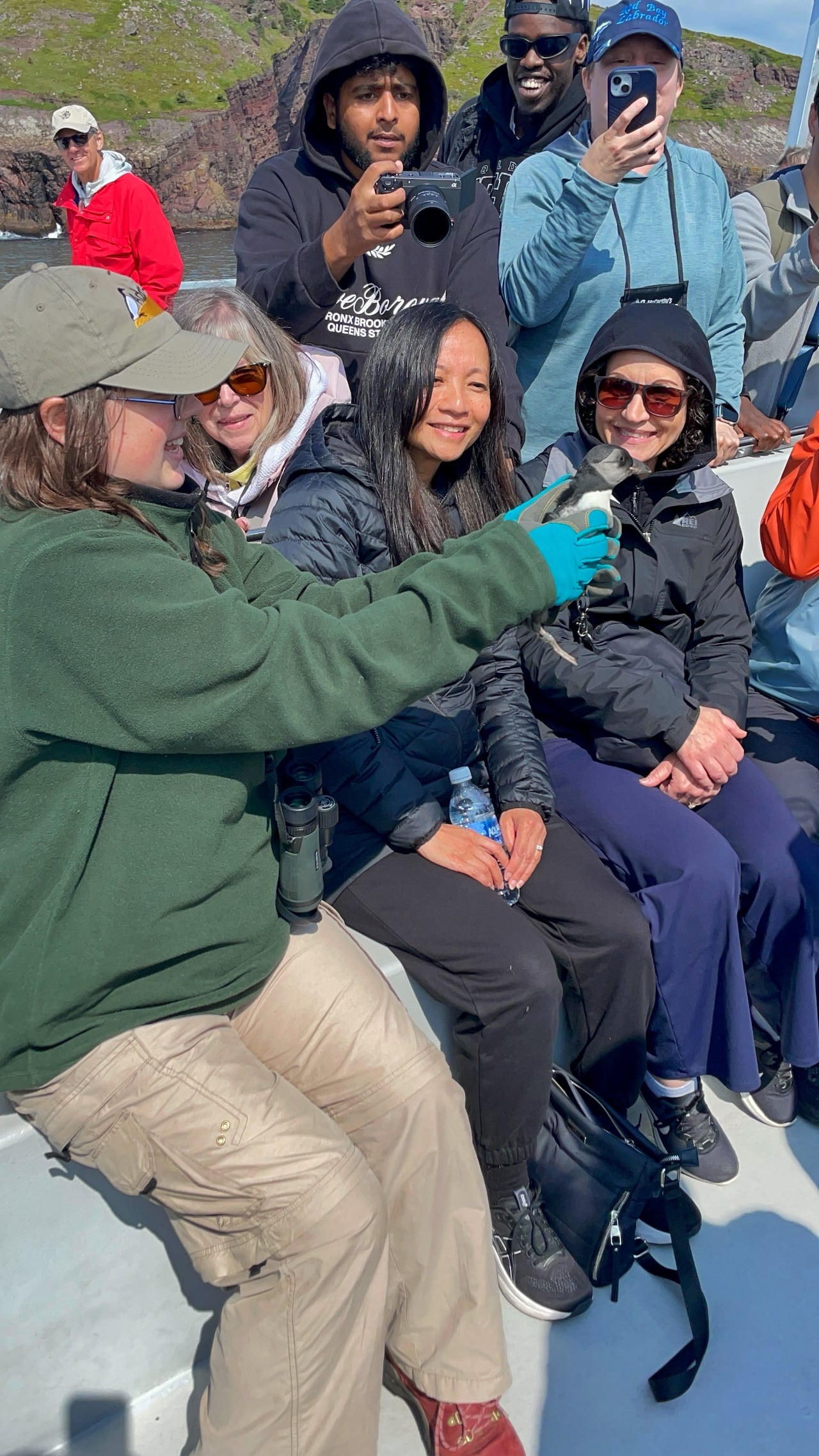 Before releasing a rescued puffin back to sea, Emily Stevens of CPAWS shows the puffin off to tourists on O’Brien’s Boat Tours. (Caroline Hillier/CBC)
The morning after their rescue, the puffins are measured, banded and are then released off local tour boats.
Puffins spend the next two to three years at sea before eventually returning to land to breed. Some puffins banded through the program have later been spotted back in the Witless Bay Ecological Reserve as adults, sending their own chicks out to sea.
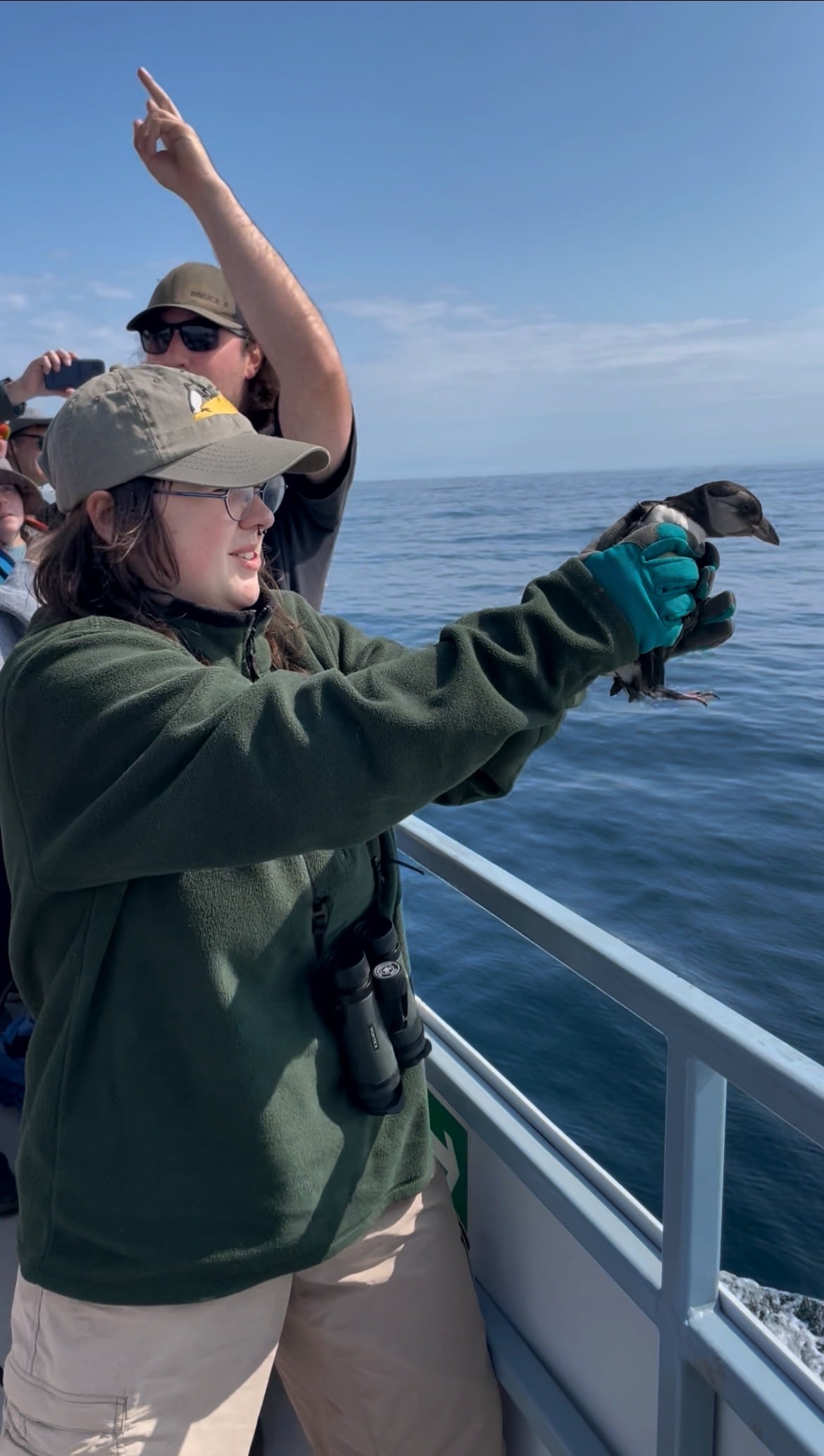 Stevens throws the rescued puffins back to sea, where they will live for a few years before eventually heading back to land to breed. (Caroline Hillier/CBC)
“So it’s not just a thing to make us feel good. It actually does help,” said Wilhelm.
“That’s pretty remarkable that they found that we did find banded birds because, it’s like looking for a needle in a haystack, you know, we don’t know where they’re going to end up breeding.”
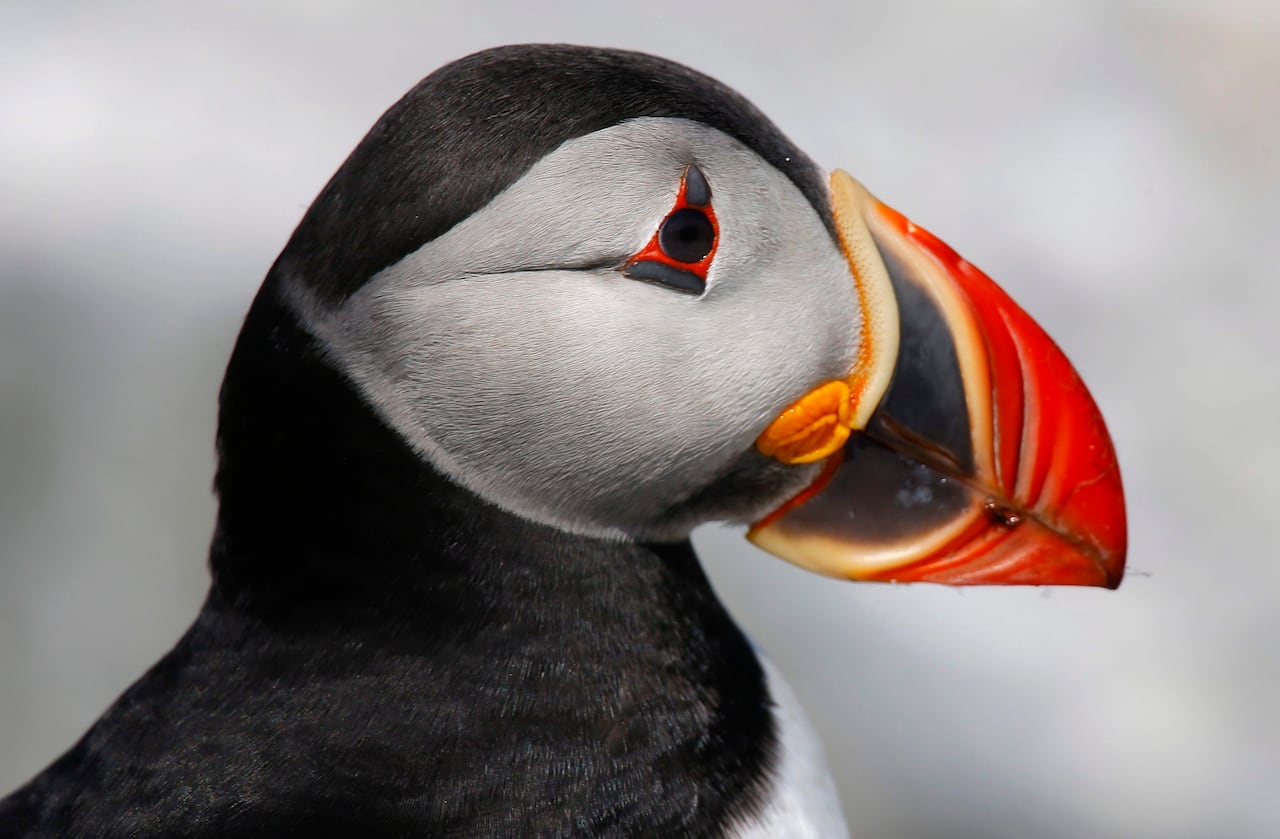 An Atlantic puffin is shown in a file photo. Adult puffins sport their iconic bright orange beaks during the breeding season. (Robert F. Bukaty/The Associated Press)