
For years, most people outside the Soviet scientific establishment knew little about Bugorski’s experience. Soviet policy placed tight restrictions on information about nuclear and radiation accidents, and his case didn’t become widely known internationally until much later.
Journalist Masha Gessen brought the story to a large Western audience in a 1997 article for “Wired,” nearly two decades after the accident. That account described both the accident and Bugorski’s continuing frustration with the bureaucracy surrounding his medical care.
His story has since become something of a poster case for the extreme hazards surrounding high-energy particle accelerators. But it shouldn’t be treated as evidence of some extraordinary human capacity to shrug off radiation.
Modern accelerators such as the Large Hadron Collider handle beams containing enormous amounts of stored energy, and accelerator facilities rely on multiple layers of safety mechanisms to prevent people from entering areas where an active beam could reach them.
Bugorski’s accident didn’t immediately rewrite international accelerator safety regulations. Nor was it a controlled experiment or an intentional test of proton warfare, although Bugorski himself later described it as ‘an unintended test of proton warfare. It was a scientific workplace accident involving malfunctioning equipment and the apparent failure of several safety mechanisms.
Still, his injuries provide an unusual real-world illustration of localized radiation damage. A proton beam can deposit energy with great precision — a property modern medicine deliberately exploits in controlled proton therapy. In Bugorski’s case, there was nothing controlled about it.
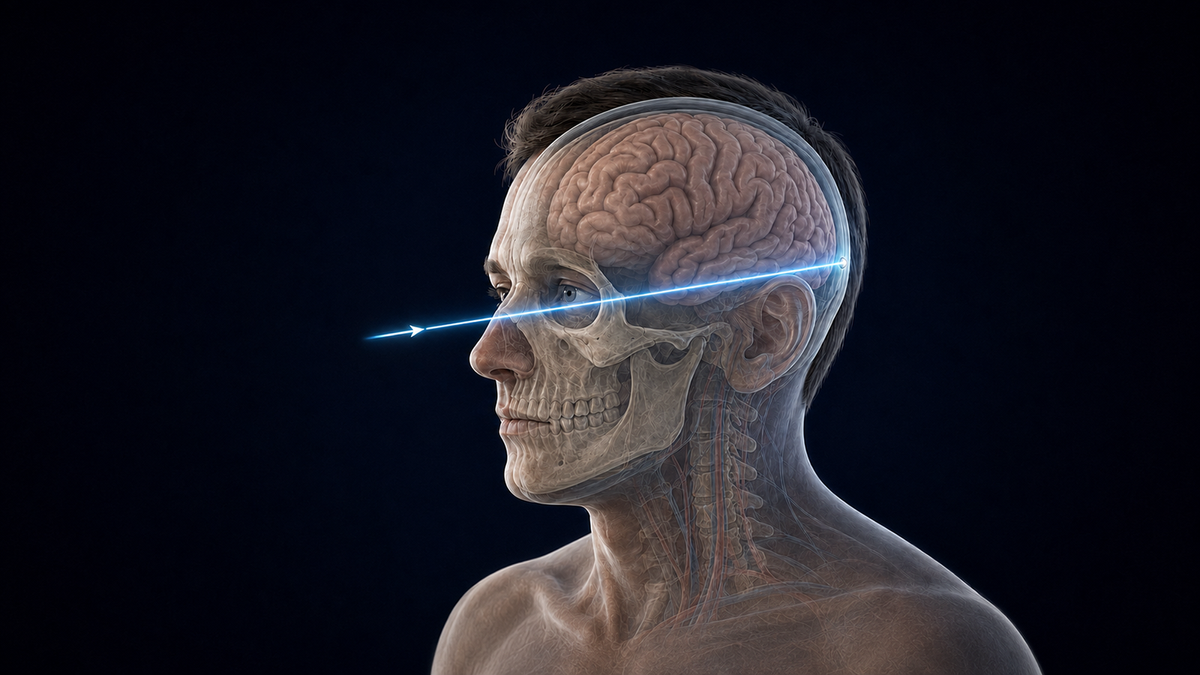
The beam damaged brain tissue, nerves and structures associated with his left ear, yet its narrow path spared enough surrounding tissue for him to survive and continue his career. That makes his experience medically extraordinary without making radiation exposure any less dangerous.
We created this article in conjunction with AI technology, then made sure it was fact-checked and edited by a HowStuffWorks editor.