
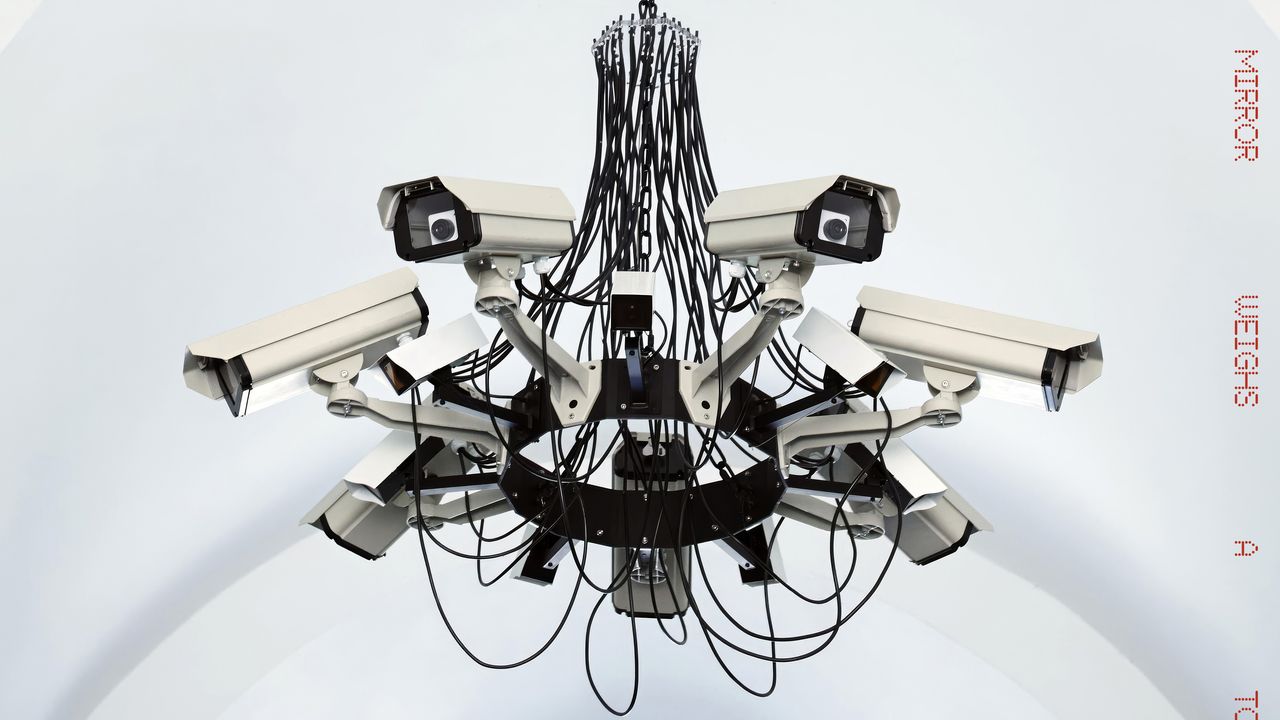
Every four years, with the reliability of a reelection campaign, Interpol emerge with a new album that sounds remarkably like Interpol. They’re not the kind of band to wade through a murky psychedelia morass for an album-length fuck-you to casual fans, à la MGMT, or douse a long-awaited comeback LP in chintzy pop textures and copious Auto-Tune, like the Strokes just did. When Interpol make a record, they’re all business, and their business is being Interpol, brooding hooks and well-pressed suits and all. They may tweak the formula—the post-punk atmospherics, the alluringly charismatic baritone belonging to Paul Banks, the cryptic lyrics that connote dark emotions but are agile enough to be repurposed for goth tattoos or goofy memes. But they don’t toss it away.
That reliability means you can count on them for consistency—aside from the dismal self-titled record, they’ve never made a bad one—but also means it can be tough to differentiate one post-Carlos Interpol album from another. Let’s see: There was the course-correction comeback that reintroduced Interpol as a three-piece, with Banks on bass. There was the surprisingly raw Dave Fridmann production that yielded some strong singles as the band settled into legacy status. There was the remotely written one that, uh, also had a bunch of Interpol songs on it. Now, after hunkering down with another new collaborator (prolific pop producer Andrew Wyatt, not to be confused with rock-dinosaur whisperer Andrew Watt) in their semi-estranged hometown of New York, Interpol return with another scheduled reset.
No score yet, be the first to add.
By all early signs, This Mirror Weighs a Ton promised a rebirth. It’s Interpol’s first album for Partisan, the thriving indie label that has lately attracted high-profile talent like Beth Orton and PJ Harvey. It’s their first to feature longtime touring bassist Brad Truax, now promoted to an official member. Early press included intriguing mentions of strings, woodwinds, and “experimental sound design” introduced by Wyatt. And its title track, released as a single, was surely the band’s most interesting song in more than a decade: Grainy and haunted, full of wobbly drum loops and gaseous synth clouds, it has a minimalist momentum and a command of empty space that gives Banks’ dour voice newfound authority. He sounds like a man brooding alone, coming unmoored: “All the kings are gone,” he sings, in between the celestial sighs delivered by his wife, fashion designer Juliet Seger-Banks, “but the maniac in your head still sleeps in archways.”
The track reconfigures Interpol as a kind of warped-pop studio project, and it sounded like an exciting glimmer of something new, but it’s more of a red herring than a representative sample. With the exception of “Enemy,” a spectral piano ballad with clipped, thundering percussion that emulates the turbulent relationship it sketches, and the pulsing, orchestral outro on “Bird and the Serpent,” nothing on This Mirror Weighs a Ton really matches the title track’s thrill and invention. It’s far from a weak record; it is, in fact, one of Interpol’s better late-career efforts. Twitchy, paranoid rockers like “See Out Loud” and “Wings on Fire” can stand with the best tracks from El Pintor or The Other Side of Make-Believe. But the most novel thing about them is that guitarist Daniel Kessler, whose trebly riffs have been an Interpol trademark since the opening swells of “Untitled,” gets a fleeting turn at lead vocals during the former.