
Topline
NASA is about to launch the first of what promises to be a new generation of space observatories. On Sunday, Aug. 30, the Nancy Grace Roman Space Telescope is scheduled to lift off aboard a SpaceX Falcon Heavy rocket from Kennedy Space Center in Florida. The $4.3 billion flagship mission arrives roughly nine months ahead of NASA’s previous schedule — an unusually early finish for a project of its size — and astronomers believe it could transform our understanding of everything from dark energy and dark matter to planets beyond the solar system.“It’s going to do things that currently are impossible,” said Shawn Domagal-Goldman, director of NASA’s Astrophysics Division, in a NASA press conference on July 29. Here’s exactly when to see it launch on Sunday, Aug. 30, 2026.
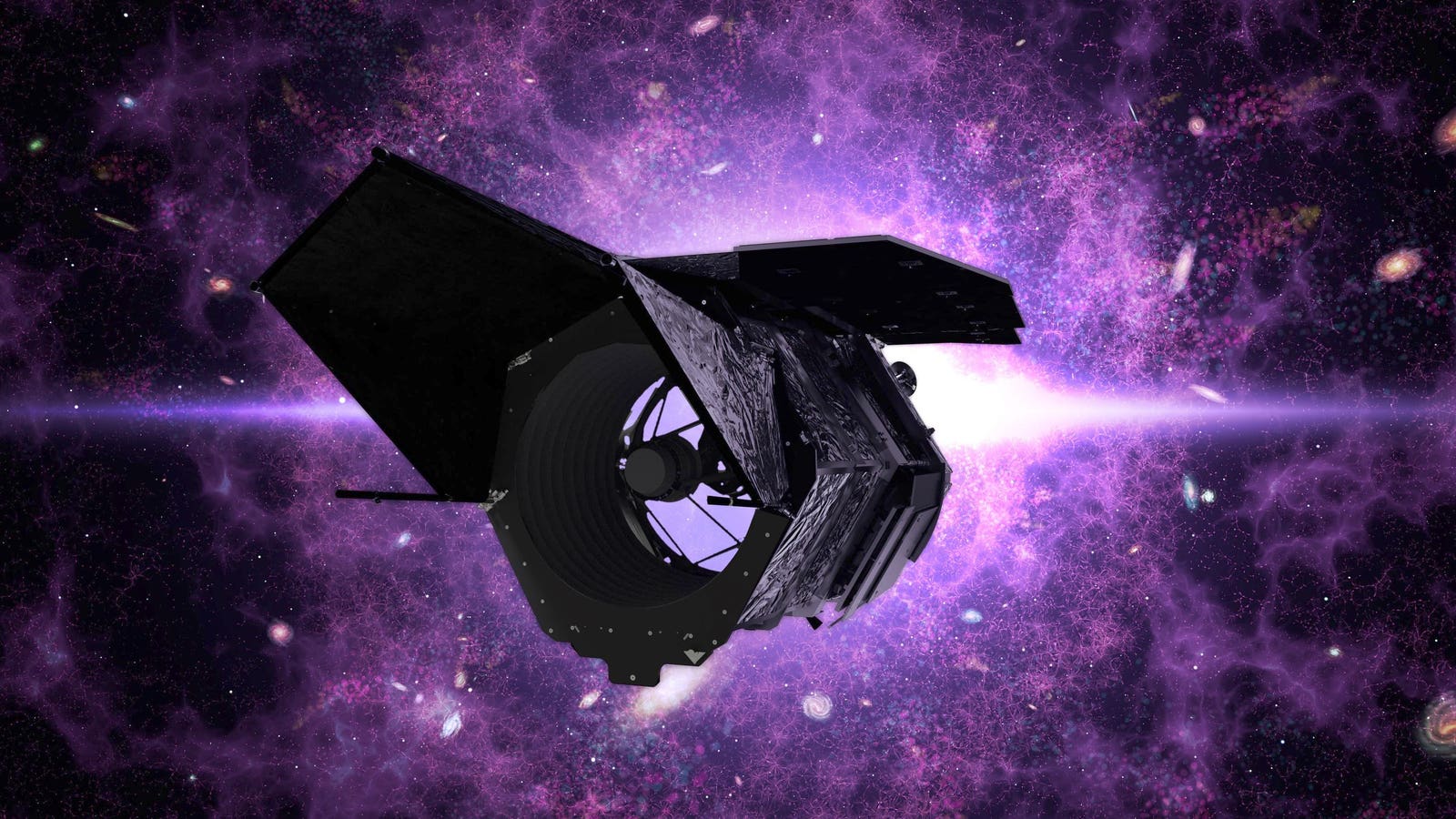
NASA’s Nancy Grace Roman Space Telescope could conduct a mega-exposure similar to but far larger than Hubble’s celebrated Ultra-Deep Field Image.
GSFC/SVSKey Facts
NASA plans to launch the Nancy Grace Roman Space Telescope aboard a SpaceX Falcon Heavy rocket from Kennedy Space Center in Florida on Sunday, Aug. 30. Liftoff is scheduled for no earlier than 7:26 a.m. EDT.
Roman is NASA’s next flagship astrophysics observatory and is designed to survey more than two billion galaxies, investigate dark energy and dark matter, and discover around 100,000 exoplanets during its five-year prime mission. Unlike Hubble or Webb, it is built to map vast areas of the sky rather than focus on individual objects.
The mission’s total lifecycle cost — including development, launch and operations — is about $4.3 billion. After launch, Roman will spend about 100 days commissioning its instruments before beginning routine science observations from the Sun-Earth L2 Lagrange point, about one million miles (1.5 million kilometers) from Earth.
NASA’s Live Coverage Schedule
Launch day coverage will be available on the NASA website, including the livestream and blog. The coverage is as follows:
Sunday, Aug. 30, 2026:
6:20 a.m. EDT: Launch coverage begins.7:26 a.m. EDT: Launch9:30 a.m. EDT: Postlaunch news conference with NASA Administrator Jared Isaacman and other NASA staff.
Roman’s Primary mirror is the same size as Hubble’s.
NASA/Chris GunnA Telescope Designed To See The Bigger Picture
Named after NASA’s first chief astronomer, Dr. Nancy Grace Roman, the observatory has often been described as combining Hubble’s sharp vision with a panoramic field of view. That wider perspective comes from Roman’s Wide Field Instrument, which pairs the same 2.4-meter (7.9-foot) primary mirror as Hubble with a field of view more than 100 times larger. Over its five-year prime mission, it will map more than two billion galaxies, collect about 20 petabytes of science data and survey more sky than Hubble has observed during more than three decades in orbit. Roman’s headline science goals are ambitious enough: investigate the mysterious dark energy driving the accelerating expansion of the universe, produce the most detailed maps yet of dark matter and conduct the largest survey of planets beyond the solar system ever attempted. Roman will also search for around 100,000 new exoplanets, many orbiting much farther from their stars than those discovered by missions such as Kepler and TESS.
Ready For Liftoff
Behind the scientific promise lies years of engineering and months of intensive preparation. The observatory has been fueled, launch teams have rehearsed every stage of the mission, and, once in space, engineers will spend about 100 days commissioning the telescope before routine science begins. During that time, Roman will deploy its systems, align its optics, activate its instruments and make the million-mile journey to the Sun-Earth L2 Lagrange point, where it will join the James Webb Space Telescope.
Further ReadingForbesNASA’s Roman Space Telescope To Launch This Month — Nine Months Ahead Of ScheduleBy Jamie CarterForbes10 Things To Know About NASA’s Roman Space Telescope Before Its Aug. 30 LaunchBy Jamie CarterForbesDragonfly: NASA’s Most Exciting Mission This Century Is Taking ShapeBy Jamie CarterForbes‘Exciting’ Earth-Like Planet Found Close To The Solar SystemBy Jamie Carter