
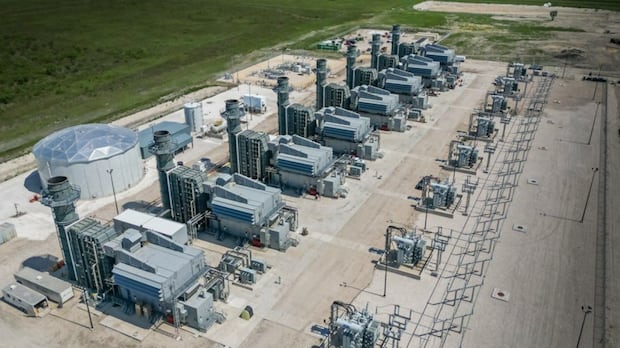
A gas and diesel power plant proposed for rural Tantramar has been approved by the New Brunswick Environment Department, with conditions attached.
Gilles LePage, the environment and climate change minister, announced the decision on Friday.
LePage said he relied on expertise and advice from a technical review committee made up of members from federal, provincial, and local bodies before making his decision.
In an email, project proponent ProEnergy acknowledged the “important regulatory decision” but said it would not comment further “until permitting and regulatory requirements have been fully met.”
WATCH | ‘It’s not a handshake agreement,’ minister says:
Tantramar gas plant clears major regulatory hurdle
New Brunswick’s environment department says the gas and diesel power plant project can proceed, subject to 45 conditions.
The U.S.-based company is proposing to install 10 refurbished jet-engine turbines in Centre Village, with a capacity to produce up to 500 megawatts of electricity on short notice.
The project is spearheaded by N.B. Power, which signed a 25-year agreement with ProEnergy to build and operate the plant in the southeast New Brunswick community.
The approval comes with a list of 45 conditions, including a requirement that the company prepare an emergency management plan with local officials and complete regular air and water-quality monitoring.
The company will also be required to inform the public about the project’s progress, and share information with Elsipogtog First Nation about the impact on plants and wildlife.
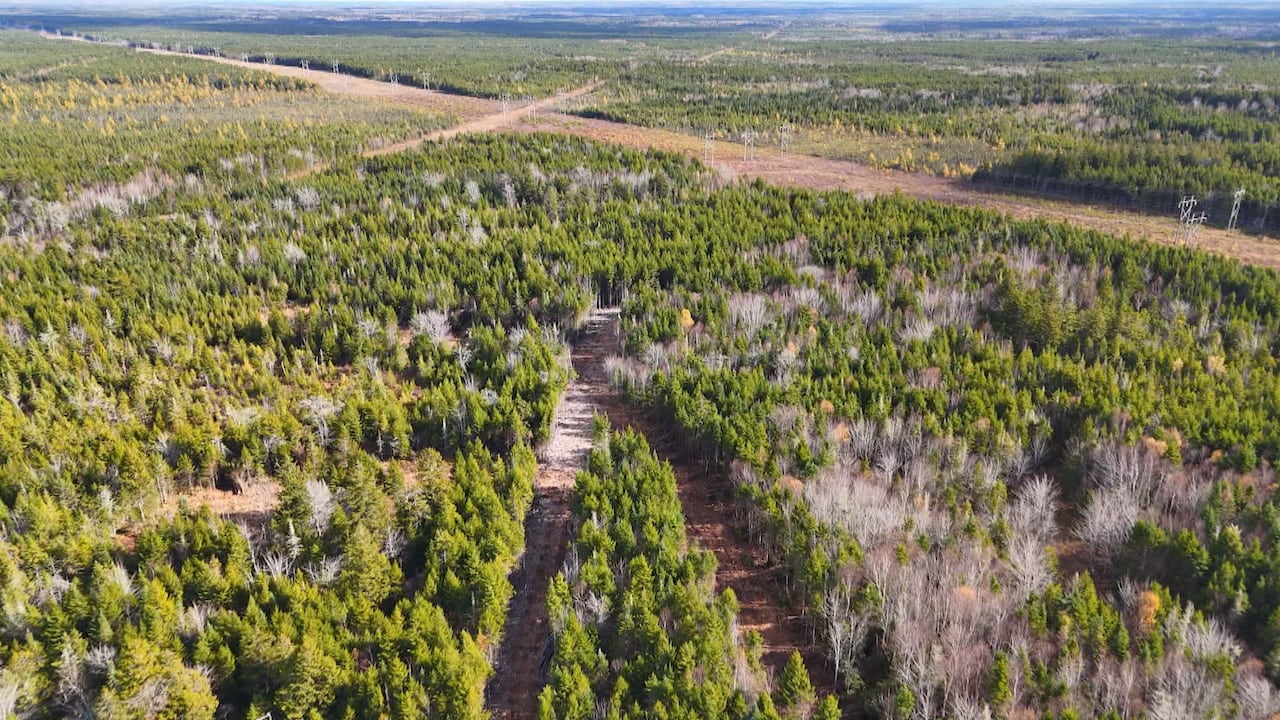 The proposed gas plant is planned for a wooded area on a site that will give the plant access to gas and electricity. (CBC News)
Shortly after the project was announced in July 2025, local residents raised concerns about the use of water resources on the site, as well as the discharge from the plant’s water-treatment system.
Local opposition to the project also cited concerns about air quality around the plant, disruptions to the regional ecosystem, and the ability for local fire departments to respond to emergencies on the site.
During the environmental impact assessment process, the company made some changes to its water-management plans, including agreeing to ship water-treatment effluent off site, instead of releasing it in Centre Village.
Both N.B. Power and ProEnergy have said the plant’s turbines will primarily operate as synchronous condensers, which means they would rotate without burning any gas or diesel.
Synchronous condensers help stabilize the electricity already flowing through the grid, without generating any power themselves.
The conditions set out by the Department of Environment will hold them to that plan.
The company will be limited to burning gas and generating electricity a maximum of 17 per cent of its operating time. And the company will need to report annually on the number of hours it has been either burning fuel or operating as a synchronous condenser.
The conditions also require ProEnergy to stick to its plans to primarily burn natural gas from the Maritimes and Northeast pipeline and use diesel fuel stored on site only as a backup.
The company will be required to notify the department whenever it burns diesel, though the conditions don’t give specific limits on how much diesel fuel the company will be permitted to burn.
‘Not really surprised’
The Conservation Council of New Brunswick has long opposed the Tantramar gas plant project, and executive director Beverly Gingras said Friday she was disappointed but “not really surprised” at the decision.
“In this province, most of the time environmental assessments end in approval,” Gingras said.
Gingras said the Conservation Council remains concerned about the local environmental impact of the project and the wider climate change impact.
“This project is only going to contribute to emissions,” said Gingras, and exacerbate climate change impacts such as heat waves and wildfires.
Gingras said that combined with another provincial government decision this week — to reopen the debate on shale gas — she feels the province is sending a message that climate change is “a problem for future generations.”
LePage said that the gas plant approval is not related to his government’s decision to review the moratorium on fracking in New Brunswick.
Mi’gmaw assessment underway
While the approval conditions specify communications with Elsipoptog First Nation, they do not specify any requirements involving Mi’gmawe’l Tplu’taqnn Inc., the group representing nine of New Brunswick Mi’kmaq nations.
Mi’gmawe’l Tplu’taqnn Inc. is currently conducting a Mi’gmaq Rights Impact Assessment on the project, which will be considered by the chiefs.
Last year, ProEnergy announced it had an Indigenous equity partner in the project, but the North Shore Mi’kmaq Tribal Council later clarified that it would not participate without an approval from the chiefs.
In July, N.B. Power executive Brad Coady told reporters that the project could proceed without an Indigenous equity partner, as long as First Nations had been given the opportunity to participate.
‘It’s not over’
“No matter how many conditions they they put on it, it doesn’t make this a good idea,” said Megan Mitton, MLA for Tantramar, where the plant site is located.
“This is still a bad idea, an expensive idea, one that is going to harm the health of people as well as our environment.”
Mitton said the opposition to the project will continue.
“It’s not over,” she said.
“We shouldn’t be doubling down on oil and gas when we have other options.”
The Energy and Utilities Board approved N.B. Power’s deal for the gas plant in late May, ultimately agreeing with the utility’s claim that the province could face rotating blackouts if the project was not online by 2028, and that battery storage alternatives were too expensive.
In June, the Protect the Chignecto Isthmus Coalition filed for a judicial review of the board decision. The group is expected in court in September to ask for the decision to be quashed and a new hearing held.
The gas and diesel project is expected to cost N.B. Power at least $3.5 billion over the course of the 25-year contract, based on figures in a 2024 briefing note to the utility’s board of directors.
N.B. Power has refused to share the actual costs of the contract signed with ProEnergy.