

Listen to this article
Estimated 4 minutes
The audio version of this article is generated by AI-based technology. Mispronunciations can occur. We are working with our partners to continually review and improve the results.
Alberta has stiffened rules, increased fines and even put mussel-sniffing dogs on the case to keep invasive species out of the province’s waterways.
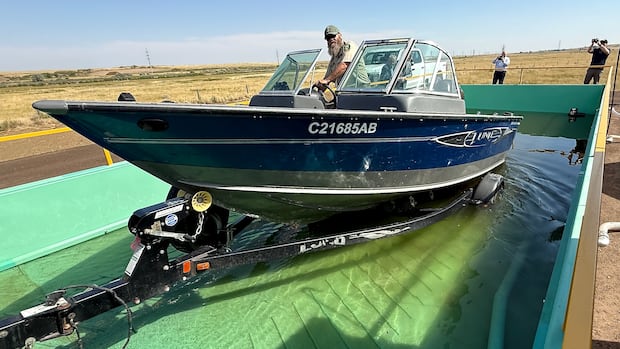
Now, officials are asking boat owners to float their watercraft and flush them out in a roadside dip tank — equipment they say could make mandatory inspections easier and more effective at provincial entry points.
“Prevention is our best defence,” said Alberta Environment Minister Grant Hunter at a demonstration of the tank, located at Dunmore, Alta., on the Trans-Canada Highway near Medicine Hat.
“The technology [allows] our boaters to be able to get in, get out and get on their way, and protect our waterways the best we can.”
The tank, built at a cost of $1.2 million, resembles a typical boat launch and sits in the corner of a commercial truck weigh station where boats are inspected.
Owners back in a boat and trailer, turn on the motor, then fill and flush any tanks with recycled, chemical-free water heated above 40 C.
Several minutes is enough to cleanse all lingering traces of mussels in the hard-to-get-at systems, said decontamination specialist Bill Fisher.
“If we have any hitchhikers, we’re going to kill them,” said Fisher.
Typically, inspectors would crawl under a trailer with a pressure washer to inspect and flush tanks for ballast or bait one by one.
Fisher said the savings of time and water will be “significant.”
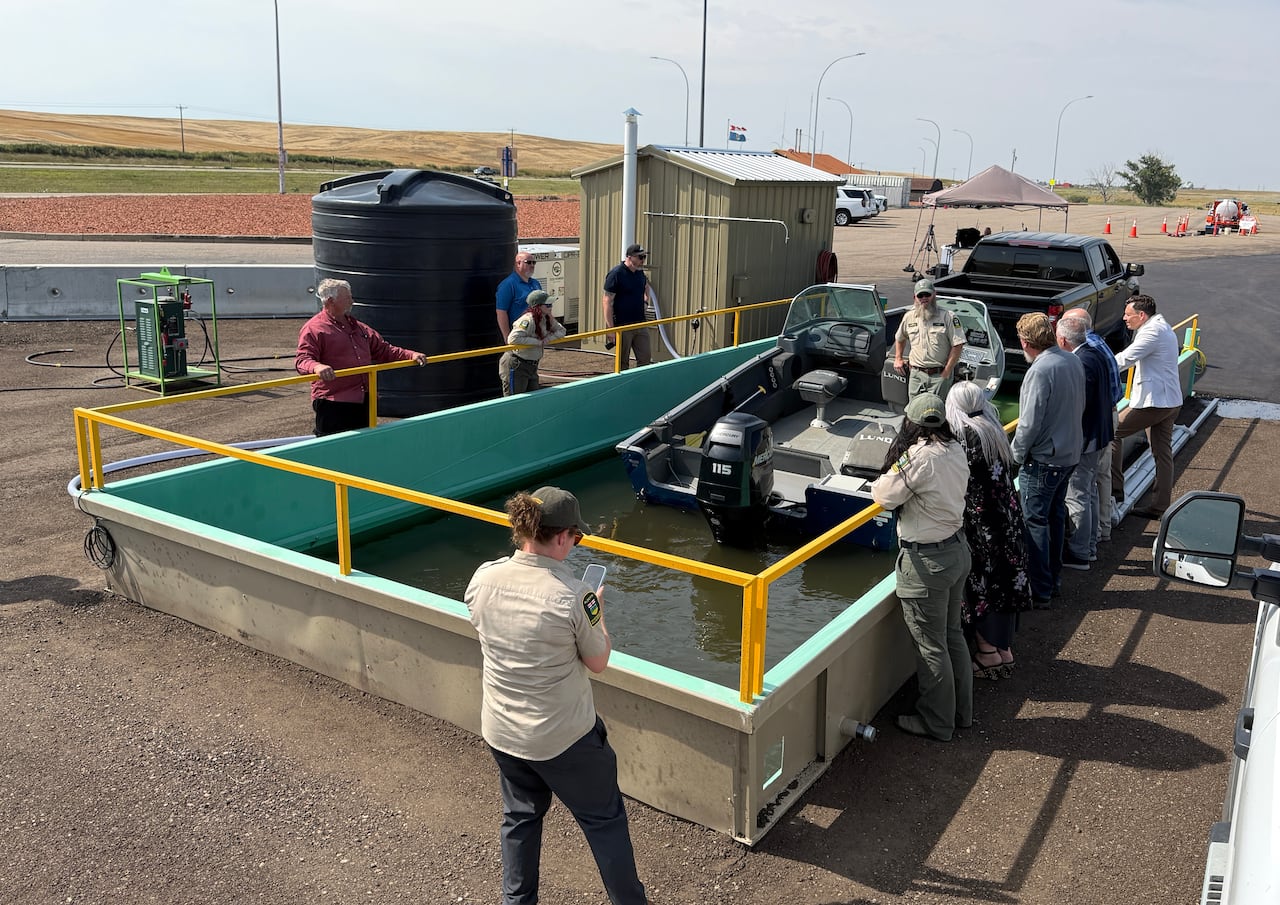 Boat owners can now speed up mandatory inspections of watercraft entering Alberta by using a new tank designed to run water hot enough to kill invasive organisms through ejection motors and other tanks. (Collin Gallant/CBC)Alberta aims to stop the spread of mussels
Alberta has stepped up measures to keep the province mussel-free in recent years.
Fines for failing to stop at an inspection station rose to $4,200 in 2024, up from $324.
The province spends about $10 million annually on the inspection and prevention program that aims to avoid problems seen in other parts of North America.
Zebra, quagga and other invasive mussels are often spread by travelling watercraft, then multiply quickly, ruining beaches and hardening to clog pipes and water intakes.
Alberta’s irrigation districts have strongly backed campaigns to keep the mussels from threatening their complex systems.
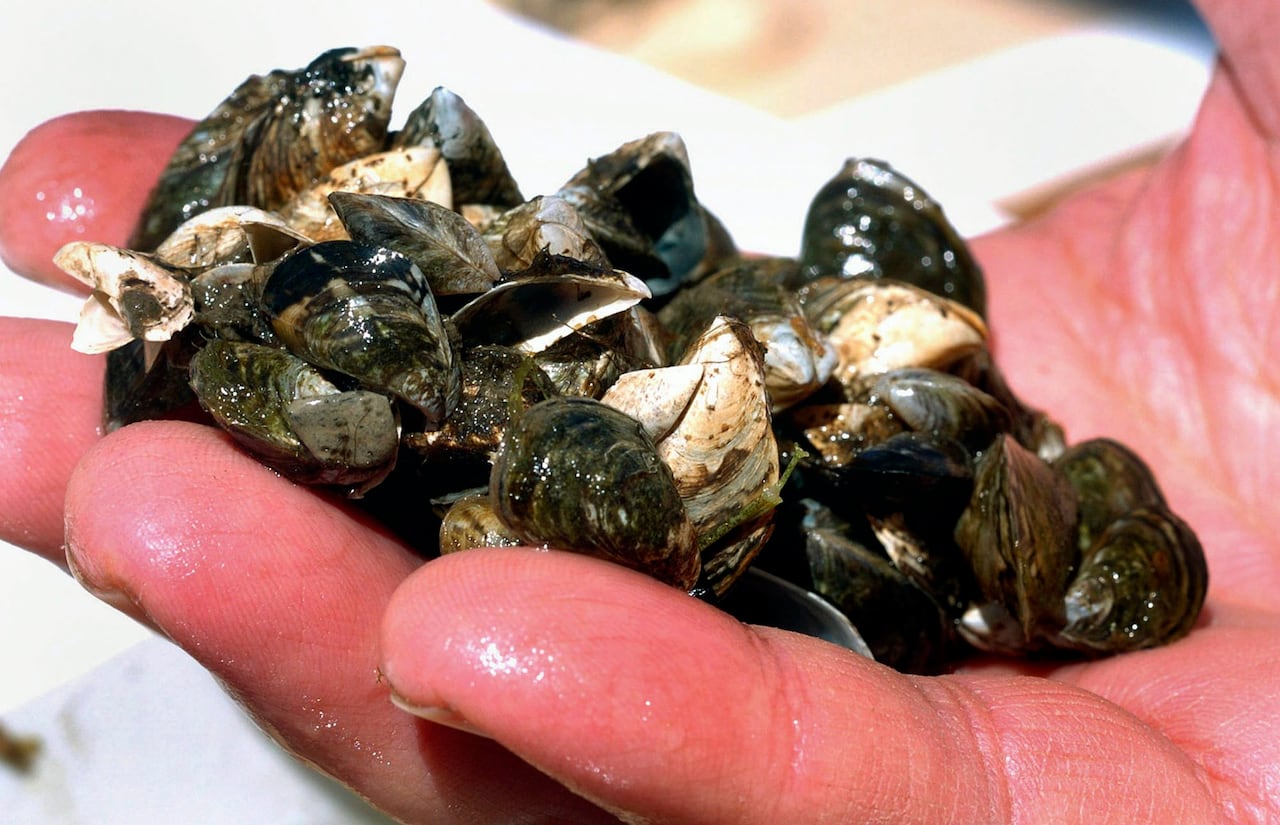 A cluster of zebra mussels that was taken from Lake Michigan is shown in this 2007 file photo. (The Associated Press)
“They’d be a huge problem for us if they came into Alberta,” said Richard Phillips, chair of the Alberta Irrigation Districts Association and a member of the provincial government’s recently reconvened Alberta Invasive Species Task Force.
He repeated the common saying that boats need to be “clean, drained and dry” when moved.
“It’s a good slogan and great practice, but easier said than done because some boats are complicated and really hard to make sure [they’re] completely free of water,” he said.
“The smallest amount of water could contain microscopic larvae.”
WATCH | K9s join the hunt, sniffing for invasive species: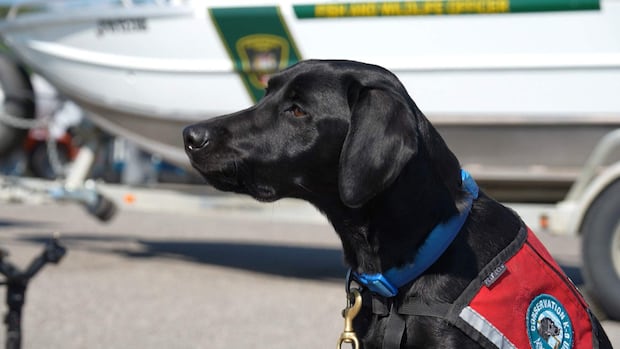
Meet the new dogs sniffing out invasive mussels at Alberta inspection sites
Alberta’s Conservation Canine Unit has two new members. The dogs are part of a larger team working to keep invasive mussels out of Alberta. As CBC’s Chelsey Mutter explains, the province says some invasive mussel species have been spreading through parts of Canada since they were first discovered in the ’80s.
Those droplets aren’t missed when ejection motors or tanks are inundated with hot water, said Garrett Atwood, whose Utah-based company, Clean Wake, designed the system to help contain invasive quagga mussels in his home state.
Alberta pilots tech already in use in Utah
“Boats have complicated systems — the intakes on every boat can be a little different — so this eliminates the guess work on how to decontaminate,” said Atwood.
“You fire up the boat. Fill up the ballast system or live well [that holds bait or caught fish] … drain the system. Turn off the engine and depart.”
Alberta conducted about 20,000 boat inspections in 2025, finding 13 cases of contamination.
This summer, all eight incidents found through provincial inspections were detected at the Dunmore station.
Hunter said the tank will be considered for use at Alberta’s 11 other boat inspection stations.
The province is also considering helping to develop a mobile tank system now being designed by academics and water groups in British Columbia.