


Listen to this article
Estimated 4 minutes
The audio version of this article is generated by AI-based technology. Mispronunciations can occur. We are working with our partners to continually review and improve the results.
For Emmanuel Perez and his toddler, a strange routine has taken over their walk to daycare.
The Parc-Extension resident says he and his almost three-year-old daughter now count the rats they see along the way. On one morning, they counted a record 11.
“Every single morning we pass by there, we use this as an opportunity to practise our counting,” Perez said.
He says the number of rats he and his family are seeing has increased significantly over the past year, with garbage, food waste and poorly maintained areas providing what he believes are ideal conditions for rodents.
Perez has lived in Montreal’s Parc-Extension neighbourhood for most of his life. He says the problem is not confined to a single property or street.
His sister recently told him she had found a large rats’ nest farther down the block, while other family members and neighbours have also reported seeing rats.
“It’s all over the place,” Perez said. “This doesn’t happen overnight. This is a pattern.”
Exterminator says rodent calls have been rising
Eric Corcoran, a technical supervisor with ABC Pest Control who has worked in the industry for 16 years, says the concerns are not unique to Perez.
Corcoran says his company has seen an increase in calls across Montreal about both rats and mice every year since the COVID-19 pandemic.
Parc-Extension, he says, is among the neighbourhoods that appear to be more affected.
He points to several factors that can make urban neighbourhoods more favourable to rodents, including population density, industrial areas, nearby highways and railway tracks.
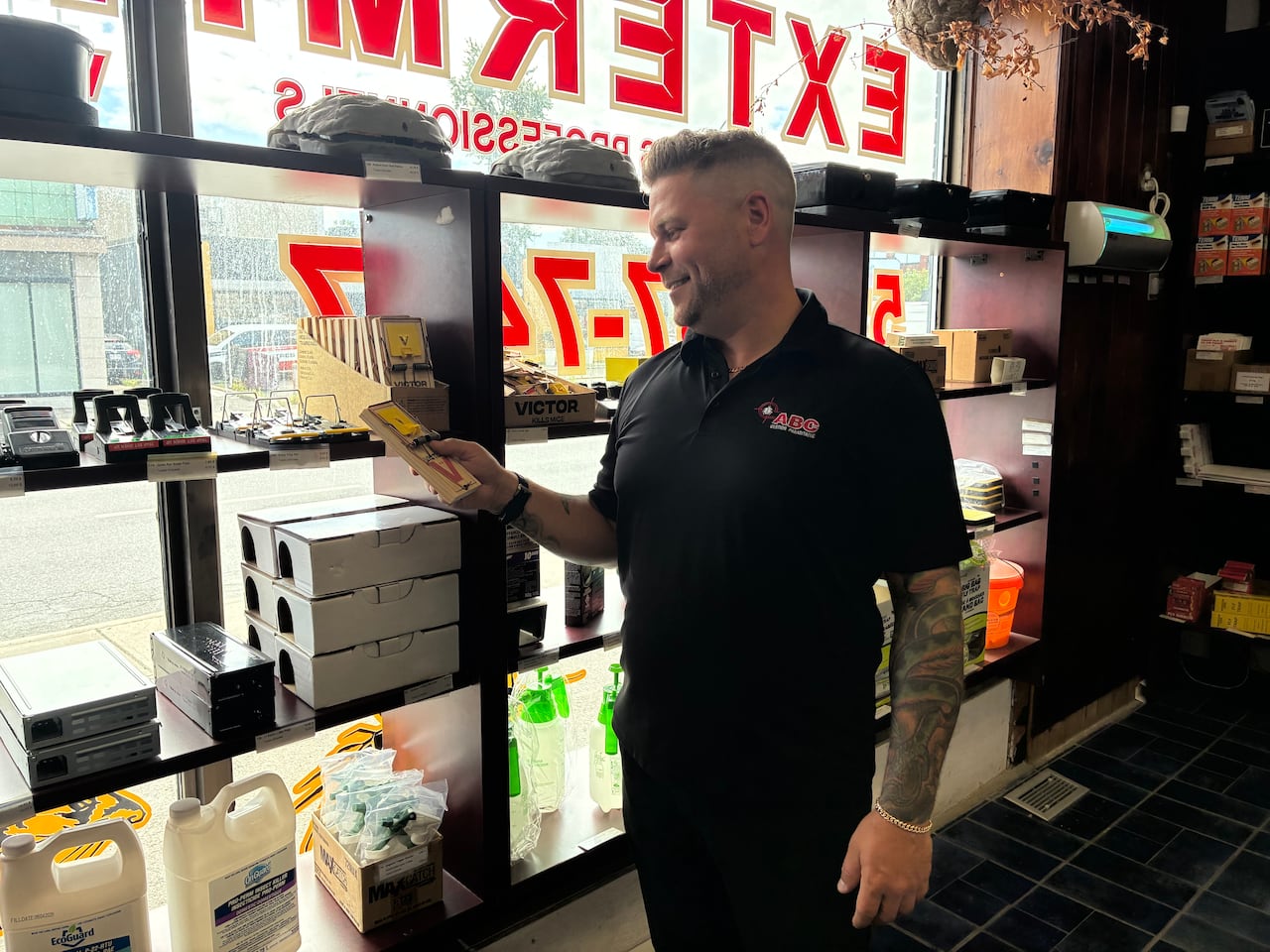 Eric Corcoran, an exterminator in Montreal, says his company has seen an increase in calls about both rats and mice every year since the pandemic. (Aatefeh Padidar/CBC News)
Garbage and organic material can also play a role.
Corcoran says changes to garbage collection schedules in some boroughs, combined with improperly managed compost and food waste, can leave more material available for rats to feed on.
But he says composting itself is not necessarily the problem. “If it’s done properly, for sure, it’s definitely something that can be managed and maintained,” he said.
The problem comes when organic material accumulates around bins, vegetation becomes overgrown or waste is not stored properly.
Dead rats raise another concern
During a recent visit to Parc-Extension by CBC, several dead rats were visible around the neighbourhood, including near the route Perez takes to his daughter’s daycare.
Perez says he started noticing more dead rats after the city came to the area to address the issue.
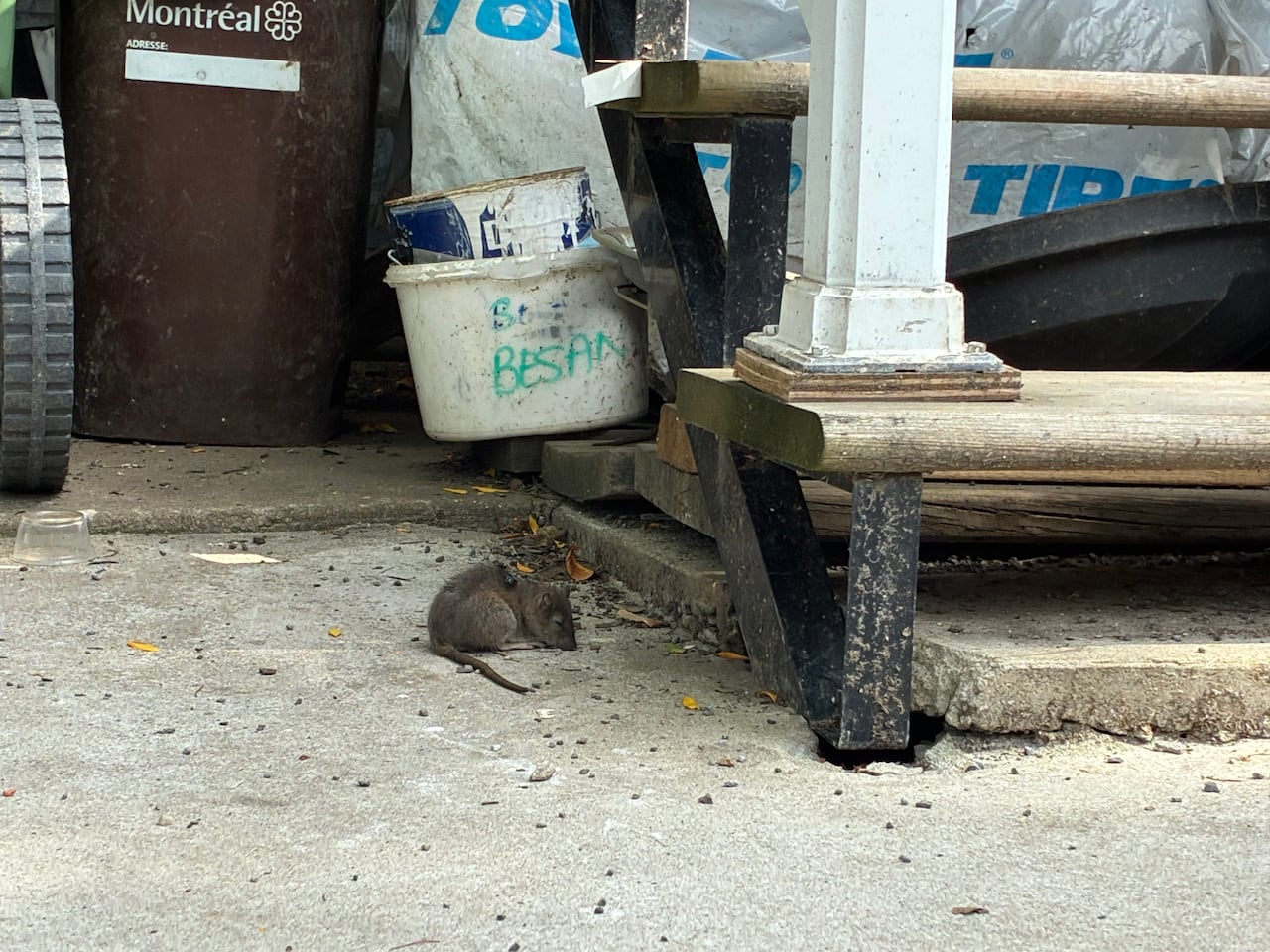 During a visit by CBC, several dead rats were seen on the route Perez takes his daughter to daycare. (Aatefeh Padidar/CBC News)
He worries about what could happen if poisoned rats are picked up by pets or other animals.
Corcoran advises residents not to handle dead rats themselves. Rats can carry pathogens and other contaminants, he says, and residents should instead contact their borough so the carcasses can be disposed of properly.
The exterminator also says residents can reduce the conditions that attract rodents by keeping garbage properly contained, cutting back vegetation and removing materials that can provide hiding places.
Borough says complaints are actually down
Asked to comment on the situation, the Villeray–Saint-Michel–Parc-Extension borough says it cannot determine whether the rat population has increased.
In a statement to CBC News, it also said the number of citizen requests for rat extermination has declined in recent years. According to the borough, there were 224 requests in 2024, 156 in 2025 and 74 as of Aug. 27 this year.
The borough says it is nevertheless taking measures to limit rodents, including hiring exterminators, installing traps, removing garbage left out outside collection hours and issuing notices and fines to residents and businesses that violate regulations.
It also says it is conducting its third consecutive year of targeted cleanliness blitzes in sensitive areas, including Parc-Extension.
The borough says food left on the ground, illegal dumping and garbage placed outside permitted collection times remain major contributors to the problem.
For Perez, however, the numbers don’t necessarily reflect what residents are seeing on the ground.
He says people may simply be getting used to the rats.
“It’s a little bit disheartening,” he said.
“I have such deep ties to this area, but I feel left out and neglected by the city.”