

Listen to this article
Estimated 5 minutes
The audio version of this article is generated by AI-based technology. Mispronunciations can occur. We are working with our partners to continually review and improve the results.
Scientists are asking Albertans to keep their eyes peeled for a rare rodent.
The elusive Franklin’s ground squirrel is the subject of a research project led by wildlife biologist Jess Haines, and is a collaboration between the MacEwan University professor’s team and conservation group Nature Alberta.
“This project started because naturalists in our community noticed that this squirrel was in decline, and they knew that no one was working on it,” Haines said.
The project aims to prove that their population has in fact declined. The Franklin’s ground squirrel is currently listed as “undetermined” by the Alberta government, meaning there’s not enough data to determine how the species is doing.
“It is a bit of a process to change that status,” Haines said.
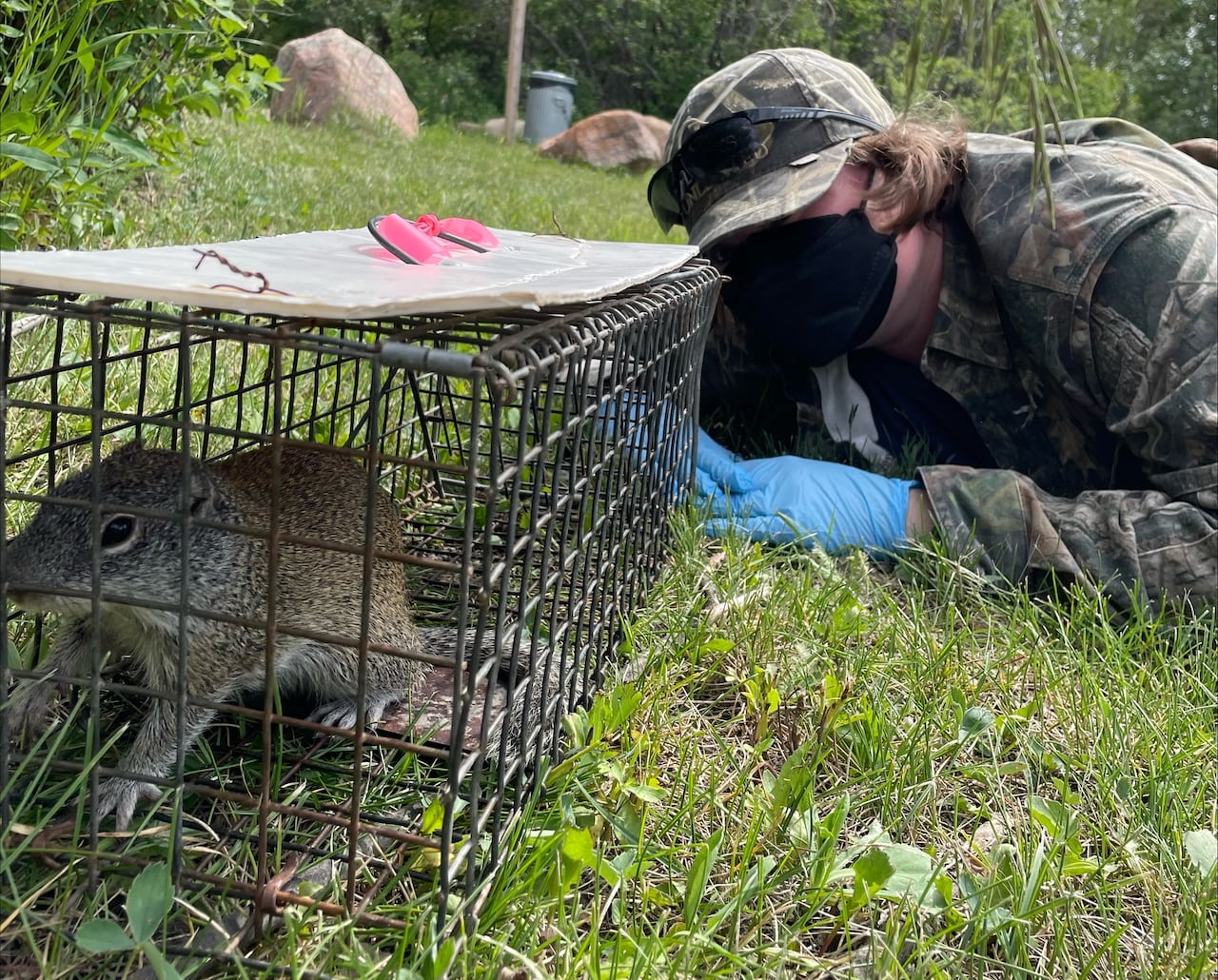 MacEwan University professor Jess Haines and her students have been closely studying Franklin’s ground squirrels in the field as part of the ongoing research project. (Submitted by Jess Haines)
Through the project, Haines aims to compile enough data on Franklin’s ground squirrel population trends to get the ball rolling on having the squirrel’s status changed to at-risk.
Unlike Richardson’s ground squirrels (colloquially known as gophers), which thrive in human-altered environments like pastures and golf courses, Franklin’s ground squirrels strictly require natural habitats with dense brush and forested areas.
Haines says human conversion of these lands for agriculture and urban expansion has directly driven the once-common squirrel’s decline.
“They used to be all through central Alberta as far as we can tell, and up into the southern boreal and maybe even into the foothills,” she said. “Now, they are limited to very few populations.”
Known locations where Franklin’s ground squirrels can still be found include Wabamun Lake Provincial Park, Pigeon Lake, Dry Island Buffalo Jump Provincial Park, Rochon Sands Provincial Park and Buffalo Lake.
“There’s some populations that seem really robust and they’re doing well, but there’s some populations that we are concerned we might lose in the next couple years,” Haines said.
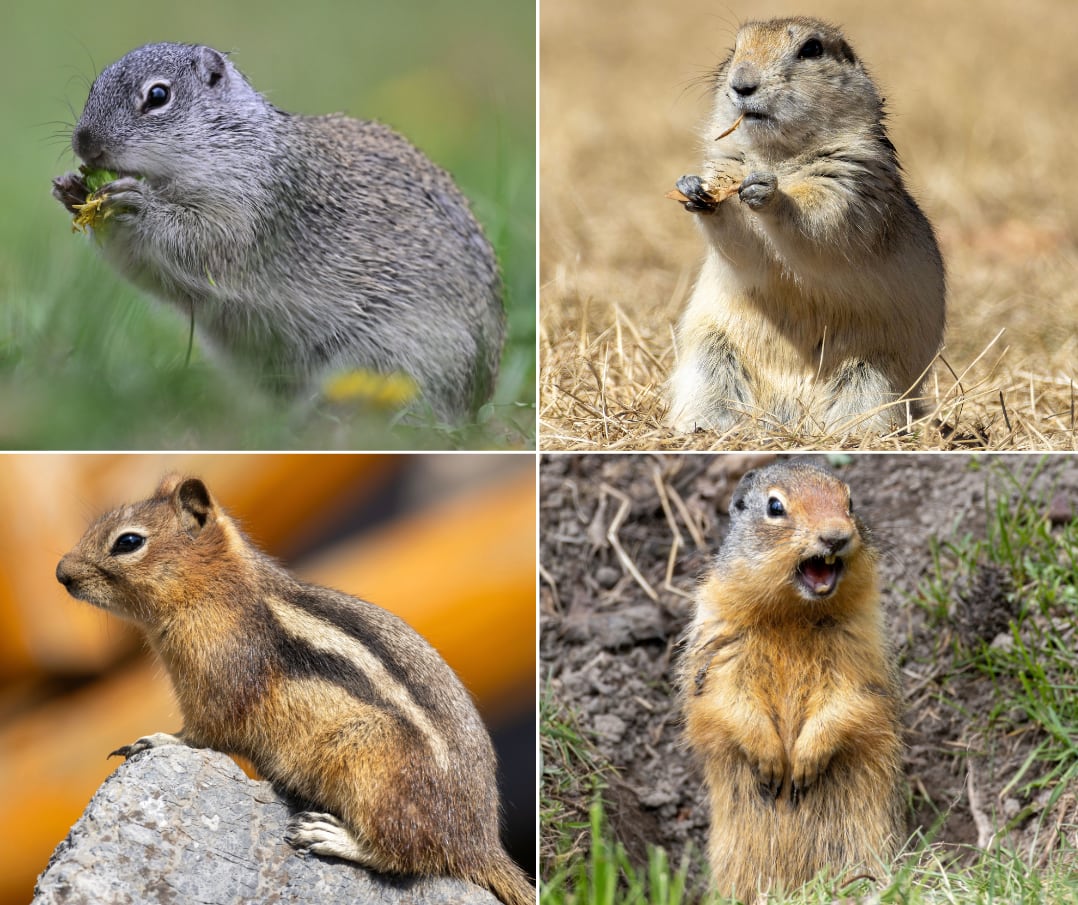 The Franklin’s ground squirrel (top left) can be distinguished from other Alberta ground squirrels by its unique colouration and habitat. Clockwise from top right: Richardson’s, Columbian and common golden-mantled ground squirrels, which are common in different parts of the province. (Mryna Pearman, Amir Said/CBC)
Haines says unlike other ground squirrels that live in large, highly visible colonies, Franklin’s ground squirrels naturally exist in low numbers and low densities.
“They are more sensitive to potentially disappearing from an area just because there aren’t a lot of them,” she said.
Project calls for help from public
Haines and her team, which often includes her students, spend a considerable amount of time looking for Franklin’s ground squirrels, which they briefly capture for research purposes and release back into the wild.
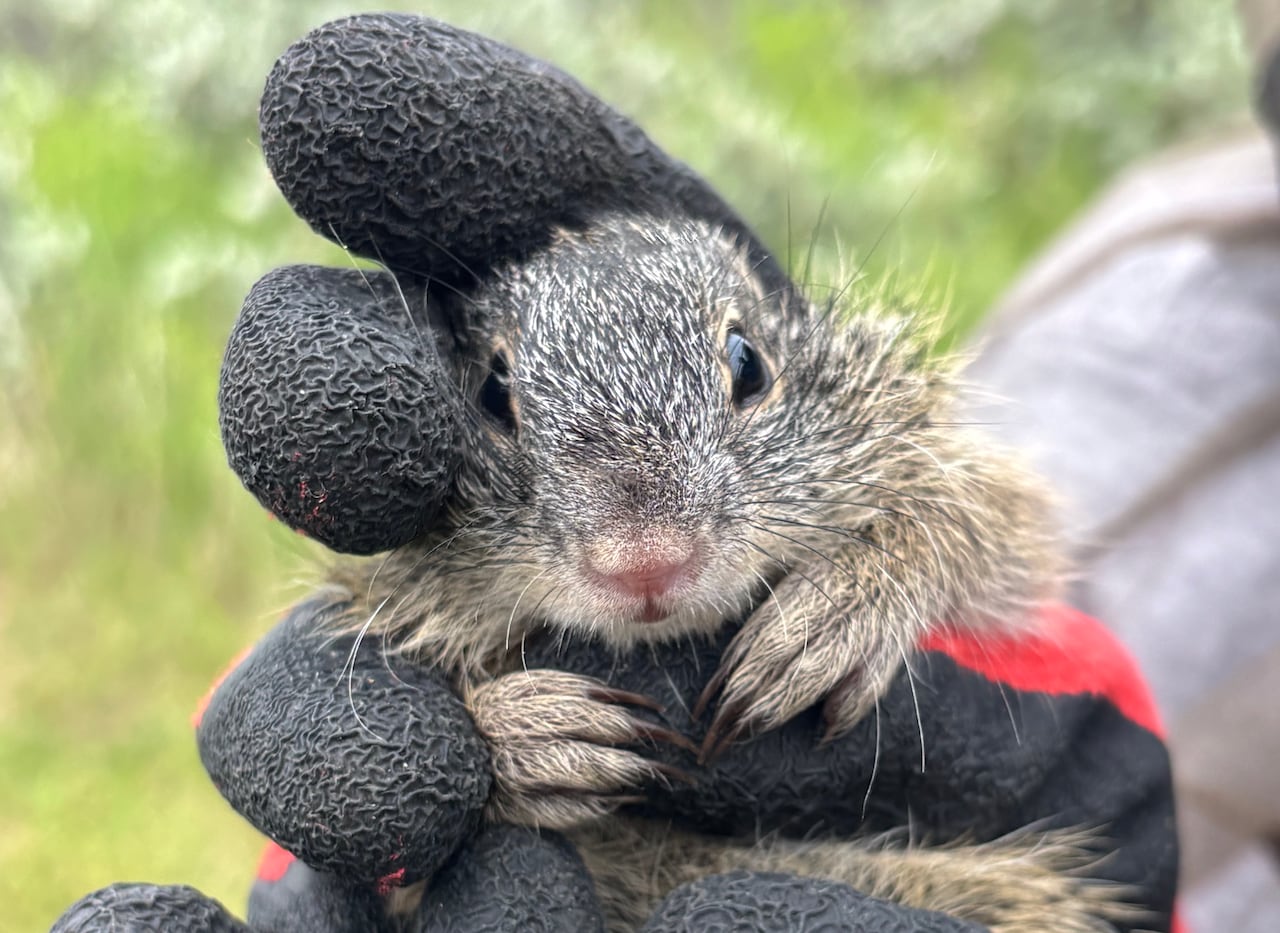 Jess Haines and her team humanely capture Franklin’s ground squirrels, collect basic data like weight and sex, and microchip them before releasing them back into the wild. (Submitted by Jess Haines)
Alongside that field work, the project asks the public to submit both historical and current observations of the squirrels through iNaturalist, a platform that lets people share photos and audio recordings of wildlife across the world.
There have been 188 observations of the Franklin’s ground squirrel submitted to iNaturalist since 2022.
Historical sightings can also be submitted through a form on the Nature Alberta website.
Through those submissions, researchers can track where the species used to live and where they still remain in the province.
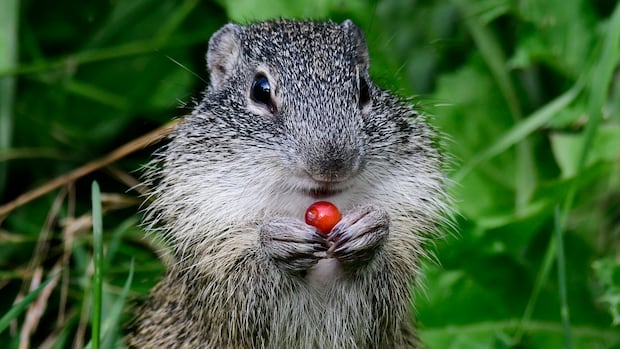
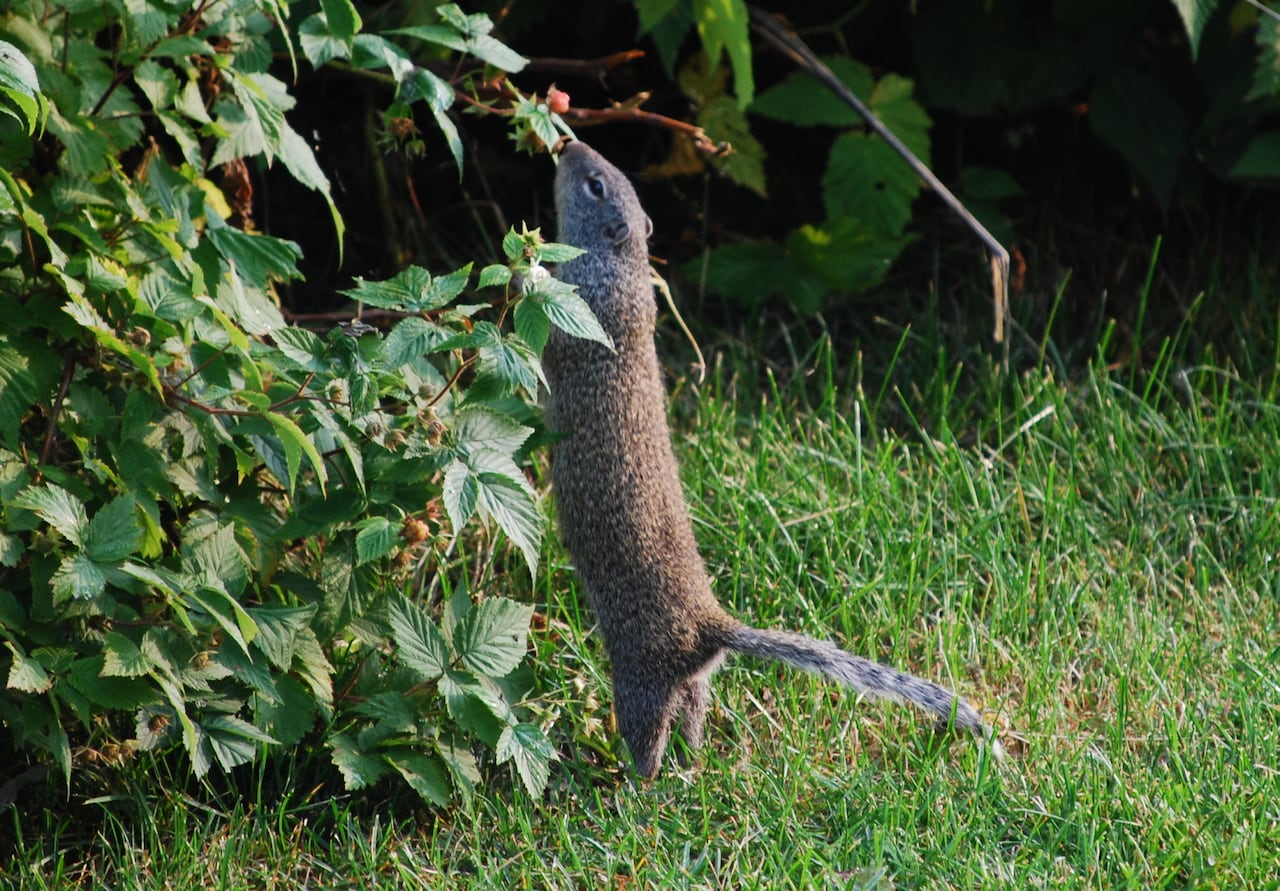 A Franklin’s ground squirrel eating raspberries. (Submitted by Jess Haines)
The project does not have a set end date, but priorities shift every couple of years. For example, the team has focused on the squirrel’s diet and habitat this year.
“Right now we’re trying to get a bigger picture of what’s going on across the province, and then in a couple years we’ll switch to much more specific questions with some of the populations that are of more concern,” she said.
“We’re just trying to get as much information as we can, so just keep submitting those observations.”
‘Nobody paid much attention to them’ until recently
Myrna Pearman with the Red Deer River Naturalists says she’s grown quite fond of the squirrels.
“They’re very tame little creatures,” Pearman said. “They would come and scavenge food, and they actually climbed into somebody’s cooler to steal food. It was really interesting to see that.”
That fascination with Franklin’s ground squirrels has inspired her to join Haines in the field and photograph the squirrels, with her hope being that the species can get some protection from the provincial government.
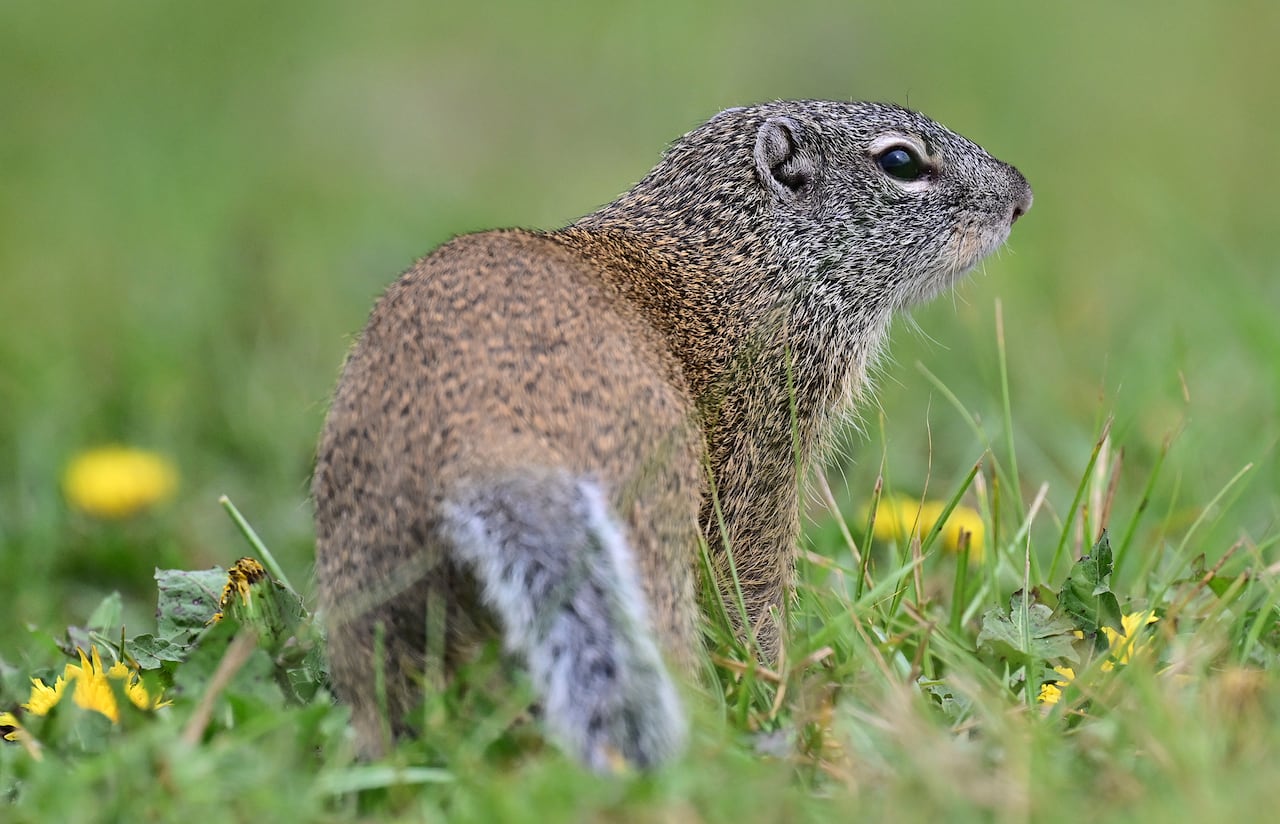 A Franklin’s ground squirrel photographed in Alberta. (Myrna Pearman)
“Nobody paid much attention to them until it became obvious … that their numbers are declining,” Pearman said.
There are 14 squirrel species in Alberta, five of which are ground squirrels. Aside from its unique habitat, the Franklin’s ground squirrel can be distinguished by its grey head and long bushy tail.
No squirrel species are currently considered at-risk in Alberta.